Lent: March 17th
Tuesday of the Fourth Week of Lent; Opt. Mem. of St. Patrick, Bishop & Confessor (Solemnity: AUS, IRE; Feast: NZ, Scot., Wales)
MASS READINGS
March 17, 2026 (Readings on USCCB website)
PROPERS [Show]
COLLECT PRAYER
Tuesday of the Fourth Week of Lent: May the venerable exercises of holy devotion shape the hearts of your faithful, O Lord, to welcome worthily the Paschal Mystery and proclaim the praises of your salvation. Through our Lord Jesus Christ, your Son, who lives and reigns with you in the unity of the Holy Spirit, God, for ever and ever.
Optional Memorial of St. Patrick: O God, who chose the Bishop Saint Patrick to preach your glory to the peoples of Ireland, grant, through his merits and intercession, that those who glory in the name of Christian may never cease to proclaim your wondrous deeds to all. Through our Lord Jesus Christ, your Son, who lives and reigns with you in the unity of the Holy Spirit, God, for ever and ever.
Recipes (25)
Activities (6)
Prayers (20)
Library (9)
Blog & Podcasts (6)
The mercy of God is not an invitation to sin. He may forgive us and take away the punishment due to sin. But let us not take it as an encouragement to sin more freely. The warning which Christ has just given to the man cured of his long infirmity is also meant for us: “See, you are well again; now sin no more, for something worse may happen to you.” Christ demands a permanent and sincere conversion after we have received his forgiveness. —St. Andrew Bible Missal
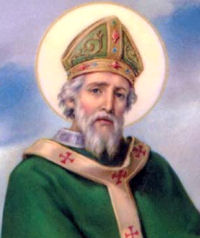
Today is also the Optional Memorial of St. Patrick (b. between 387-390 and died between 461-464). This day is not all about leprechauns, shamrocks and green beer, but a day to honor and pray to St. Patrick. He was an influential saint who, 1,500 years ago, brought Christianity to the little country of Ireland. He was born about 385 in the British Isles, was carried off while still very young during a raid on Roman Britain by the Irish and sold as a slave. At the end of six years he contrived to escape to Europe, became a monk and was ordained; he then returned to Ireland to preach the Gospel. During the thirty years that his missionary labors continued he covered the Island with churches and monasteries; in 444 he founded the metropolitan see of Armagh. St. Patrick died in 461. After fifteen centuries he remains for all Irishmen the great bishop whom they venerate as their father in the Faith.
Meditation for Tuesday of the Fourth Week of Lent—Converting Our Hearts Every Day
The Season of Lent for every Christian should mark a turning point, accentuating that change in thought and life which becomes daily in those who truly wish to follow Jesus. In the Gospel the word “daily” is heard many times, for example speaking of the demands of discipleship, the Lord says: “every day” it is necessary to take up the cross and follow Him (cfr. Lk 9, 23). “Every day” is synonymous with “totality,” donation, which, because it is “daily," renews itself and never breaks up, never weakens. Just as running water flows continually and is always fresh and clear, so too the spiritual life: to maintain its vivacity it draws continually from the grace which flows from Jesus. In this sense we clearly understand the necessity to “pray without ceasing.”
A great temptation on the path of conversion is to stop, to “stagnate”: we remain as we are, we do not to renew ourselves, and in doing so deceiving ourselves and others with a “Christianity” consisting of habits and “goals reached”. The journey of Lent invites us to remove these illusions, the word of Jesus resounds louder than ever: “repent and believe in the Gospel”. To be authentic conversion should never stop; the true Christian experiences the dynamics of conversion, like walking behind Jesus, on a path which never stops because it is at the spiritual level, if we stop, we go backwards! “ 'Once the hand is laid on the plough, no one who looks back is fit for the kingdom of God.'” (Lk 9, 62).
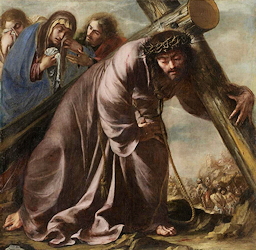 So as not to interrupt our conversion, our journey of 'becoming' Christians, the only possibility is daily conversion: denying ourselves, our ambitions every day, with the dynamic power of love. Selfishness has its own dynamics, which is also daily and drives us to satisfy 'ego'. Only the disciple who gives himself entirely to the Lord, day after day, becomes increasingly similar to his Master and lives in joy, light and love.
If a Christian says he has no joy, light or love then he must make a profound examination of conscience to discern areas where the power of selfishness prevails over the dynamics of conversion.
It is not God who is sparing with himself, or who hesitates to give Himself to us, it is man, as St Teresa of Avila says so well: “ If we attain to the perfect possession of this true love of God, it brings all blessings with it. But so niggardly and so slow are we in giving ourselves wholly to God that we do not prepare ourselves as we should to receive that precious thing which it is His Majesty's will that we should enjoy only at a great price.” (Life, chapter 11, paragraph 1).
Dying to self costs, but it obtains the greatest result: it allows Jesus to live in us. In fact there can be no dynamics of conversion, without daily “renouncing self" precisely to live for Jesus. The Word of God says clearly that only those who lose themselves, who give themselves entirely to God, truly find Him and enjoy Him here on earth: “ If, however, from there you start searching once more for Yahweh your God, and if you search for him honestly and sincerely, you will find him.” (Deut 4, 29). The Lenten journey is therefore a path of self-giving and trusting in God which culminates at Easter with new birth in Jesus. The Holy Father, Pope Benedict XVI, describes this dynamics with the following illuminating words: “ Jesus' invitation to take up one's cross and follow him may at first sight seem harsh and contrary to what we hope for, mortifying our desire for personal fulfilment. At a closer look, however, we discover that it is not like this: the witness of the saints shows that in the Cross of Christ, in the love that is given, in renouncing the possession of oneself, one finds that deep serenity which is the source of generous dedication to our brethren, especially to the poor and the needy, and this also gives us joy. The Lenten journey of conversion on which we are setting out today together with the entire Church thus becomes a favourable opportunity, "the acceptable time" (II Cor 6: 2) for renewing our filial abandonment in the hands of God and for putting into practice what Jesus continues to repeat to us: "If any man would come after me, let him deny himself and take up his cross and follow me" (Mk 8: 34) and this is how one ventures forth on the path of love and true happiness. (…) let us ask Our Lady, Mother of God and of the Church, to accompany us on our way through Lent, so that it may be a journey of true conversion. May we let ourselves be led by her, and inwardly renewed we will arrive at the celebration of the great mystery of Christ's Pasch, the supreme revelation of God's merciful love.” (Benedict XVI, General Audience 6 February 2008).
—Msgr. Luciano Alimandi (Agenzia Fides 20/2/2008; righe 54, parole 792)

Tuesday of the Fourth Week of Lent
Station with San Lorenzo in Damaso (St. Lawrence at the House of Damasus):
The church of today's station is believed to have been built over the house of Pope St. Damasus, (366-383), by the Pope himself. The church was rebuilt in the late 15th century and restored several times, the latest being after fire damage of 1944. This is yet another church dedicated to St. Lawrence, deacon and martyr, who has ten churches just in Rome dedicated to this popular saint.
For more on San Lorenzo in Damaso, see:
- Churches of Rome
- Rome Art Lover
- Roman Churches
- PNAC
- Aleteia
- Station Church
- The Catholic Traveler
- Roman Despatches
- Walks in Rome
For further information on the Station Churches, see The Stational Church.
St. Patrick
Not many facts are known about the life of St. Patrick. We know that he was born around 415 AD, and was a Roman Briton. When he was about 16, while he was tending his sheep some Irish raiders captured him and made him a slave. He eventually was able to escape and return to Britain. There he heard the call to return and bring Christianity to Ireland. He was ordained a priest, consecrated a bishop and came back to Ireland around 435 AD. Many legends are associated around St. Patrick: how he drove the snakes out of Ireland, and the use of the shamrock to teach the mystery of the Trinity. Whether or not the legends are true, St. Patrick succeeded in bringing Catholicism to Ireland, and in time, the whole country converted from their pagan gods to the one true God.
Although a small country, Ireland has played a large role in saving and bringing Christianity throughout the world. During the early Dark Ages, the Irish monasteries preserved Western writings while Europe remained in darkness. But as the Catholic country remained solidly Catholic, the Irish spread the faith to all corners of the world. To learn more on this subject, read Thomas Cahill's How the Irish Saved Civilization.
We have a few works attributed to St. Patrick, one being his autobiography called Confessions. It is a short summary of the events in his life, written in true humility. Below is a short excerpt:
I am greatly God's debtor, because he granted me so much grace, that through me many people would be reborn in God, and soon after confirmed, and that clergy would be ordained everywhere for them, the masses lately come to belief, whom the Lord drew from the ends of the earth, just as he once promised through his prophets: "To you shall the nations come from the ends of the earth, and shall say, Our fathers have inherited naught hut lies, worthless things in which there is no profit." And again: "I have set you to be a light for the Gentiles that you may bring salvation to the uttermost ends of the earth."
Patronage: against fear of snakes; against ophidiophobia; against snake bites; against snakes; barbers; barrel makers; blacksmiths; cattle; coopers; engineers; excluded people; hairdressers; miners; ophidiophobics; Ireland; Nigeria (1961)
See Catholicsaints.info for the long list of different diocese that claim St. Patrick as their patron.
Symbols and Representation: A bishop trampling on snakes; bishop driving snakes away; shamrock; snakes; cross; harp; demons; baptismal font; Purgatory; serpent
Highlights and Things to Do:
- Listen to Catholic Culture's Podcasts and Audiobooks:
- Way of the Fathers by Mike Aquilina, 51—St. Patrick: Paternal and Patristic
- Audiobook read by James Majewski:
- Read more about St. Patrick:
- Honor St. Patrick by trying typical Irish fare: corned beef and cabbage, soda bread, scones, stew, Shepherd's pie, potatoes in various forms and the famous beer and spirits of Ireland. For dessert, try making the Irish Porter Cake. See Catholic Cuisine for some food ideas.
- Read the Lorica (Breastplate) of St. Patrick. Here is an older translation — pray it with your family after your rosary tonight.
- From the Catholic Culture library:
- The Conversion of Ireland by Warren Carroll
- The Irish Soldiers of Mexico by Michael Hogan
- The Irish Madonna of Hungary by Zsolt Aradi
- Our Lady in Old Irish Folklore and Hymns by James F. Cassidy
- Listen to Catholic Culture's Way of the Fathers St. Patrick: Paternal and Patristic by Mike Aquilina.
- St. Patrick's grave is unknown, but his relics are located in Down Cathedral.