Lent: February 20th
Friday after Ash Wednesday
Other Commemorations: St. Jacinta Marto (RM)
MASS READINGS
February 20, 2026 (Readings on USCCB website)
PROPERS [Show]
COLLECT PRAYER
Friday after Ash Wednesday: Show gracious favor, O Lord, we pray, to the works of penance we have begun, that we may have strength to accomplish with sincerity the bodily observances we undertake. Through our Lord Jesus Christ, your Son, who lives and reigns with you in the unity of the Holy Spirit, God, for ever and ever.
Recipes (6)
Activities (11)
Prayers (12)
Library (14)
Blog & Podcasts (7)
» Enjoy our Liturgical Seasons series of e-books!
The first four Masses in Lent serve as a general introduction to Lent. They describe the essentials of a Lenten program. This Mass is concerned with fasting and teaches us what true fasting is. The Opening Prayer of today's Mass asks God to guide the Lenten penance we have begun.
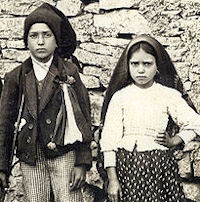
Franciso and Jacinta Marto were officially declared saints of the Catholic Church by Pope Francis on May 13, 2017, in Fatima, Portugal. The Roman Martyrology commemorates St. Jacinta (1910-1920), the youngest visionary of Our Lady of Fatima. The brother and sister who tended to their families’ sheep with their cousin Lucia Santo in the fields of Fatima, witnessed the apparitions of Mary, now commonly known as Our Lady of Fatima. Pope John Paul II beatified Francisco and Jacinta May 13, 2000, on the 83rd anniversary of the first apparition of Our Lady at Fatima. Both under 12 years old, they were the youngest non-martyrs to be beatified in the history of the Church. St. Francisco's feast is April 4.
Meditation for Friday after Ash Wednesday—The Tree of Knowledge and the Cross
The sin that was wrought through the tree was undone by the obedience of the tree, obedience to God whereby the Son of man was nailed to the tree, destroying the knowledge of evil, and bringing in and conferring the knowledge of good; and evil is disobedience to God, as obedience to God is good. And therefore the Word says through Isaiah the prophet, foretelling what was to come to pass in the future—for it was because they told the future that they were "prophets"—the Word says through him as follows: I refuse not, and do not gainsay, my back have I delivered to blows and my cheeks to buffets, and I have not turned away my face from the contumely of them that spat. [Is. 50, 6] So by obedience, whereby He obeyed unto death, hanging on the tree, He undid the old disobedience wrought in the tree. And because He is Himself the Word of God Almighty, who in His invisible form pervades us universally in the whole world, and encompasses both its length and breadth and height and depth—for by God's Word everything is disposed and administered—the Son of God was also crucified in these, imprinted in the form of a cross on the universe; for He had necessarily, in becoming visible, to bring to light the universality of His cross, in order to show openly through His visible form that activity of His: that it is He who makes bright the height, that is, what is in heaven, and holds the deep, which is in the bowels of the earth, and stretches forth and extends the length from East to West, navigating also the Northern parts and the breadth of the South, and calling in all the dispersed from all sides to the knowledge of the Father.
—St. Irenaeus
Highlights and Things to Do:
- Today's reading from the book of Isaiah declares that the fasting desired by the Lord is not so much denying oneself food (although this is important) but rather, consists in "Sharing your bread with the hungry, sheltering the oppressed and the homeless; / Clothing the naked when you see them, and not turning your back on your own." Many families take these words to heart by having an inexpensive, penitential dinner on Fridays in Lent (such as beans and rice) and then giving the extra money to the poor.
- Many families give each child one pretzel during Friday dinners in Lent. Remind your children of the spiritual significance of the pretzel.
- Pray the Stations of the Cross today with your family. An excellent version with beautiful meditations composed by our Holy Father is his Stations of the Cross at the Colosseum. Some other recommended versions are: Eucharistic Stations of the Cross, and the more traditional Stations of the Cross written by Saint Alphonsus Liguori can be found in most Catholic bookstores. Here are some guidelines for praying the Stations of the Cross in your home.
- Any of the linked activities (Fun Pretzel Project, Lenten Scrapbook, Candelabrum for Stations of the Cross) are a wonderful way for your children to spend their Friday afternoons throughout this season of Lent.
Friday after Ash Wednesday
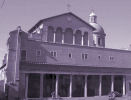
Station with Santi Giovanni e Paolo (Saints John and Paul)
Today's Station on the Coelian Hill was named after two brothers who were officers in the Roman Imperial court. Because they refused to renounce Christ, they were beheaded on June 26, 362. The basilica is where the Christian Senator Pammachius built over their home of the martyrs Sts. John and Paul. Near the church was a hospice where Pammachius dispensed his fortune in charity to the poor.
For Lent 2026, there will be a replacement church, but it has not been announced yet.
For more on Santi Giovanni e Paolo, see:
- Churches of Rome Info
- The Station Churches of Rome
- Rome Art Lover
- Roman Churches
- PNAC
- Aleteia
- The Station Church
- The Catholic Traveler
Beginning in Lent 2025, San Sebastiano al Palatino (St Sebastian on the Palatine) is the replacement church, dedicated to St. Sebastian, the 3rd-century soldier-martyr under the reign of Diocletian. San Sebastiano is a titular church built on the site traditionally held as the place of St. Sebastian's first martyrdom with arrows, although not successful. The church was originally erected in the 10th century and rebuilt in the 17th century.
For further information on the Station Churches, see The Stational Church.
St. Jacinta Marto
Between May 13 and October 13, 1917, three children, Portuguese shepherds from Aljustrel, received apparitions of Our Lady at Cova da Iria, near Fatima, a city 110 miles north of Lisbon. At that time, Europe was involved in an extremely bloody war. Portugal itself was in political turmoil, having overthrown its monarchy in 1910; the government disbanded religious organizations soon after.
At the first appearance, Mary asked the children to return to that spot on the thirteenth of each month for the next six months. She also asked them to learn to read and write and to pray the rosary “to obtain peace for the world and the end of the war.” They were to pray for sinners and for the conversion of Russia, which had recently overthrown Czar Nicholas II and was soon to fall under communism. Up to 90,000 people gathered for Mary’s final apparition on October 13, 1917.
Less than two years later, Francisco died of influenza in his family home. He was buried in the parish cemetery and then re-buried in the Fatima basilica in 1952. Jacinta died of influenza in Lisbon, offering her suffering for the conversion of sinners, peace in the world and the Holy Father. She was re-buried in the Fatima basilica in 1951. Their cousin, Lucia dos Santos, became a Carmelite nun and was still living when Jacinta and Francisco were beatified in 2000. Sister Lucia died five years later. The shrine of Our Lady of Fatima is visited by up to 20 million people a year.
—Excerpted from Saint of the Day: Lives, Lessons and Feast by Leonard Foley, O.F.M.; revised by Pat McCloskey, O.F.M.
Patronage: against bodily ills; captives; people ridiculed for their piety; prisoners; sick people; against sickness
Highlights and Things to Do:
- Learn more about St. Jacinta:
- Visit virtually the Shrine of Our Lady of Fatima in Fatima, Portugal.
- Read online Fatima in Lucia's Own Words.
- Catholic Cuisine for some food ideas for St. Jacinta.