Lent: February 25th
Wednesday of the First Week of Lent; Ember Wednesday
Other Commemorations: St. Walburga, Abbess (RM)
MASS READINGS
February 25, 2026 (Readings on USCCB website)
PROPERS [Show]
COLLECT PRAYER
Wednesday of the First Week of Lent: Look kindly, Lord, we pray, on the devotion of your people, that those who by their self-denial are restrained in body may by the fruit of good works be renewed in mind. Through our Lord Jesus Christ, your Son, who lives and reigns with you in the unity of the Holy Spirit, God, for ever and ever.
Recipes (4)
Activities (5)
Prayers (8)
Library (2)
Blog & Podcasts (3)
» Enjoy our Liturgical Seasons series of e-books!
Today is Ember Wednesday, the beginning of the Spring or Lent Embertide. There are two principal objects for the Ember Days of this period of the year: the first is to offer to God the season of Spring, and, by fasting and prayer, to draw down His blessing upon it; the second is to ask Him to enrich with His choicest graces the priests and sacred ministers who are to receive their Ordination on Saturday. See also Contemporary Observation of Ember Days and Lenten Ember Days for more information.
The Roman Martyrology commemorates St. Walburga (710-779), abbess, who, at the request of St. Boniface and her holy brothers Sts. Willibald and Winebald, left England to come to Germany to help establish the faith there. She established a double monastery of monks and nuns at Hiedenhem, where she was abbess. She died February 25, 779, and later her relics were translated to Eichstatt on May 1, 870.
Meditation for Wednesday of the First Week of Lent
The people of Nineveh are also our model for Lent. They did penance at the preaching of Jonah the prophet and obtained divine mercy and pardon. Christ is preaching penance to use today through his Church. Should we not also put on the sackcloth of self-denial and take on the fast to remedy our self-indulgence that we also may obtain forgiveness for ourselves? Nor should we forget to pray for a world which is drowning in the sin and vice of its own creation.
Before we arrive at the joy and glory of Easter we have first to go through forty days of Lenten journey. This period of preparation is designed by God. It is not merely a time of self-denial, of death to self, and of carrying the cross; it is a time of recovery of our real self, of a more real life, and of sharing in Christ's glory. God intends that we should accustom ourselves to live the Paschal rhythm of "death and life" to reclaim one's real self and to become ready to share in Christ's glory.
—St. Andrew Bible Missal
Lent Ember Days or Lent Embertide, Ember Wednesday of Lent
The Church has traditionally designated Wednesday, Friday and Saturday of the First Week in Lent during which to consecrate the season of spring to God and to obtain graces, through prayer, fasting and the offering of the holy Sacrifice. These days, however, unlike those of the other seasons, do not refer to the fruits of the earth, but are rather expiatory in character.
The Lenten Ember days are the most recent of the four sets of Ember Days and do not have the same importance as the other three, since the whole of Lent is devoted to spiritual renewal. Doubtlessly the three days, Wednesday, Friday and Saturday, formed part of the Lenten liturgy from its very beginning. Wednesday, devoted to our Lady, is a day of reflection and spiritual orientation; Friday emphasizes conversion and penance; Saturday, a preview of Easter, marked the renewal of our baptismal covenant.
On all four Ember Wednesdays the stational service was observed in the largest church of our Lady in Rome, St. Mary Major. This basilica, which dates from the fourth century, was rebuilt by Pope Sixtus III (431-440), and dedicated to our Blessed Mother as a result of the Council of Ephesus' definition of the divine motherhood of the Virgin Mary.
It is probable that in the second half of the fourth century the Ember day observance was rearranged and the three great churches (St. Mary Major, Holy Apostles, St. Peter) were selected as stations.
Today, then, we pilgrimage to the largest and most venerable shrine of Our Lady in the world and honor the Mother of God as our patron. The humble guise in which we meet her in the Gospel serves as a model for Lenten humility. Nevertheless, we are promised a participation in her dignity, i.e., we are destined to become "mothers and brothers to Jesus," if we do "the will of His Father." Thus Mary is our companion during Lent. Devoutly and suppliantly we enter the stational church, reminding God of His never failing mercy and begging for liberation from oppression. The kingdom of God never lacks enemies.
"The men of Nineveh [the pagans] shall rise in judgment with this generation [the chosen people of Israel] and shall condemn it; because they did penance at the preaching of Jonah; and behold a greater than Jonah here. The queen of the South [of Saba] shall rise in judgement with this generation and shall condemn it; because she came from the ends of the earth to hear the wisdom of Solomon; and behold a great then Solomon here." The chosen people would have nothing to do with their Savior when He came to them. They rejected Him, and therefore they themselves were rejected. We who are of the Gentiles have been chosen in their place. Mary and our Holy Mother the Church lead us to Him. In baptism we were made His brothers and sisters and were joined to Him in a union of prayer, in a union of life and spirit. From that moment we are bound to do the will of the Father.
We can prove unfaithful to our vocation, lose our faith, and fall away. For this reason the Church presses upon us the urgency of self-examination, penance, and meditation during the holy season of Lent, for the "men of Nineveh did penance at the preaching of Jonah" and thus found favor with God.
Our hearts are filled with gratitude for the great grace that has been given to us in baptism. We should renew our desire and our resolution to accomplish the will of the Father. "I will meditate on Thy commandments which I have loved exceedingly; and I will lift up my hands to Thy commandments which I have loved."
—adapted from Dom Rembert Bularzik, O.S.B, Orate Fratres, Pius Parsch, OSB, The Church's Year of Grace and Benedict Baur, The Light of the World
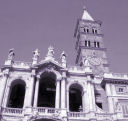
Wednesday of the First Week of Lent (Ember Wednesday)
Station with Santa Maria Maggiore (St. Mary Major):
The spring Ember Week consecrated the new season to God and by prayer and fasting sought to obtain abundant graces for those who on Saturday were to receive Holy Orders. The Station was fittingly held in the church, which witnessed the first scrutinies for the coming ordinations, and which was dedicated to the mother of the great High Priest.
For more on Santa Maria Maggiore, see:
- Churches of Rome
- The Station Churches of Rome
- Rome Art Lover
- Roman Churches
- PNAC
- Aleteia
- Station Church
- The Catholic Traveler
For further information on the Station Churches, see The Stational Church.
St. Walburga
St. Walburga was born around 710. She is the daughter of St. Richard and the niece of St. Boniface. When St. Richard set out for a pilgrimage to the Holy Land with his sons, Ss. Willibald & Winibald, he entrusted 11 year old Walburga to the monastery school at Wimborne. She remained as a nun, spending a total of 26 years there.
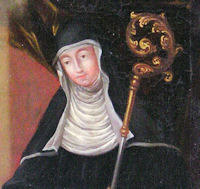 When St. Boniface put out an appeal for nuns to help him in the evangelization of Germany, St. Walburga answered the call. On the way to Germany, there was a terrible storm at sea. Walburga knelt on the deck of the ship and prayed. The sea immediately became calm. Some sailors witnessed this and spread the word that she was a wonderworker, so she was received in Germany with great respect.
At first, she lived at Bischofsheim, under the rule of St. Lioba. Then she was made abbess at Heidenheim, near to where her brother, Winibald served as an abbot over a men's monastery. After his death, she ruled both monasteries. She worked many miracles in the course of her ministry. She wrote a biography of her brother, Winibald, and of Willibald's travels in Palestine, in Latin. She is regarded as the first woman author in both England and Germany.
On September 23, 776, she assisted Willibald in translating the uncorrupt relics of their brother, Winibald, to a new tomb in the church at Heidenheim. Shortly after this, she fell ill. Willibald cared for her until she died on February 25, 777, then placed her next to Winibald in the tomb.
After St. Willibald's death in 786, people gradually forgot St. Walburga and the church fell into disrepair. In 870, Bishop Oktar was having Heidenheim restored. Some workmen desecrated Walburga's grave. She appeared in a dream to the bishop, who then translated her relics to Eichstadt. In 893, St. Walburga's body was found to be immersed in a mysterious sweet-smelling liquid. It was found to work miraculous healings. The liquid, called St. Walburga's oil, has flowed from her body, ever since, except for a brief period when the church was put under the interdict after robbers shed the blood of a bell-ringer in the church. Portions of St. Walburga's relics have taken to several other cities and her oil to all parts of the world.
Patronage: against coughs; against dog bites; against famine; against hydrophobia; against mad dogs; against plague; against rabies; against storms; boatmen; farmers; harvests; mariners; sailors; watermen; diocese of Eichstätt, Germany; diocese of Plymouth, England; Antwerp, Belgium; Gronigen, Netherlands; Oudenarde, Belgium; Zutphen, Netherlands
Symbols and Representation: abbess holding three ears of corn; abbess with angels holding a crown over her; abbess within a family tree of the kings of England; crown; near her own tomb as it exudes its miraculous oil
phial of oil; royal abbess with a small flask of oil on a book; scepter; three ears of corn; with Saint Willibald and Saint Winebald
Highlights and Things to Do:
- Eliminating Confusion: The night of 1 May, the date of the translation of Walburga’s relics to Eichstatt in 870, is known as Walpurgisnacht (or St. Walburga's Eve); it is also a pagan festival marking the beginning of summer and the revels of witches. Though the saint had no connection with this festival, her name became associated with witchcraft and country superstitions because of the date. It is possible that the protection of crops ascribed to her, represented by three ears of corn in her icons, may have been transferred to her from Mother Earth and the connection to this pagan holiday. (From CatholicSaints.Info).
- Read more about St. Walburga:
- Visit online two of the American abbeys dedicated to St. Walburga: in Northern Colorado and St. Emma Monastery in Greensburg, Pennsylvania.
- Read more about the Oil of St. Walburga. This is the church in Eichstädt in Bavaria, Germany where her body and the oil is found.