Lent: February 26th
Thursday of the First Week of Lent
Other Commemorations: St. Porphyrius, Bishop (RM)
MASS READINGS
February 26, 2026 (Readings on USCCB website)
PROPERS [Show]
COLLECT PRAYER
Thursday of the First Week of Lent: Bestow on us, we pray, O Lord, a spirit of always pondering on what is right and of hastening to carry it out, and, since without you we cannot exist, may we be enabled to live according to your will. Through our Lord Jesus Christ, your Son, who lives and reigns with you in the unity of the Holy Spirit, God, for ever and ever.
Recipes (1)
Activities (5)
Prayers (6)
Library (2)
Blog & Podcasts (0)
» Enjoy our Liturgical Seasons series of e-books!
In certain ways the Lenten Christian is like the Jew in exile. He is still exposed to the attacks of the enemies. Lent, like the exile in Babylon, is a time of cleansing. It intends to create in us a greater desire and longing for deliverance which God has promised us through our savior Jesus Christ. All the chants and prayers in today's Mass are urgent pleas for God's mercy and help.
The Church has fittingly assumed the prayer of Esther as her own today. Like the Jews of old, she finds her people in many countries fighting against a well-organized plan of a persecution and extermination, more terrible than the one the Jews had to face. She is undergoing this trial to show her fidelity to Christ, and to plead for the salvation of all men. —St. Andrew Bible Missal
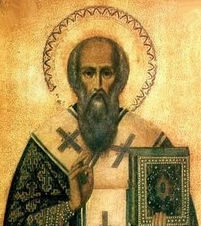
The Roman Martyrology commemorates St. Porphyrius (d. 420), a wealthy Greek who became a hermit first in the desert of Skete in Egypt and then in Palestine on the banks of the Jordan. Much against his will he was raised to the see of Gaza, which he ruled with extraordinary energy, ability and success. He almost completely uprooted the remnants of paganism in his diocese. His biography written by his deacon Mark is one of the most valuable historical sources of the fifth century.
Meditation for Thursday of the First Week of Lent—Confidence and Union with God in Temptation
Nothing is more efficacious against temptation than the remembrance of the Cross of Jesus. What did Christ come to do here below if not to "destroy the works of the devil"? And how has He destroyed them, how has He "cast out" the devil, as He Himself says, if not by His death upon the Cross?
Let us then lean by faith upon the cross of Christ Jesus, as our baptism gives us the right to do. The virtue of the cross is not exhausted. In baptism we were marked with the seal of the cross, we became members of Christ, enlightened by His light, and partakers of His life and of the salvation He brings to us. Hence, united to Him, whom shall we fear? Dominus illuminatio mea et salus mea; quern timebo? Let us say to ourselves: "He hath given His angels charge over thee to keep thee in all thy ways."
"Because he hoped in Me (says the Lord) I will deliver him; I am with him in tribulation, I will deliver him, and I will glorify him. I will fill him with length of days, and I will show him My salvation."
—Excerpted from Christ the Life of the Soul, Dom Marmion
Thursday of the First Week of Lent
Station with San Lorenzo in Panisperna (St. Lawrence in Panisperna):
The church stands on the site of St. Lawrence's martyrdom. The appellation refers to the name of the street, which in turn most likely refers to the tradition of the Poor Clares in the adjacent convent of distributing bread and ham (pane e perna) on August 10th, the feast day of St. Lawrence. This is done in remembrance of St. Lawrence distributing Church funds to the poor.
For more on San Lorenzo in Panisperna, see:
- The Station Churches of Rome
- Rome Art Lover
- Roman Churches
- PNAC
- Aleteia
- Station Church
- The Catholic Traveler
For further information on the Station Churches, see The Stational Church.
St. Porphyrius
Saint Porphyrius, Archbishop of Gaza, was born about the year 346 at Thessalonica. His parents were people of substance, and this allowed St Porphyrius to receive a fine education. Having the inclination for monastic life, he left his native region at twenty-five years of age and set off for Egypt, where he lived in the Nitrian desert under the guidance of St Macarius the Great (January 19). There he also met St Jerome (June 15), who was then visiting the Egyptian monasteries. He went to Jerusalem on pilgrimage to the holy places, and to venerate the Life-Creating Cross of the Lord (September 14), then he moved into a cave in the Jordanian wilderness for prayer and ascetic deeds.
After five years, St Porphyrius was afflicted with a serious malady of the legs. He decided to go to the holy places of Jerusalem to pray for healing. As he lay half-conscious at the foot of Golgotha, St Porphyrius fell into a sort of trance. He beheld Jesus Christ descending from the Cross and saying to him, "Take this Wood and preserve it."
Coming out of his trance, he found himself healthy and free from pain. Then he gave away all his money to the poor and for the adornment of the churches of God. For a time he supported himself by working as a shoemaker. The words of the Savior were fulfilled when the saint was forty-five years old. The Patriarch of Jerusalem ordained St Porphyrius to the holy priesthood and appointed him custodian of the Venerable Wood of the Cross of the Lord.
In 395 the bishop of the city of Gaza (in Palestine) died. The local Christians went to Caesarea to ask Metropolitan John to send them a new bishop who would be able to contend against the pagans, which were predominant in their city and were harassing the Christians there. The Lord inspired the Metropolitan to summon the priest Porphyrius. With fear and trembling the ascetic accepted the office of bishop, and with tears he prostrated himself before the Life-Creating Wood and went to fulfill his new obedience.
In Gaza there were only three Christian churches, but there were a great many pagan temples and idols. During this time there had been a long spell without rain, causing a severe drought. The pagan priests brought offerings to their idols, but the woes did not cease. St Porphyrius imposed a fast for all the Christians; he then served an all-night Vigil, followed by a church procession around the city. Immediately the sky covered over with storm clouds, thunder boomed, and abundant rains poured down. Seeing this miracle, many pagans cried out, "Christ is indeed the only true God!" As a result of this, 127 men, thirty-five women and fourteen children were united to the Church through Holy Baptism, and another 110 men soon after this.
The pagans continued to harass the Christians. They passed them over for public office, and burdened them with taxes. St Porphyrius and Metropolitan John of Caesarea journeyed to Constantinople to seek redress from the emperor. St John Chrysostom (September 14, January 27 and 30) received them and assisted them.
Ss. John and Porphyrius were presented to the empress Eudoxia who was expecting a child at that time. "Intercede for us," said the bishops to the empress, "and the Lord will send you a son, who shall reign during your lifetime". Eudoxia very much wanted a son, since she had given birth only to daughters. Through the prayer of the saints an heir was born to the imperial family. As a result of this, the emperor issued an edict in 401 ordering the destruction of pagan temples in Gaza and the restoration of privileges to Christians. Moreover, the emperor gave the saints money for the construction of a new church, which was to be built in Gaza on the site of the chief pagan temple.
St Porphyrius upheld Christianity in Gaza to the very end of his life, and guarded his flock from the vexatious pagans. Through the prayers of the saint numerous miracles and healings occurred. The holy archpastor guided his flock for twenty-five years, and reposed in 420 at an advanced age.
—Excerpted from A...Sinner blog
Highlights and Things to Do:
- Learn more about St. Porphyrius:
- Read Deacon Mark's biography, The life of Porphyry, bishop of Gaza.