Ordinary Time: September 16th
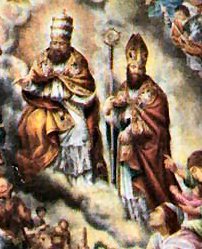
Memorial of Sts. Cornelius, Pope, and Cyprian, Bishop, Martyrs; Ember Wednesday
Other Commemorations: St. Ninian, Bishop (Scotland, Feast; RM); Sts. Euphemia, Martyr (RM); St. Ninian, Bishop (RM); Bl. Victor III, Pope (RM); St. Juan Macias, Religious (RM)
MASS READINGS
September 16, 2026 (Readings on USCCB website)
PROPERS [Show]
COLLECT PRAYER
Memorial of Sts. Cornelius and Cyprian: O God, who gave Saints Cornelius and Cyprian to your people as diligent shepherds and valiant Martyrs, grant that through their intercession we may be strengthened in faith and constancy and spend ourselves without reserve for the unity of the Church. Through our Lord Jesus Christ, your Son, who lives and reigns with you in the unity of the Holy Spirit, God, for ever and ever.
Recipes (2)
Activities (7)
Prayers (3)
Library (7)
Blog & Podcasts (10)
Today's Memorial of Saints Cornelius (d. 253) and Cyprian (190-258) commemorates two friends in the service of Christ and his Church. Cornelius, a Roman, was the twenty-first Pope during the reign of the Emperor Gallus and Volusian. He had to oppose Novatian, the first anti-pope, who believed that apostates who repented could not be forgiven. Helped by St. Cyprian, Cornelius confirmed his papal authority. He was beheaded in exile at Civitavecchia, Italy in 253. Saints Cyprian and Cornelius are mentioned in the Roman Canon (Eucharistic Prayer I) of the Mass.
The Roman Martyrology also commemorates:
—Sts. Euphemia of Chalcedon (c. 290-c. 305), a virgin of Chalcedon, was martyred under Diocletian. Her cult was widespread in the East. Over her tomb was built the basilica in which assembled the Council of Chalcedon in 451. St. Euphemia was also venerated in the West, especially in Italy.
—St. Ninian (c. 360-c. 432) was the first apostle of Christianity in Scotland. He was born in Cumbria of Christian parents around 360 and was educated in Rome. He became a priest and was ordained a bishop, probably by Pope Siricius, after which he was sent to evangelize Scotland. He landed there in 397 at Whithorn near Solway Firth, where he built a stone cathedral called Candida Casa (‘White House’). He died around the year 432 and was buried at Whithorn.
—Blessed Pope Victor III (1027-1087) was elected in 1086. He was described as a man of “unusual holiness” and he much preferred to remain the abbot of his beloved Monte Cassino monastery than become Pope. Reluctant and also gravely ill, Victor had a short and unremarkable Papacy. Victor is one of the few Popes to be buried outside of St. Peter’s Basilica. His body is entombed in the chapter-house of Monte Cassino (where he did his greatest work), but it was briefly moved to Rome during World War II for safekeeping. Pope Victor III was beatified by Pope Leo XIII in 1887.
—St. Juan de Macias (or John Massias) (1585-1645) was a Dominican lay brother at Lima, Peru and a friend of St. Martin de Porres. He was born in Ribera, Spain, to a noble family but orphaned at a young age. He went to Peru to work on a cattle ranch before entering the Dominicans at Lima as a lay brother, assigned as the porter. He was known for his austerities, miracles, and visions. John was canonized by Pope St. Paul VI in 1975.
The beginning of the Autumn or September Embertide, begins today with Ember Wednesday. These Ember Days fall after the third Sunday of September near the Feast of the Exaltation of the Holy Cross (September 14) and are days of thanksgiving for the completed harvest of fruits and grapes, being historically commemorated as a "wine-press feast." But these Ember Days are also days of penance and atonement since the traditional liturgy connected them with the Jewish celebration of the New Year and Day of Atonement, Yom Kippur. The Stational churches were part of the Ember Days, with Ember Wednesdays always being with Mary, Station with Santa Maria Maggiore (St. Mary Major).
The Ember Days also are no longer universally marked on the General Roman Calendar. In the 1969 Calendar reform (see General Instruction on the Roman Missal), the observance of Ember Days was left to the discretion of the conference of bishops, and can be adjusted and expanded. In the USA most bishops have chosen to not officially observe Ember Days, but in other countries they are observed. While Ember Days are not part of the whole community worship, personal observance at home or small communities is not discouraged.
See September or Fall Ember Days and Contemporary Observation of Ember Days.
Autumn Embertide: Ember Wednesday
The Ember days of Autumn are days of thanksgiving for the completed harvest of fruits and grapes. The pre-1962 liturgy connects the Ember Days with the solemn commemoration of the Jewish New Year’s celebration of the Old Testament (Rosh Hashanah) and the great Day of Atonement (Yom Kippur). These Ember days, therefore, have become days of thanksgiving and atonement. There are four focal points for the September Embertide:
- Days of Thanksgiving. The Autumn Ember Days days of thanksgiving for the completed harvests of fruits and particularly grapes. The former liturgy connected the Ember Days with are outside the main liturgical seasons (Advent, Christmas, Lent and Easter) but are closest to the Fall Equinox. We are giving special thanks to God for the gifts of the fall harvest, particularly the grapes, which give us the gift of wine for the Eucharist.
- Days of Atonement, Spiritual Renewal and Refreshment. Holy Mother Church provides us with yet another opportunity to redirect, refresh and renew.
- Prayer for Priests. The Church no longer regularly ordains priests during the Quarterly Ember Days, but this is a special time, particularly Ember Saturday, to pray for priests and for seminarians, particularly the ones who are about to be ordained within the year.
- Reflecting on the Spirit of the Season.. Each set of Ember Days reflect the season of the Liturgical Year in which they occur. The Ember Days in September are outside the main liturgical seasons (Advent, Christmas, Lent and Easter) and are closest to the Fall Equinox in the Northern Hemisphere, when the days grow shorter and nights grow longer. September is harvesting time, and a time of preparation for winter. It is a busier time for most, and not just because of agrarian needs. September marks a time of transition with the beginning of the academic year.
Wednesday of Ember week was traditionally devoted to our Lady and in imitation of her it was a day of reflection and spiritual orientation. All four Ember Wednesdays were celebrated in the station church of St. Mary Major.
September Ember Wednesday Meditation
This excerpt from Pius Parsch is based on the 1962 Missal. The current Missal does not contain special propers and readings for Ember Days.
Wednesday of Ember week is always “Mary’s Day”’ hence at Rome the divine liturgy is celebrated in the Basilica of St. Mary Major.
Hardly any other Ember Mass brings us as much of the spirit of the olden Ember festivals as this. The opening words put us immediately in a joyous mood. And at the climax of the celebration we proclaim with the Church, “The joy of the Lord is our true strength.” It is an idea worth remembering. Christian does not seek to lame the vital forces of life but to purify and ennoble them. Where there is life, there must be feeling, spirit, joy. One should not think that such expressions of life are questionable or proper only to the children of the world. Nor must joy confine itself to the supernatural, over the natural too we may be happy. Ember week provides a splendid occasion to show joyous gratitude for the gifts and fruits of nature.
Now a few observations on the three Lessons, for in striking graduation they bring to our attention three primary Ember blessings: bodily food—spiritual nourishment—fasting.
First Lesson, Amos 9:13-15. Amos, the shepherd-prophet, projects the prosperity of the Holy Land after the return from exile. He is, we know, describing in prophetical perspective the spiritual well-being of God’s kingdom upon earth and the blessedness of the “new heaven and the new earth” hereafter. The early Church, however, would adapt in adopting and used the text to score the produce of nature presently being harvested. We are being urged to show a most sincere gratitude to the Father and Source of whatever comes from field, orchard, or garden. Let nature be a big picture-book illustrating the good and great God on every page. It is the warmth of His love that is ripening autumn’s baskets of vegetables, grain, and fruit.
Second Lesson, 2 Esdras 8:1-10 or Nehemiah 8:1-10. Alongside these baskets of food for our bodies, the liturgy places supernatural nourishment, the word of God. For the Lord once said: “Not from bread alone does man live, but by every word that comes from the mouth of God.” On few occasions in history was the word of God more highly esteemed than that recorded in the second Lesson. Esdras read from the inspired scroll; with holy reverence the people listened before worshipping God present in His words, exultingly joyous over the divine revelation. These then are the two principal blessings of the past quarter-year, bread for the body and the word of God for the soul. They have come to us in abundance. And we are grateful.
Third Lesson, Mark 9:16-28. How does fasting fit into the picture? Human nature is subject to the curse of original sin; like the boy in the Gospel we come under the devil’s influence, and his power cannot be counteracted with the usual tools. Extraordinary tools are necessary, like “prayer and fasting.” A good reason, surely, for the quarterly Ember days. With thankful hearts we may enjoy the fruits of earth, praising the good God; the inspired words of holy Scripture may bring untold spiritual blessings; nevertheless, more is needed. to tame proud and stubborn nature the mighty levers of prayer and fasting must be brought into action, not merely our own individual praying and fasting, but that of Christ too, viz., the oblation of His whole life as it comes to us through Mass and holy Communion.
—Excerpted from Pius Parsch, Year of Grace, Volume 5
September Ember Wednesday
Station with Santa Maria Maggiore (St. Mary Major):
We humbly ask today's great patroness, Mary, the Mother of Jesus, to obtain for us a true ember spirit and to accompany us as we approach the holy Table "to eat fat meats, and drink sweet wine, and send portions to them that have not prepared for themselves; because it is the holy (ember) day of the Lord; be not sad, for the joy of the Lord is our strength." (Msgr. Martin Hellriegel)
For more on Santa Maria Maggiore, see:
For further information on the Station Churches, see The Stational Church.
St. Cornelius
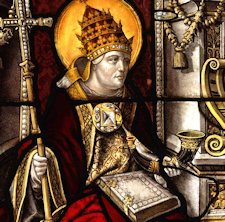 Pope Cornelius (251-253) was the successor to Pope Fabian. During his reign a controversy arose concerning the manner of reinstating those who had fallen from the faith under the duress of persecution. The Novatians accused the Pope of too great indulgence and separated themselves from the Church. With the help of St. Lucina, Cornelius transferred the remains of the princes of the apostles to places of greater honor. On account of his successful preaching the pagans banished him to Centumcellae, where he died. St. Cyprian sent him a letter of condolence. At the time of Pope Cornelius there were at Rome forty-six priests, seven deacons, seven subdeacons, forty-two acolytes, fifty-two clerics and more than five hundred widows who were supported by the Church (according to Cornelius' letter to Bishop Fabian of Antioch).
—Excerpted from The Church's Year of Grace, Pius Parsch
Patronage: against earache; against epilepsy; against fever; against twitching; cattle; domestic animals; earache sufferers; epileptics; Albano Sant’Alessandro, Italy; Kornelimünster, Germany
Symbols and Representation: horn and triple papal cross; cows or oxen; font; tall cross; sword; also papal symbols of tiara, church and/or triple cross; martyr's crown; palm frond (for martyr); papal tiara
Highlights and Things to Do:
- Read more about St. Pope Cornelius:
- Catholic Cuisine has an idea for Orecchiette "Little Ears" Pasta for St. Cornelius.
St. Cyprian
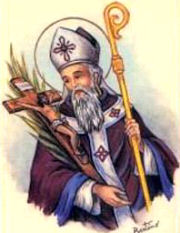 Thascius Caecilius Cyprianus, illustrious as a pagan rhetorician in Carthage, embraced the true faith in the year 246 and was soon thereafter consecrated priest and bishop of that city (248). He was an energetic shepherd of souls and a prolific writer. He defended the unity of the Church against schismatic movements in Africa and Italy, and greatly influenced the shaping of Church discipline relative to reinstating Christians who had apostatized. He fled during the Decian persecution but guided the Church by means of letters. During the Valerian persecution (258) he was beheaded. He suffered martyrdom in the presence of his flock, after giving the executioner twenty-five pieces of gold. St. Jerome says of him: "It is superfluous to speak of his greatness, for his works are more luminous than the sun." Cyprian ranks as an important Church Father, one whose writings are universally respected and often read in the Divine Office. His principal works are: On the Unity of the Church; On Apostates; a collection of Letters; The Lord's Prayer; On the Value of Patience.
—Excerpted from The Church's Year of Grace, Pius Parsch
Patronage: Algeria (proclaimed on 6 July 1914 by Pope Pius X); North Africa; Albano Sant’Alessandro, Italy
Symbols and Representation: Twenty gold coins; crown; axe; palm frond (for martytr); martyr's crown; bishop's mitre
Highlights and Things to Do:
- Listen to Catholic Culture's podcasts on St. Cyprian:
- Catholic Culture's Audiobook: St. Cyprian of Carthage—Letter to Donatus read by James Majewski
- Way of the Fathers Ep. 18—The Short, Happy Life of Cyprian of Carthage by Mike Aquilina
- Read St. Cyprian's encouraging words to the martyrs of his day.
- Learn more about Roman persecutions, catacombs, apostates, Novatian and Novatus.
- See the collection of St. Cyprian's writings at Catholic Culture and Documenta Catholica Omnia.
- Study the Sacrament of Penance (pdf file).
- Read The Life and Passion of Cyprian, Bishop and Martyr, by Pontius the Deacon.
- Read The Treatises of S. Cæcilius Cyprian, Bishop of Carthage, and Martyr by St. John Henry Newman.
- Read more about St. Cyprian:
Sts. Euphemia of Chalcedon
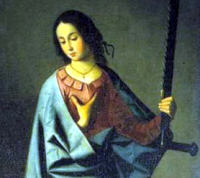 At Chalcedon, were the deaths of St. Euphemia, virgin and martyr, under Emperor Diocletian and the proconsul Priscus. For her faith in our Lord she was subjected to tortures, imprisonment, blows, the torment of the wheel, fire, the crushing weight of stones, the teeth of the beasts, scourging with rods, the cutting of sharp saws, and burning pans, all of which she survived. But when she was again exposed to the beasts in the amphitheater, praying to our Lord to receive her spirit, one of the animals inflicted a bite on her holy body although the rest of them licked her feet, and she yielded her unspotted soul to God . . . At Rome, the holy martyrs Lucy, a noble matron, and Geminanus, were subjected to grievous afflictions and were for a long time tortured by the command of Emperor Diocletian. Finally, being put to the sword, they obtained the glorious victory of martyrdom.
—Excerpted from The Roman Martyrology
Patronage: Alba Adriatica, Italy; Rovinj, Croatia
Often Depicted As: with a lion or bear or snakes, stabbed with a sword, holding a lily and palm of martyrdom
Highlights and Things To Do:
- Euphemia is also honored by the Antiochian Orthodox Church and the Orthodox Church in America. See St. Euphemia the All-Praised and Great Martyr Euphēmia the All-praised.
- Read more about St. Euphemia:
- See Saint Euphemia: The Iconography.
St. Ninian
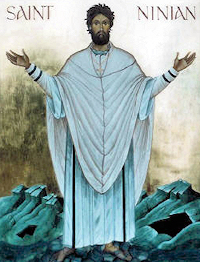 Bishop and confessor; date of birth unknown; died about 432; the first Apostle of Christianity in Scotland. The earliest account of him is in Bede (Hist. Eccles., III, 4): "the southern Picts received the true faith by the preaching of Bishop Ninias, a most reverend and holy man of the British nation, who had been regularly instructed at Rome in the faith and mysteries of the truth; whose episcopal see, named after St. Martin the Bishop, and famous for a church dedicated to him (wherein Ninias himself and many other saints rest in the body), is now in the possession of the English nation. The place belongs to the province of the Bernicians and is commonly called the White House [Candida Casa], because he there built a church of stone, which was not usual amongst the Britons." The facts given in this passage form practically all we know of St. Ninian's life and work.
The most important later life, compiled in the twelfth century by St. Ælred, professes to give a detailed account founded on Bede and also on a "liber de vita et miraculis eius" (sc. Niniani) "barbarice scriptus", but the legendary element is largely evident. He states, however, that while engaged in building his church at Candida Casa, Ninian heard of the death of St. Martin and decided to dedicate the building to him. Now St. Martin died about 397 so that the mission of Ninian to the southern Picts must have begun towards the end of the fourth century. St. Ninian founded at Whithorn a monastery which became famous as a school of monasticism within a century of his death; his work among the southern Picts seems to have had but a short-lived success. St. Patrick, in his epistle to Coroticus, terms the Picts "apostates", and references to Ninian's converts having abandoned Christianity are found in Sts. Columba and Kentigern. The body of St. Ninian was buried in the church at Whithorn (Wigtownshire), but no relics are now known to exist. The "Clogrinny", or bell of St. Ringan, of very rough workmanship, is in the Antiquarian Museum at Edinburgh.
—Excerpted from New Advent
Patronage: The diocese of Antigonish, Nova Scotia, Canada and the diocese of Galloway, Scotland
Often Represented As: bishop with crozier and book
Highlights and Things to Do:
- Read more about St. Ninian:
- St. Aelred wrote a Life of Ninian.
Blessed Pope Victor III
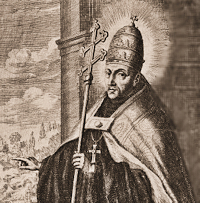 Blessed Pope Victor III was born a Prince of the dukes of Benevento around the year 1026, the only son of Prince Landulf V. Victor was always monastically inclined, having skillfully avoided not one, but two arranged marriages before opting for life as a hermit and monk. He eventually entered the monastery of Monte Cassino, where he succeeded Abbot Frederick when the latter was elected Pope Stephen IX. As abbot, Victor (then Desiderius) became renowned as the greatest abbot the monastery had seen since St. Benedict himself.
Taking office as pope on May 24, 1086, Victor had little time or energy to do much, given his age and the tenuous situation with Antipope Clement III lurking in and out of Rome. It’s said that Victor was hardly able to make it through an entire Mass during his time as pope due to ill health. He’s credited with authoring a work on the miracles of St. Benedict and other saints at Monte Cassino. Pope Victor III died September 16, 1087 and is buried in the abbey he called home for nearly three decades.
—Excerpted from Flocknote
Highlights and Things to Do:
- Read more about Bl. Pope Victor III:
St. Juan Macias (or John Massias)
St. Juan Macias lived in Lima, Peru at the same time as St. Martin de Porres and only 5 years after the death of St. Rose of Lima. Originally from Spain, St. Juan Macias first met the Dominicans at the age of 16 but was told in a revelation that he wasn’t to enter yet. Later, he traveled to the New World, and at the age of 35, he entered the Dominican convent of St. Mary Magdalene in Lima (St. Martin was in the convent of Santo Domingo, otherwise known as Holy Rosary) as a laybrother (cooperator brothers were called laybrothers then).
Now while many historians might try to avoid talk of miracles and the supernatural and look solely at the heroic sanctity of saints, sometimes it is good to look at how God can work in these scientifically unexplainable ways. And even though St. Juan Macias wasn’t known to be a miracle worker of the magnitude of saints like St. Vincent Ferrer or St. Martin de Porres, he still lived a life full of supernatural graces. For instance, he was attacked by demons from the moment that he enter the Order, he had visions of St. John the Evangelist throughout his life, he would disappear when the overly curious or wealthy were looking at him, and he was visited by many of the souls whom he had liberated from Purgatory (he is said to have freed more than a million through his prayers and sacrifices.
He was well known mainly for two things during his life. First, he was known to love the Rosary, which he began to pray as a child in Spain while he shepherded his uncle’s flock of sheep. He would pray the Rosary constantly, especially when he had any moment of free time. Secondly, he was known for his generosity to the poor, 200 of whom he fed every day.
He was greatly aided in this by his little donkey that he sent through Lima. He had a little sign which put on it asking for donations for the poor. The donkey, knowing his route perfectly, would travel through the streets and come back with benefactions for the city’s poor. Often the donkey would stop at certain locations and make loud noises so that the people inside would come out to make their donations.
St. Juan Macias was beatified with St. Martin de Porres in 1837 by Pope Gregory XVI and was canonized in 1975 by Pope Paul VI.
—Excerpted from Dominican Friars, Province of St. Joseph
Highlights and Things To Do:
- Read more about St. Juan:
- Read Beneath Mary's Mantle: St. Juan Macias (1585 to 1645).
- Read about St. Juan's devotion for saving the Poor Souls.
- Three great saints of Lima, Peru honored together.