Lent: March 14th
Saturday of the Third Week of Lent
Other Commemorations: St. Matilda (RM)
MASS READINGS
March 14, 2026 (Readings on USCCB website)
PROPERS [Show]
COLLECT PRAYER
Saturday of the Third Week of Lent: Rejoicing in this annual celebration of our Lenten observance, we pay, O Lord, that, with our hearts set on the paschal mysteries, we may be gladdened by their full effects. Through our Lord Jesus Christ, your Son, who lives and reigns with you in the unity of the Holy Spirit, God, for ever and ever.
Recipes (1)
Activities (3)
Prayers (15)
Library (0)
Blog & Podcasts (0)
The gifts received by us from God are derived not from ourselves but from the Holy Spirit, and are to be used, in a spirit of humility, in the service of the Church and of our brothers.
The parable of the Pharisee and the Publican is a striking reminder that we have no grounds for self-satisfaction. There are two classes of men, said Pascal: saints, who consider themselves guilty of every fault, and sinners, who do not feel guilty of anything. The former are humble and God will exalt them; the latter are proud and will be humbled by punishment. Going even deeper, St. Irenaeus defined man as "the receptacle of God's gifts."
God is not content with calling on us to observe His commandments; He gives us His Holy Spirit to transform our lives and make them truly Christian. —St. Andrew Daily Missal
St. Matilda (895-968) (also known as "Maud" or "Maude"), Queen of Germany and wife of King Henry I is commemorated today in the Roman Martyrology. She was well known throughout the realm for her generosity, she taught the ignorant, comforted the sick, and visited prisoners. She was betrayed by Otto after Henry’s death when he falsely accused her of financial mismanagement.
Meditation for Saturday of the Third Week of Lent—Confession
Fifty years ago, Saturday was the day when many Catholics “went to confession,” which meant acknowledging the sins and failures of the past week, accepting a penance (usually in the form of a brief series of prayers), and then receiving sacramental absolution. The practice of “going to confession” has decreased dramatically throughout the Catholic world over the past half-century, despite the Church’s efforts to make it more accessible and less threatening (which it rarely was, the mythology surrounding the dark confessional notwithstanding). At precisely the time in Western culture when various forms of psychotherapy are flourishing, Catholics have increasingly abandoned the ancient forms of cleansing guilt to which they once came readily. A diminished sense of sin surely has something to do with this anomaly. So, perhaps, does a too-easy sense of familiarity with holy things, such that twenty-first-century postmoderns do not feel any need to be cleansed before approaching the Lord. Both attitudes deserve reexamination during the pilgrimage of Lent.
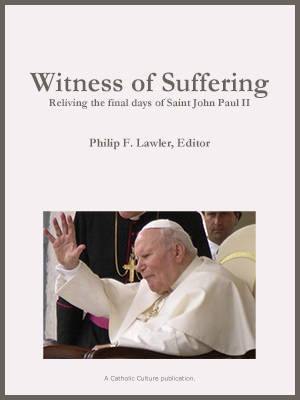
In his 1984 postsynodal apostolic exhortation, Reconcilatio et Paenitentia, Pope John Paul II characteristically tried to reframe the Church’s thinking about “going to confession” and receiving the Sacrament of Penance: what sometimes seemed a strange or arcane Catholic practice, John Paul proposed, should in fact be understood in terms of the personal drama of every human life, which is the drama of freedom. Taking freedom seriously means taking the abuse of freedom, which is sin, seriously. And to take sin seriously requires us to name the wounds in our lives as the first step toward their being healed. Thus, John Paul taught, the very fact of someone kneeling to name the wounds he or she bears adds to that man’s or woman’s human dignity. Confession of sins, far from being demeaning or dehumanizing, is liberating and ennobling.
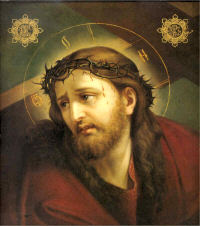
Regular confession of sins is also, the pope suggested, an essential part of configuring oneself to Christ, for the Cross of Christ is the fountainhead from which all reconciliation between God and humanity flows. Indeed, the very geometry of the Cross expresses the two dimensions of the reconciliation every sensitive soul seeks: the vertical beam symbolizes our need for reconciliation with God, while the horizontal crossbeam represents the imperative of God for the guilt we carry along the journey of life; the human family craves reconciliation within itself. Both aspirations are embodied in the cross.
In an interview with a local newspaper in 2011, Cardinal Francis E. George, OMI, the archbishop of Chicago, said that he intended to devote more of his priestly life to the ministry of the confessional as he entered his meridian seventies. “The most important conversations on the planet take place in the confessional,” the cardinal said. It’s where you have a soul who bares who they are before God and you’re witness to that. It’s God who forgives, but you’re witness to that and you try to assist. If [I] can do that well for just a few people, I’ll be able to tell the Lord…I did a few things right anyway.” And those penitents will be able to approach the glory of the Lord cleansed, like Moses, Aaron, and the priests of the Old Covenant.
—George Weigel, Roman Pilgrimage: The Station Churches
Saturday of the Third Week of Lent
Station with Santa Susanna (St. Susan):
The Station is in the church of St. Susanna, virgin and martyr of Rome. The first Christian place of worship was built here in the 4th century. It was probably the titulus of Pope Caius (283-296). Caius was St. Susanna's uncle, and tradition claims that the church stands on the site of her martyrdom. The church is now the national parish of the United States since 1922.
Since 2019, there is a temporary closure. Currently the replacement Station Church is S. Maria della Vittoria (St. Mary of Victory).
For more on Santa Susanna, see:
- Churches of Rome
- The Station Churches of Rome
- Rome Art Lover
- Roman Churches
- PNAC
- Aleteia
- Station Church
- The Catholic Traveler
- Roman Despatches
- Walks in Rome
For more on S. Maria della Vittoria, see:
- Rome Art Lover
- Churches of Rome
- The Station Churches of Rome
- Roman Churches
- Walks in Rome
- Roman Despatches
For further information on the Station Churches, see The Stational Church.
St. Matilda (also known as "Maud" or "Maude")
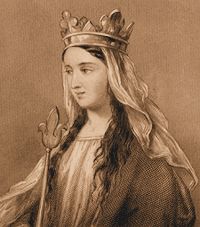 This princess was daughter of Theodoric, a powerful Saxon count. Her parents placed her very young in the monastery of Erford, of which her grandmother Maud was then abbess. Our Saint remained in that house, an accomplished model of all virtues, till her parents married her to Henry, son of Otho, Duke of Saxony, in 913, who was afterwards chosen king of Germany. He was a pious and victorious prince, and very tender of his subjects.
Whilst by his arms he checked the insolence of the Hungarians and Danes, and enlarged his dominions by adding to them Bavaria, Maud gained domestic victories over her spiritual enemies more worthy of a Christian and far greater in the eyes of Heaven. She nourished the precious seeds of devotion and humility in her heart by assiduous prayer and meditation. It was her delight to visit, comfort, and exhort the sick and the afflicted; to serve and instruct the poor, and to afford her charitable succor to prisoners. Her husband, edified by her example, concurred with her in every pious undertaking which she projected.
After twenty-three years' marriage God was pleased to call the king to himself, in 936. Maud, during his sickness, went to the church to pour forth her soul in prayer for him at the foot of the altar. As soon as she understood, by the tears and cries of the people, that he had expired, she called for a priest that was fasting to offer the holy sacrifice for his soul.
She had three sons: Otho, afterwards emperor; Henry, Duke of Bavaria; and St. Brunn, Archbishop of Cologne. Otho was crowned king of Germany in 937, and emperor at Rome in 962, after his victories over the Bohemians and Lombards.
The two oldest sons conspired to strip Maud of her dowry, on the unjust pretence that she had squandered the revenues of the state on the poor. The unnatural princes at length repented of their injustice, and restored to her all that had been taken from her.
She then became more liberal in her alms than ever, and founded many churches, with five monasteries.
In her last sickness she made her confession to her grandson William, the Archbishop of Mentz, who yet died twelve days before her, on his road home. She again made a public confession before the priests and monks of the place, received a second time the last sacraments, and, lying on a sack-cloth, with ashes on her head, died on the 14th of March in 968.
—Excerpted from Lives of the Saints, by Alban Butler, Benziger Bros. ed. [1894]
Patronage: death of children; disappointing children; falsely accused people; large families; people ridiculed for their piety; queens; second marriages; widows
Symbols and Representation: alms; bag of money; crown; orb; scepter; purse, indicative of her generosity; queen with a whip; queen holding a church
Highlights and Things to Do:
- Read more about St. Matilda:
- Read Spotlight on Queen Mathilda of Saxony.
- St. Matilda's remains are in Quedlinburg Abbey next to her husband. The church is now used by the Lutheran Evangelical Church in Germany