Lent: March 3rd
Tuesday of the Second Week of Lent; Opt. Mem. of St. Katharine Drexel, Virgin (USA)
Other Commemorations: St. Cunegundes, Virgin and Empress (RM)
MASS READINGS
March 03, 2026 (Readings on USCCB website)
PROPERS [Show]
COLLECT PRAYER
Tuesday of the Second Week of Lent: Guard your Church, we pray, O Lord, in your unceasing mercy, and, since without you mortal humanity is sure to fall, may we be kept by your constant helps from all harm and directed to all that brings salvation. Through our Lord Jesus Christ, your Son, who lives and reigns with you in the unity of the Holy Spirit, God, for ever and ever.
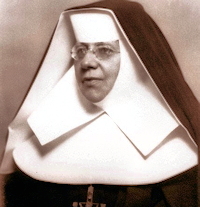
Optional Memorial of St. Katharine Drexel: God of love, you called Saint Katharine Drexel to teach the message of the Gospel and to bring the life of the Eucharist to the Native American and African American peoples; by her prayers and example, enable us to work for justice among the poor and the oppressed, and keep us undivided in love in the Eucharistic community of your Church. Through our Lord Jesus Christ, your Son, who lives and reigns with you in the unity of the Holy Spirit, God, for ever and ever.
Recipes (4)
Activities (4)
Prayers (8)
Library (1)
Blog & Podcasts (1)
Jesus’ condemnation of religious externalism, hypocrisy and vanity is not meant to correct only the Pharisees of his time. It is also directed at us. We should look into our Lenten practices of piety and works of charity and see whether they are tainted with hypocrisy. During the celebration that follows, Christ, the servant of Yahweh, will increase in us the spirit of human service.
The “phylacteries” mentioned in the gospel were bands of parchment enclosed in small boxes worn on the forehead and left forearm where they were fixed by straps. On these bands were inscribed the most important texts of the Law. The “fringes” were the tassels which the Law required to be worn at the four corners of the cloak. By wearing broad phylacteries and long tassels the Pharisees intended to show clearly their fidelity to the Law. —St. Andrew MissalThe dioceses of the United States celebrate the Optional Memorial of St. Katharine Drexel (1858-1955). Born into a wealthy Philadelphia family, Katharine took an avid interest in the material and spiritual well-being of African and Native Americans. She founded the Sisters of the Blessed Sacrament for Indians and Colored People, and opened mission schools in the West for Native Americans and in the South for African Americans. In 1915 she founded Xavier University in New Orleans. At her death, there were more than 500 sisters teaching in 63 schools.
The Roman Martyrology commemorates St. Cunegundes (d. 1040) who was Empress of the Holy Roman Empire. She and her husband, St. Henry II guarded perpetual virginity in their marriage. Together the couple carried out many pious works and practiced prayer and mortification. After his death in 1024, she went to the Convent of Kaufungen (Hesse), which she had founded. She died there in 1040 and was canonized by Pope Innocent III in 1200.
Meditation for Tuesday of the Second Week of Lent—The Narrow Formalism of the Pharisees
The excessive formalism of the Pharisees led of necessity to pride. Being themselves the authors of many precepts, they believed themselves to be equally the authors of their own sanctity. They were the "separated," the pure, untouched by untying unclean. Hence what had they wherewith to reproach themselves? were they not perfectly "correct" in every way? Therefore they had the utmost esteem for themselves. Their overweening pride urged them "to love salutations in the market-place, and the first chairs in the synagogues, and the chief rooms at feasts."
The Savior's extraordinary condescension towards publicans and sinners, rejected by them as unclean, His independence in regard to the Law of the Sabbath, for He said that He was the Lord of the Sabbath, the miracles whereby He drew the people to Him could not fail to disquiet them. the people to Him could not fail to disquiet them. the people to Him could not fail to disquiet them.
Throughout the Gospel we see them full of hatred against Jesus, striving to destroy His authority with the multitude, to turn His disciples away from Him and to deceive the people in order to hinder Him from fulfilling His mission of salvation.
—Dom Columba Marmion, Christ in His Mysteries

Tuesday of the Second Week of Lent
Station with Santa Balbina (St. Balbina):
2026 Replacement Church: Basilica di San Bartolomeo all'Isola Tiberina
The original station church for today was named after St. Balbina was a virgin and martyr (130) and the daughter of the tribune and martyr, St. Quirinus. The church is one of the oldest churches in Rome, and was probably built in the 4th century above the house of the consul Lucius Fabius Cilone. The first reference to it is found in a 6th century document, where it is referred to as Sanctae Balbinae. It was consecrated by Pope St. Gregory the Great.
For more on Santa Balbina, see:
- Churches of Rome info
- The Station Churches of Rome
- Rome Art Lover
- Roman Churches
- PNAC
- Aleteia
- Station Church
- The Catholic Traveler
- Roman Despatches
- Walks in Rome
2026 Replacement Church:
Station with San Bartolomeo (St. Bartholomew)
The Basilica di San Bartolomeo all'Isola Tiberina (Basilica of St. Bartholomew on the Tiber Island) houses the remains of St. Bartholomew the Apostle in the red porphyry sarcophagus under the high altar. The basilica was originally built in 998 on Tiber Island in Rome, over an ancient temple dedicated to Aesculapius, god of medicine. Due to flood damage from 1557, the church was rebuilt in the 17th century. On October 12, 2002, Pope St. John Paul II dedicated the Basilica of St. Bartholomew on the Island as a memorial place for the “new witnesses of the faith” of the 20th and 21st centuries.
For more on San Bartolomeo all'Isol, see:
For further information on the Station Churches, see The Stational Church.
St. Katharine Drexel
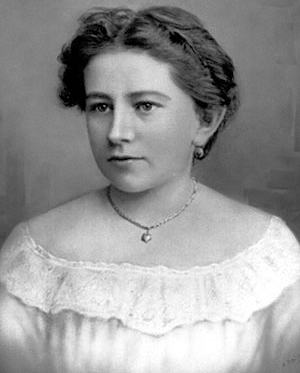 Katharine Drexel was born in Philadelphia in 1858. She had an excellent education and traveled widely. As a rich girl, she had a grand debut into society. But when she nursed her stepmother through a three-year terminal illness, she saw that all the Drexel money could not buy safety from pain or death, and her life took a profound turn.
She had always been interested in the plight of the Indians, having been appalled by reading Helen Hunt Jackson's A Century of Dishonor. While on a European tour, she met Pope Leo XIII and asked him to send more missionaries to Wyoming for her friend Bishop James O'Connor. The pope replied, "Why don't you become a missionary?" His answer shocked her into considering new possibilities.
Back home, she visited the Dakotas, met the Sioux leader Red Cloud and began her systematic aid to Native American missions.
She could easily have married. But after much discussion with Bishop O'Connor, she wrote in 1889, "The feast of Saint Joseph brought me the grace to give the remainder of my life to the Indians and the Colored." Newspaper headlines screamed "Gives Up Seven Million!"
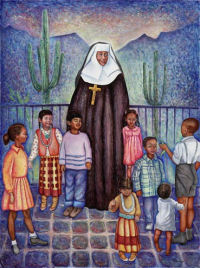 After three and a half years of training, she and her first band of nuns (Sisters of the Blessed Sacrament for Indians and Colored) opened a boarding school in Santa Fe. A string of foundations followed. By 1942 she had a system of African American Catholic schools in thirteen states, plus forty mission centers and twenty-three rural schools. Segregationists harassed her work, even burning a school in Pennsylvania. In all, she established fifty missions for Native Americans in sixteen states.
Two saints met when she was advised by Mother Cabrini about the "politics" of getting her order's rule approved in Rome. Her crowning achievement was the founding of Xavier University in New Orleans, the first university in the United States for African Americans.
At seventy-seven, she suffered a heart attack and was forced to retire. Apparently her life was over. But now came almost twenty years of quiet, intense prayer from a small room overlooking the sanctuary. Small notebooks and slips of paper record her various prayers, ceaseless aspirations and meditation. She died at ninety-six and was canonized in 2000.
—Excerpted from Saint of the Day, Leonard Foley, O.F.M.
Symbols and Representation: An empress in imperial robes, sometimes holding a church
Highlights and Things to Do:
- St. Katharine had a great love for the Eucharist, the center and source of her activity. Make a family visit to the Blessed Sacrament today.
- Read more about St. Katharine:
- St. Katharine was the daughter of Francis Anthony and Emma (Bouvier) Drexel who were generous with their money.
- Read more about the Sisters of the Blessed Sacrament which she founded. Also, see the Catholic Encyclopedia article.
- St. Katharine was originally buried in the National St. Katharine Drexel Shrine in Philadelphia, Pennsylvania, but was transferred in 2017/2018 to the Cathedral of Sts. Peter and Paul also in Philadelphia.
- St. Katharine became a spiritual mother of African Americans and Native Americans, fighting for equal rights for these neglected ethnic groups. She was particularly concerned with achieving a quality education for these people. Find out about nearby educational programs for underprivileged inner city children (an excellent parent organization concerned with this is Youth Service International) and look for ways to support them. If you cannot give any of your time, consider making a small donation.
- St. Katharine also founded Xavier University in New Orleans, the first US University for blacks.
- St. Katharine grew up in a wealthy home but her parents instilled in her the understanding that her wealth belonged to her only on loan so that she could share it with others. She gave generously and with full trust in God. Do you tithe on a regular basis? Do you encourage your children to be generous with their allowance money?
- Visit this website about Katharine Drexel that features many photos, a history and information about her shrine.
- See Catholic Cuisine for food ideas for St. Katharine.
St. Cunegundes
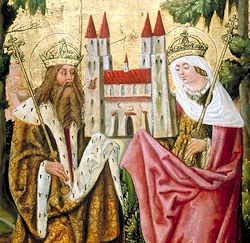 Saint Cunegundes was the daughter of Siegfried, the first Count of Luxemburg, and Hadeswige, his pious wife. They instilled into her from her cradle the most tender sentiments of piety, and married her to St. Henry, Duke of Bavaria, who, upon the death of the Emperor Otho III., was chosen king of the Romans, and crowned on the 6th of June, 1002. She was crowned at Paderborn on St. Laurence's day. In the year 1014 she went with her husband to Rome, and received the imperial crown with him from the hands of Pope Benedict VIII. She had, by St. Henry's consent, before her marriage made a vow of virginity. Calumniators afterwards made vile accusations against her, and the holy empress, to remove the scandal of such a slander, trusting in God to prove her innocence, walked over red-hot ploughshares without being hurt. The emperor condemned his too scrupulous fears and credulity, and from that time they lived in the strictest union of hearts, conspiring to promote in everything God's honor and the advancement of piety.
Going once to make a retreat in Hesse, she fell dangerously ill, and made a vow to found a monastery, if she recovered, at Kaffungen, near Cassel, in the diocese of Paderborn, which she executed in a stately manner, and gave it to nuns of the Order of St. Benedict. Before it was finished St. Henry died, in 1024. She earnestly recommended his soul to the prayers of others, especially to her blear nuns, and expressed her longing desire of joining them. She had already exhausted her treasures in founding bishoprics and monasteries, and in relieving the poor, and she had therefore little left now to give. But still thirsting to embrace perfect evangelical poverty, and to renounce all to serve God without obstacle, she assembled a great number of prelates to the dedication of her church of Kaffungen on the anniversary day of her husband's death, 1025; and after the gospel was sung at Mass she offered on the altar a piece of the true cross, and then, putting off her imperial robes, clothed herself with a poor habit; her hair was cut off, and the bishop put on her a veil and a ring as a pledge of her fidelity to her heavenly Spouse.
After she was consecrated to God in religion, she seemed entirely to forget that she had been empress, and behaved as the last in the house, being persuaded that she was 30 before God. She prayed and read much, worked with her hands, and took a singular pleasure in visiting and comforting the sick.
Thus she passed the last fifteen years of her life. Her mortifications at length reduced her to a very weak condition and brought on her last sickness. Perceiving that they were preparing a cloth fringed with gold to cover her corpse after her death, she changed color and ordered it to be taken away; nor could she be at rest till she was promised she should be buried as a poor religious in her habit. She died on the 3d of March, 1040. Her body was carried to Bamberg and buried near that of her husband. She was solemnly canonized by Innocent III. in 1200.
—Excerpted from Lives of the Saints, by Alban Butler, Benziger Bros. ed. [1894]
Patronage: archdiocese of Bamberg, Germany; city of Bamberg, Germany; Lithuania; Luxembourg; Poland
Highlights and Things to Do:
- Read more about St. Cunegunda:
- Read about the life of St. Cunegunda's husband, King St. Henry II here.
- She and her husband Henry II are interred in the Bamberg Cathedral in Bavaria.
- Watch this short Gloria.tv video about St. Cunegunda's life.