Lent: March 12th
Thursday of the Third Week of Lent
Other Commemorations: St. Luigi Orione, Priest (RM); St. Innocent I, Pope (RM)
MASS READINGS
March 12, 2026 (Readings on USCCB website)
PROPERS [Show]
COLLECT PRAYER
Thursday of the Third Week of Lent: We implore your majesty most humbly, O Lord, that, as the feast of our salvation draws ever closer, so we may press forward all the more eagerly towards the worthy celebration of the Paschal Mystery. Through our Lord Jesus Christ, your Son, who lives and reigns with you in the unity of the Holy Spirit, God, for ever and ever.
Recipes (2)
Activities (4)
Prayers (15)
Library (0)
Blog & Podcasts (0)
Today, the mid-point of Lent, was celebrated with somewhat joyful spirit in ancient times. This day was a breathing space in the center of Lent’s austerities. Today’s ancient Entrance Antiphon and Opening Prayer express this encouraging spirit. Modern Lent is less austere, less in need of any breathing space. Today’s lesson: be faithful to God, and do not ever fall away. It is a lesson to strengthen us for the remainder of Lent. —The Vatican II Weekday Missal
The Roman Martyrology commemorates St. Luigi Giovanni Orione, F.D.P. (1872-1940) (also known as Aloysius). He was an Italian priest who was active in answering the social needs of his nation as it faced the social upheavals of the late 19th century. To this end, he founded a religious institute of men. St. Luigi was canonized by St. John Paul II on May 16, 2004.
St. Innocent I (d. 417), 40th pope of the early Church is also commemorated today. Pope Innocent was a friend of Saint John Chrysostom. He reigned from 402-417. So much of his work was battling various heresies and schisms: Novatianism, Montanism, Arianism, Pelagianism and Priscillianism. He was pope during the sack of Rome by Alaric the Goth in 410.
Meditation for Thursday of the Third Week of Lent
The Gospel shows us Jesus at grips with Satan; He overcomes him and drives him from the body of one possessed. From the beginning of His ministry Jesus was pitted against Satan; at the time of His passion He entered on the final combat but victory was assured to Him: "For the prince of this world cometh, and in Me he hath not anything." Our Lord Himself summed up His whole work as the definitive victory over Satan: "Now shall the prince of this world be cast out. And I, if I be lifted up from the earth, will draw all things to Myself."
Thus our Lord's whole mission is set before us as a struggle with, and a victory over, Satan. During Lent the Church could not fail to emphasize this. At the outset, on the 1st Sunday, she appointed for the Gospel the account of the temptation in the desert and we have already seen its real significance. Today, cast out from the body of one possessed, Satan finds that he has lost all the kingdom that he had seized. As the passion and the baptisms of Easter draw nearer it is made clear to us that after the exorcisms pronounced over the catechumens will come the taking possession by Christ of the human souls whom He has redeemed.
The struggle against Satan goes on in our lives as baptized members of the Church. Humanity, so long as it knew not Christ, was deaf and dumb and the devil's prey; but once open to the light of our Savior it can fix its gaze on Him, and strong in His grace, begins on new ways, far from the darkness of sin.
—St. Andrew Daily Missal
Thursday of the Third Week of Lent
Station with Santi Cosma e Damiano (Sts. Cosmas and Damian):
The Station is at the church of Sts. Cosmas and Damian, physicians. These martyrs were twin brothers originating from Arabia. They practiced medicine in Aegea, Cilicia, but accepted no money from the poor. Their beautiful Christian lives edified the pagans and converted many to the Faith. They were arrested in the persecution of Diocletian, subjected to torture, and finally beheaded.
For more on Santi Cosma e Damiano, see:
- Churches of Rome
- The Station Churches
- Rome Art Lover
- Roman Churches
- PNAC
- Aleteia
- Station Church
- The Catholic Traveler
- Walks in Rome
- Roman Despatches
For further information on the Station Churches, see The Stational Church.
St. Luigi Orione
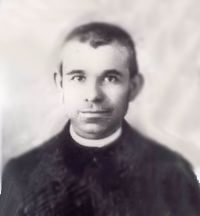 Luigi Orione was born in Pontecurone, diocese of Tortona, on 23 June 1872. At thirteen years of age he entered the Franciscan Friary of Voghera (Pavia), but he left after one year owing to poor health. From 1886 to 1889 he was a pupil of Saint John Bosco at the Valdocco Oratory (Youth Centre) in Turin.
On 16 October 1889, he joined the diocesan seminary of Tortona. As a young seminarian he devoted himself to the care of others by becoming a member of both the San Marziano Society for Mutual Help and the Society of Saint Vincent de Paul. On 3 July 1892 he opened the first Oratory in Tortona to provide for the Christian training of boys. The following year, on 15 October 1893, Luigi Orione, then a seminarian of twenty-one, started a boarding school for poor boys, in the Saint Bernardine estate.
On 13 April 1895, Luigi Orione was ordained priest and, on that occasion, the Bishop gave the clerical habit to six pupils of the boarding school. Within a brief span of time, Don Orione opened new houses at Mornico Losana (Pavia), Noto - in Sicily, Sanremo and Rome.
Around the young Founder there grew up seminarians and priests who made up the first core group of the Little Work of Divine Providence. In 1899, he founded the branch of the Hermits of Divine Providence. The Bishop of Tortona, Mgr Igino Bandi, by a Decree of 21 March 1903, issued the canonical approval of the Sons of Divine Providence (priests, lay brothers and hermits) - the male congregation of the Little Work of Divine Providence. It aims to "co-operate to bring the little ones, the poor and the people to the Church and to the Pope, by means of the works of charity," and professes a fourth vow of special "faithfulness to the Pope." In the first Constitutions of 1904, among the aims of the new Congregation, there appears that of working to "achieve the union of the separated Churches."
Inspired by a profound love for the Church and for the salvation of Souls, he was actively interested in the new problems of his time, such as the freedom and unity of the Church, the Roman question, modernism, socialism and the Christian evangelization of industrial workers.
He rushed to assist the victims of the earthquakes of Reggio and Messina (1908) and the Marsica region (1915). By appointment of Saint Pius X, he was made Vicar General of the diocese of Messina for three years.
On 29 June 1915, twenty years after the foundation of the Sons of Divine Providence, he added to the "single tree of many branches" the Congregation of the Little Missionary Sisters of Charity who are inspired by the same founding charism. Alongside them, he placed the Blind Sisters, Adorers of the Blessed Sacrament. Later, the Contemplative Sisters of Jesus Crucified were also founded.
For lay people he set up the associations of the "Ladies of Divine Providence," the "Former Pupils," and the "Friends." More recently, the Don Orione Secular Institute and the Don Orione Lay People's Movement have come into being.
Following the First World War (1914-1918), the number of schools, boarding houses, agricultural schools, charitable and welfare works increased. Among his most enterprising and original works, he set up the "Little Cottolengos," for the care of the suffering and abandoned, which were usually built in the outskirts of large cities to act as "new pulpits" from which to speak of Christ and of the Church - "true beacons of faith and of civilization."
Don Orione's missionary zeal, which had already manifested itself in 1913 when he sent his first religious to Brazil, expanded subsequently to Argentina and Uruguay (1921), Palestine (1921), Poland (1923), Rhodes (1925), the USA (1934), England (1935), Albania (1936). From 1921-1922 and from 1934-1937, he himself made two missionary journeys to Latin America: to Argentina, Brazil and Uruguay, going as far as Chile.
He enjoyed the personal respect of the Popes and the Holy See's Authorities, who entrusted him with confidential tasks of sorting out problems and healing wounds both inside the Church as well as in the relations with society. He was a preacher, a confessor and a tireless organizer of pilgrimages, missions, processions, live cribs and other popular manifestations and celebrations of the faith. He loved Our Lady deeply and fostered devotion to her by every means possible and, through the manual labor of his seminarians, built the shrines of Our Lady of Safe Keeping in Tortona and Our Lady of Caravaggio at Fumo. In the winter of 1940, with the intention of easing the heart and lung complaints that were troubling him, he went to the Sanremo house, even though, as he said, "it is not among the palm trees that I would like to die, but among the poor who are Jesus Christ." Only three days later, on 12 March 1940, surrounded by the love of his confreres, Don Orione died, while sighing "Jesus, Jesus! I am going."
His body was found to be intact at its first exhumation in 1965. It has been exposed to the veneration of the faithful in the shrine of Our Lady of Safe Keeping in Tortona ever since 26 October 1980 - the day in which Pope John Paul II inscribed Don Luigi Orione in the Book of the Blessed. He was canonized on 16 May 2004.
—© Libreria Editrice Vaticana
Highlights and Things to Do:
- Read more about St. Luigi Orione:
- Find out more about The Sons of Divine Providence, the order founded by St. Luigi, and their work, Orionecare. See also the Italian main site.
- St. Luigi's body was found intact when exhumed in 1965. His remains are now interred at the shrine of Our Lady of Safe Keeping, Tortona, Italy.
St. Innocent I
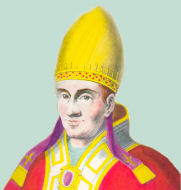 Innocent was born in Albano, Italy. He lived during the time of Saints Jerome and Augustine. He became Pope, on December 22, 401. Jerome, writing to the virgin Demetrias, says of him: "Hold fast to the faith of holy Innocent, who is the son of Anastasius of blessed memory and his successor in the apostolic throne; receive no strange doctrine, however shrewd and prudent you may think yourself."
During his pontificate, Innocent emphasized papal supremacy, praising the bishops of Africa for referring the decrees of their councils at Carthage and Milevis in 416 that condemned Pelagianism, to the pope for confirmation. This confirmation stirred St. Augustine to pen his famous remark: "Roma locuta, causa finita est" (Rome has spoken, the matter is ended).
Innocent was pope during the capture and sack of Rome by the Goths under Alaric in 410. He condemned the heresies of Pelagius and Celestinus, decreeing that children, even though born of a Christian mother, must be born again by water, in order that their second birth may cleanse away the stain they have contracted by the first. He also approved the observance of fasting on the Saturday in memory of the burial of Christ our Lord. He fought the unjust removal of Saint John Chrysostom and spoke strongly in favor of clerical celibacy. He sat fifteen years, one month, and ten days. Innocent died in Rome, March 12, 417 and was buried in the cemetery called ad Ursum Pileatum.
—Some material excerpted from The Liturgical Year, Abbot Gueranger O.S.B.
Symbols and Representation: Angel holding a crown
Highlights and Things to Do:
- Read four letters of correspondence between Pope Innocent and Saint John Chrysostom.
- Read more about St. Innocent I: