Accepting Liberty Medal, Pope hails Declaration’s ‘lofty ideals,’ stresses rights to life, religious freedom
July 04, 2026
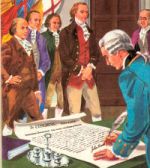
Pope Leo XIV accepted the Liberty Medal from the National Constitution Center and, in a July 3 video address (49:05), hailed the “lofty ideals enshrined at the beginning of the Declaration of Independence.”
“From our youth, most of us have admired the eloquence of those words, with their resounding appeal to the law of nature and to nature’s God as the basis of their assertion that all men and women are created equal and endowed by their Creator with certain inalienable rights, including the right to life, liberty and the pursuit of happiness,” Pope Leo said. “While couched in the language of the Enlightenment, that claim is ultimately grounded in an understanding of the human person inspired by the great biblical vision of man and woman being created in the divine image. It is indeed here that we discover the basis of human dignity; dignity which precedes the establishment of any State, and whose custody constitutes its very purpose.”
“Today, as we look to the future, this historic anniversary presents us with the opportunity to reflect once again on the nation’s founding principles in the hope that America will remain ever true to the dream that has earned it the title of land of the free and home of the brave,” the Pope continued. “The first right enshrined by the nation’s founders was the right to life, for no one who is deprived of life can enjoy liberty or pursue happiness.”
Reflecting on the right to life, Pope Leo said:
A country’s vitality is deeply tied to the value it affords to human life in every form and condition, acknowledging the dignity endowed upon every human person by virtue of their very existence. The inherent worth of every human life has led the noble hearts of generations to praise the marvelous works of the Creator (cf. Ps 139:14) and stand in reverence before so precious a gift. Indeed, it is precisely this reverence that we must continue to cultivate—one that sways the hearts of individuals and inspires laws that recognize and safeguard the gift from the moment of conception to natural death.
Reverence, too, will aid us in discovering that we are guardians and stewards of those entrusted to our care. In this regard, the moral greatness of a nation is manifested, above all, in its capacity to support, protect and cherish the lives of all, especially the most vulnerable and those whose worth is questioned.
Turning to the theme of liberty, Pope Leo said that “authentic freedom runs much deeper” than the “ability to act as one would like.”
“It is founded upon the human person’s capacity to know the truth and adhere to what is good, even at great cost—a sacrifice well known to many who have labored to shape this country,” the Pope said. “The desire for truth and freedom, as well as the very pursuit of happiness, continues to inspire people of all generations to ask fundamental questions regarding the meaning of life, our ultimate purpose, and indeed about God, and it is proper for magnanimous hearts to endeavor to answer these questions with sincerity. These answers inevitably determine the direction which we seek to give to our lives, and America has long championed the religious freedom necessary to follow responsibly the dictates of conscience in this regard, free from fear and coercion, as enshrined in the First Amendment to the United States Constitution.”
The Pope explained:
It is this freedom that holds sacred the inner sphere of the person where convictions are formed and where conscience can guide the decisions made in the intimacy of the human heart. This same freedom also ensures the right of every person to worship according to one’s own belief, and of individuals, communities and associations to give public expression to their faith.
In fact, religious freedom gave rise to the American tradition of allowing for interfaith dialogue and interreligious cooperation in promoting the public good and enriching the debates on the great moral and ethical issues that have faced the nation and shaped the course of its history. It is my hope that this tradition will continue to bear fruit in a public discourse marked by moderation, respect for the views of others and an ongoing effort to find common ground in promoting the cause of peace and reconciliation, at home and abroad.
“In accepting this award, I therefore pray that this, the 250th anniversary of the founding of this great nation, may be the occasion of a solemn recommitment to these ideals that have made America a country that values peace and prosperity, a country characterized by generosity and nobility of heart,” the Pontiff concluded. “I commend all of you, as well as the future of the Nation, to the One who is himself the source of true freedom and lasting peace, the One whose very name is Peace.”
For all current news, visit our News home page.
Further information:
All comments are moderated. To lighten our editing burden, only current donors are allowed to Sound Off. If you are a current donor, log in to see the comment form; otherwise please support our work, and Sound Off!