Make your gift today!
Help keep Catholics around the world educated and informed.
Already donated? Log in to stop seeing these donation pop-ups.
Lent: March 5th
Thursday of the Second Week of Lent
Other Commemorations: St. Lucius I, Pope and Martyr (RM); St. John Joseph of the Cross, Priest (RM)
MASS READINGS
March 05, 2026 (Readings on USCCB website)
PROPERS [Show]
COLLECT PRAYER
Thursday of the Second Week of Lent: O God, who delight in innocence and restore it, direct the hearts of your servants to yourself, that, caught up in the fire of your Spirit, we may be found steadfast in faith and effective in works. Through our Lord Jesus Christ, your Son, who lives and reigns with you in the unity of the Holy Spirit, God, for ever and ever.
Recipes (2)
Activities (2)
Prayers (12)
Library (0)
Blog & Podcasts (0)
The thought expressed in today’s first reading in Jeremias is one of the basic themes of the great prophets; it is to be found also in the Psalms (particularly Ps 1) and the book of Proverbs. Trust in men and trust in God—the former belies our expectations and only the latter assures our happiness and enables us to “bring forth good fruit.”
The parable of the rich man and Lazarus, the beggar, is addressed to the Pharisees. The rich man stands for the haughty man who, proudly satisfied with the gifts that God has bestowed on him, is unaware that living as he does he loses God’s favour. The teaching is the same as in the Epistle; blessed are the poor in spirit: those who put their trust in God. —St. Andrew Daily Missal
The Roman Martyrology commemorates:
- St. Lucius I, Pope and Martyr (d. 254), 22nd elected pope. Except that he was born in Rome, Italy, there is little information on Lucius' birth or younger years before becoming a priest. When elected as pope in June 353, Lucius chose to use his own name. He was quickly banished from Rome for a period, but returned and died in Rome after serving 8 months in office. Even though he was only a pope for such a short period of time, he fought against the heretic Novatian (heresy Novatianism).
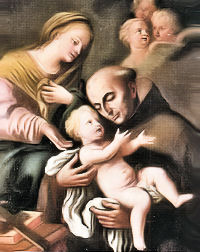
- St. John Joseph of the Cross, Priest (1654-1734). St. John Joseph was born on the Island of Ischia, off the coast of Naples, Italy. He entered the Alcantarine (after Peter of Alcantara) or strictest branch of the Franciscan Order at the age of 16. After being ordained, over the years he obediently took on assignments of novice master, guardian and provincial, all the while still practicing penance, putting the needs of others first, and choosing the lowliest tasks to serve his community. After suffering a stroke, he died in his convent at Naples on March 5, 1734. He was canonized in 1839 by Pope Gregory XVI.
Today's Station Church is St. Mary in Trastevere, rebuilt in the twelfth century. After St. Mary Major, it is considered the most beautiful church dedicated to Our Lady in Rome.
Meditation for Thursday of the Second Week of Lent—Prayer of Confidence in the Merits and Merciful Power of Jesus
The proud who claim to draw their power form themselves, commit the sin of Lucifer, who said: “I will ascend into Heaven…. I will be like the Most High”; like Lucifer they will be overthrown and cast down into the abyss.
But what do we say? That without Christ, we can do nothing, as He has Himself declared. We declare that it is through Jesus, with Jesus, that we can arrive at holiness and enter into Heaven; we say to Christ: “Master, I am poor, miserable, naked, weak, of this I am daily more and more convinced. But I know, too, that Thou art ineffably powerful, great and good; I know that the Father Thou lovest so much hath placed in Thee all the treasures of holiness that men may desire; I know that Thou wilt never reject those who come to Thee. Therefore, whilst adoring Thee in the deepest recesses of my soul, I have full confidence in Thy merits and satisfactions; I know that, altogether miserable as I am, Thou canst, by Thy grace, shower Thy riches upon me, uplift me even to the Divine, that I may be made like unto Thee and may share in Thy Divine Beatitude!”
—Dom Columba Marmion, Christ the Ideal of the Monk
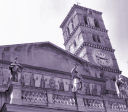
Thursday of the Second Week of Lent
Station with Santa Maria in Trastevere (St. Mary in Trastevere):
The Station for today is in the celebrated basilica, St. Maria in Trastevere. The basilica was consecrated in the third century, under the pontificate of St. Callixtus, and was the first church built in Rome in honor of our Blessed Lady, particularly for her Assumption. The original church was demolished and the current church was constructed between 1139 to 1181, with additions such as mosaics and chapels added through the centuries.
For more on Santa Maria in Trastevere, see:
- Churches of Rome
- The Station Churches of Rome
- Rome Art Lover
- Roman Churches
- PNAC
- Aleteia
- Station Church
- The Catholic Traveler
- Walks in Rome
- Roman Despatches
For further information on the Station Churches, see The Stational Church.
St. Lucius I
 St. Lucius, according to the "Liber Pontificalis," was a Roman, the son of Porphyrius. When he succeeded St. Comelius, the persecution of Trebonianus Gallus was still raging, and the new Pope was exiled. Soon, however, the persecution died away and Lucius was able to return to Rome. There is extant a letter from St. Cyprian congratulating the Pope on his return from exile and praising him for his confession of Christ.
St. Lucius continued the policy of Cornelius in admitting repentant apostates to communion after due penance. St. Cyprian praises him for this.
The Liber Pontificalis attributes to Pope Lucius a decree ordering that two priests and three deacons should live with a bishop that they might be witnesses for him. Duchesne, however, considers this decree apocryphal.
According to the Liber Pontificalis, Pope Lucius was beheaded in the persecution of Valerian. This is almost certainly inaccurate, for Lucius died before the persecution of Valerian broke out. At any rate, St. Lucius died some time in the beginning of March 254, and was buried in the Cemetery of Calixtus. His tombstone has been discovered. The feast of St. Lucius is kept on March 4.
—Excerpted from Popes Through the Ages, by Joseph Brusher
Patronage: Copenhagen, Denmark
Highlights and Things to Do:
- Read more about Pope St. Lucius I:
- Learn more about Novatian and Novatianism at New Advent.
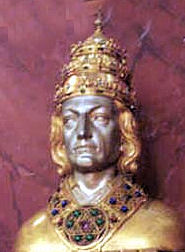
- St. Lucius was buried in a compartment of the papal vault in the catacombs of St. Callistus. His remains were transferred in 821 to St. Cecilia in Travestere, Rome. The sarcophagus that once held St. Lucius' remains is extant in the crypt of Santa Cecilia. It is said that some of his relics were transferred Roskilde, Denmark around 1100, and his head placed in a reliquary bust in the Saint Ansgar cathedral at Roskilde in 1910. There have been some carbon testings of the skull and the authenticity is being questioned.
St. John Joseph of the Cross
Saint John Joseph of the Cross was born on the feast of the Assumption in 1654, on the island of Ischia in the kingdom of Naples. From his childhood he was a model of virtue, and in his sixteenth year he entered the Franciscan Order of the Strict Observance, or Reform of Saint Peter of Alcantara, at Naples. Such was the edification he gave in his Order, that within three years after his profession he was sent to found a monastery in Piedmont. He assisted in its construction himself and established there the most perfect silence and monastic fervor.
One day Saint John Joseph was found in the chapel in ecstasy, raised far above the floor. He won the hearts of all his religious, and became a priest out of obedience to his Superiors. He obtained what seemed to be an inspired knowledge of moral theology, in prayer and silence. He assisted at the death of his dear mother who rejoiced and seemed to live again in his presence, and after he had sung the Mass for the repose of her soul, saw her soul ascend to heaven, to pray thereafter their God face to face.
With his superiors’ permission he established another convent and drew up rules for the Community, which the Holy See confirmed. Afterward he became a master of novices vigilant and filled with gentleness, and of a constantly even disposition. Some time later he was made Provincial of the Province of Naples, erected in the beginning of the 18th century by Clement XI. He labored hard to establish in Italy this branch of his Order, which the Sovereign Pontiff had separated from the same branch in Spain. His ministry brought him many sufferings, especially moral sufferings occasioned by numerous calumnies. Nonetheless, the Saint succeeded in his undertakings, striving to inculcate in his subjects the double spirit of contemplation and penance which Saint Peter of Alcantara had bequeathed to the Franciscans of the Strict Observance. He gave them the example of the most sublime virtues, especially of humility and religious discipline. God rewarded his zeal with numerous gifts in the supernatural order, such as those of prophecy and miracles.
Finally, consumed by labors for the glory of God, he was called to his reward. Stricken with apoplexy, he died an octogenarian in his convent at Naples, March 5, 1734. Countless posthumous miracles confirmed the sanctity and glory of the Saint, and he was canonized in 1839 by Pope Gregory XVI.
—Excerpted from Lives of the Saints for Every Day of the Year, edited by Rev. Hugo Hoever, S.O. Cist., Ph.D.
Patronage: Ischia, Italy; Naples, Italy
Symbols and Representation: Man wearing a Franciscan habit
Highlights and Things to Do:
- Read more about St. John Joseph: