The Evidence of Affirmation
By Fr. Jerry Pokorsky ( bio - articles - email ) | Dec 15, 2025
Every so often we must examine our intellectual patterns of thinking with the humility to admit that we can be wrong—and the wisdom to know where firm certainties of truth are found.
Good Catholics accept Church teaching as true and reliable. We needn't be great theologians to accept the Creed and try to live by the Ten Commandments, aided by prayer and the Sacraments. However, we often encounter dangerous heresies that may shake the foundations of our faith and lead us to error.
Let us examine the mechanics of affirming, with God’s grace, our personal narratives of knowledge, including the Catholic faith.
Here’s a philosophical term from our college days: epistemology. It’s a fancy word that asks the following:
- What does it mean to know something?
- How do we know what we claim to know?
- Can we be certain about anything?
These questions shape how we receive the faith, reconcile it with our humanity, endure trials, and recognize Jesus when He comes to us.
Artificial intelligence (AI) may expand the encyclopedia of available information, but our personal knowledge remains limited. Still, we can take holy delight in the fact that God’s grace does not operate through computer chips. God’s grace needs a human host, not a data center, to receive His wisdom. God saves us, not computers.
Sufficient evidence is the foundation of truth under two major categories: evidence our senses perceive and evidence we accept on the testimony of others—in short, direct experience and belief.
Accepting something as true based on direct experience depends upon the proper functioning of the five senses: sight, hearing, smell, taste, and touch. At times, we make mistakes in accepting something as true or false. We may be physically impaired. Here’s an old joke: an old man tells another old man that he has the best hearing aid on the market. “What kind is it?” the other asks. He responds, “About 6 p.m.”
Experiential knowledge is crucial, but it hardly exhausts the scope of our knowledge. Most of what we know is accepted based on the testimony of authority: belief. Accepting something as true, rooted in testimony, depends on the reliability of the person making the claim and on our good sense in recognizing truthful testimony. Most of us trust, for example, that the moon rock at the Smithsonian is not fake.
Of course, we may accept testimony in good faith only to learn later that the person who testified was misinformed, mistaken, or malicious. (Maybe Oswald didn’t act alone!) We may also be intellectually impaired for many reasons: the neurons aren’t working like they used to; we are intellectually lazy; we jump to conclusions; or we cling to patterns of thinking that we will not allow others to confuse with the facts.
It’s easy to think that doubts and uncertainties are modern problems, but they’ve always been part of the human condition. Pontius Pilate asked, in a moment of disorientation, “What is truth?” And even the saints faced their own struggles with the content of faith, including John the Baptist.
John was fearless in his convictions. He indicted the Pharisees and Sadducees as a brood of vipers. King Herod was in an illicit marriage, and, speaking truth to power, John alienated Herod’s wife.
John was humble. He told his followers that the one to come after him was greater than he and that he was not worthy to untie His sandals. He was reluctant to baptize Jesus. Instead, he said that Jesus should baptize him.
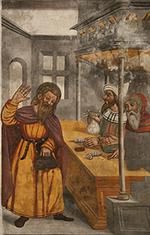
Early in the Gospel, John is on Herod’s death row. John sent his disciples to Jesus with an epistemological question. He asked in faith, not rebellion: Was Jesus the one who was to come, or should he look for another? Jesus responds by quoting Isaiah:
Go and tell John what you hear and see: the blind receive their sight and the lame walk; lepers are cleansed, and the deaf hear; the dead are raised up, and the poor have good news preached to them. And blessed is he who takes no offense at me. (Mt 11:4–6)
Some suggest that John knew all along that Jesus was the Messiah. The question and the answer would necessarily redirect popular attention from John to Jesus. But we cannot rule out another possibility: John’s sinless confusion—not a crisis of faith, rather uncertainty about whether he had assembled the correct narrative of Israel’s faith.
John knew his imprisonment would not end well. Herodias would get her wish: John’s head on a platter. But would the ministry of Jesus end the same way, making way for another? Or was Jesus the promised Messiah? Was John’s ministry worth his sacrifice?
In response, Jesus invoked the prophecies of Isaiah. Reassured, John immediately reconnected the dots. Jesus will indeed fulfill all the prophecies of old. John’s faith in the Scriptures, his religious formation under Zechariah and Elizabeth, and his formation among the Essenes shared a similar trajectory. John was a key link as the forerunner to the Messiah.
At times, we may become aware that a mistaken intellectual pattern needs an overhaul because it was based on faulty information or unreliable authorities. We may have become heretics, distorting our faith with harmful errors that rob us and others of happiness. But we may also question our beliefs in times of trouble. Like John, we may find ourselves reexamining the foundations of our faith.
With God’s grace, intellectual honesty occasionally requires us to reconsider the foundations of our religious faith—not with Zechariah’s skepticism, but with John’s faith, seeking the evidence of affirmation. With John, we may ask, “What has the Church, rooted in history, always taught, and why?” The answers are always ancient, always new, and protect us from harmful heresies that destroy souls and even nations.
The Church does not offer us an abstract system, but the Real Presence—Jesus Himself, born into His Church, born into history—recognized, trusted, and handed down faithfully from age to age.
Fr. Jerry Pokorsky is a priest of the Diocese of Arlington who has also served as a financial administrator in the Diocese of Lincoln. Trained in business and accounting, he also holds a Master of Divinity and a Master’s in moral theology. Father Pokorsky co-founded both CREDO and Adoremus, two organizations deeply engaged in authentic liturgical renewal. He writes regularly for a number of Catholic websites and magazines. See full bio.
All comments are moderated. To lighten our editing burden, only current donors are allowed to Sound Off. If you are a current donor, log in to see the comment form; otherwise please support our work, and Sound Off!