Pope Leo asks pardon for Holy See’s complicity in slavery
May 25, 2026
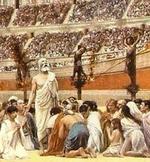
Pope Leo XIV renewed the teaching Church’s condemnation of slavery and asked pardon for the Holy See’s complicity in the slave trade.

In Magnifica Humanitas (CWN article)—dated May 15 and released today—Pope Leo deplored forms of slavery linked to the digital economy.
“The fight against new forms of slavery is a decisive test for the ethical discernment of AI and digital transformation,” Pope Leo wrote. “In continuity with the tradition inaugurated by Leo XIII, the Church renews her firm condemnation of all forms of slavery, trafficking and the commodification of persons. She likewise highlights the urgent need for reflection and action that keep the inalienable dignity of every human being and the common good, as both the focus and goal of society, as well as the guiding criteria for every personal, social and political choice” (n. 174).
“Human trafficking must be recognized as a contemporary form of slavery and a grave violation of human dignity,” the Pope continued. “Failing to respond firmly, or tolerating these practices in any way, is in some way to become complicit in today’s sins, which are akin to those of the past when slavery was being concealed and justified” (n. 175).
The Pontiff added:
In the development of her doctrine, the Church has gradually come to a deeper awareness of the gravity of these issues. It is true that past events cannot be judged anachronistically, as though the moral criteria that matured over time had always been available. Yet neither can we deny or diminish the delay with which both society and the Church came to denounce the scourge of slavery.
In antiquity and the Middle Ages many individuals and even ecclesiastical institutions had slaves. Already in the early modern period, the Apostolic See of Rome, responding to requests from Sovereigns, intervened several times in order to regulate and legitimize forms of subjugation, and, in certain cases, the enslavement of “infidels.” It was only in the nineteenth century that a formal, absolute and universal condemnation of slavery was clearly articulated, notably under Pope Leo XIII.
This development offers a clear example of the Church’s growth in understanding the perennial truths of Revelation that she safeguards. Although there was not always consistency in practice—given that slavery was long tolerated before being unequivocally condemned—there has been a continuous affirmation throughout history of the dignity of every human being, created in the image of God, even if it took eighteen centuries for its full incompatibility with slavery to be explicitly recognized. This constitutes a wound in Christian memory, one from which we cannot consider ourselves detached.
It is impossible not to feel deep sorrow when contemplating the immense suffering and humiliation endured by so many in stark contrast to their immeasurable dignity as persons infinitely loved by the Lord. For this, in the name of the Church, I sincerely ask for pardon.
This is why the memory of past complicity and blindness in the face of the injustice of slavery becomes a call to vigilance. What we have learned must be translated into discernment and responsibility in the present. If we want to avoid the need to ask for pardon again in the future for having failed to respect the treasure of human dignity that is required by our faith, it falls to us today to denounce, clearly and firmly, trafficking in its many forms and, together with all who are committed to this cause, to support concrete efforts of prevention, protection, liberation and rehabilitation. (nn. 176-177)
In referring to the Holy See’s complicity in the slave trade, Pope Leo cited fifteenth-century papal documents, “as in the Papal Bulls Sicut Dudum (13 January 1435) and Etsi Suscepti (9 January 1442) of Eugenius IV, and in the Papal Bulls Dum Diversas (18 June 1452) and Romanus Pontifex (8 January 1455) of Nicholas V.”
“Political and, at times, even economic needs overcame the demands of the Gospel,” Pope Leo continued. “The need for evangelization was frequently compromised or at least misunderstood with regard to the needs of worldly powers, thus relativizing the problematic incompatibility of slavery with the Christian conscience” (footnote 174).
Pope Leo’s apology for slavery is not unprecedented: Pope St. John Paul II, for example, offered apologies in 1985 (in Cameroon), in February 1992 (in Guinea), and twice in October 1992 (in the Dominican Republic and in Rome). Pope Leo’s apology, however, focused on the Holy See’s complicity.
For all current news, visit our News home page.
Further information:
All comments are moderated. To lighten our editing burden, only current donors are allowed to Sound Off. If you are a current donor, log in to see the comment form; otherwise please support our work, and Sound Off!

-
Posted by: axiombob1989 -
May. 29, 2026 6:19 PM ET USA
Apologies have been given in the past. Does the Pope realize how difficult it is to profess the Catholic Church with seemingly unnecessary retreading of the past. The reaction that I get from non-Catholics is that we (Catholics) supported slavery during the revolutionary war! If this was a necessary apology, then someone please explain why.
-
Posted by: sav4later2502 -
May. 26, 2026 5:55 PM ET USA
Apparently, you didn't like my response since you didn't publish it. Let's try again... in a watered-down version, more politically correct version. The Catholic Church of 2026 is not responsible for slavery...and it has no business offering apologies for something it didn't do... or promote! Furthermore, the UK (primarily) and the United States are basically responsible for the elimination of slavery. A "Thank You" is appropriate.
-
Posted by: feedback -
May. 26, 2026 2:09 AM ET USA
"In the name of the Church, I sincerely ask for pardon." Didn't Pope Leo just make all Catholics look guilty for slavery? And, who is authorized to respond to the Pope's sincere request and issue the pardon on behalf of all the slaves of the past millenia? However, there are all kinds of sins against human life and dignity being promoted and committed today. Widespread abortion is one of them.