Silently Sharing the Same Fears
By Fr. Jerry Pokorsky ( bio - articles - email ) | Mar 30, 2026
During the 1960s age of existentialist folk tunes, a popular song was titled “Old Friends.” It was hauntingly beautiful, yet lacked the hope of resurrection. The poetry described two old friends, sitting on a park bench like bookends. The lyricists sang, “How terribly strange to be seventy.” The story ends unresolved: “Old friends. Memory brushes the same years. Silently sharing the same fears.”
Pagan stoicism has its merits, but most of us are not silent in our fears; we complain. This theme of complaining is ancient. Lament can bring us into conversation with God—or undermine our trust in Him.
Penitents concerned about their prayer life during trials should take consolation from Psalm 55: “O God, listen to my prayer; do not hide from my pleading. Hear me, Lord, as I complain.” It is holy and fitting to use fear and suffering to turn to God in prayer and complaint—provided we do not make Him the object of our anger. We honor God when we turn to Him and acknowledge His supremacy. Yet it is more common to disengage from God and complain apart from faith.
During the Exodus, the Israelites’ complaining often resembled comic sketches. They asked Moses, “Is it because there are no graves in Egypt that you have taken us away to die in the wilderness? It would have been better for us to serve the Egyptians than to die in the wilderness.” (Exodus 14:11–12) Parents recognize such complaining: it goes beyond expressing needs; it is the whining of spoiled children.
At root, whiners do not solve problems; they are disobedient. As wise parents remind unruly children, they want what they want, and they want it now. On the road to the Promised Land, the Israelites faced numerous obstacles that required obedience and cooperation with God’s grace. Yet they repeatedly failed His tests. Moses frequently had to intercede on their behalf to save them from God’s wrath.
They were thirsty with nothing to drink. They were hungry and longed to return to Egypt as slaves, pining for the flesh pots. Their deprivation was compounded by losing trust in God’s presence. Moses became the target of their complaints, yet he defended them like a loving father protecting rambunctious children. God, in turn, lavished His gifts upon them.
God sent manna from heaven, a mysterious food that prefigured the Sacred Bread of the Eucharist. He sent quails to satisfy their cravings for meat. In the evening, quails came; in the morning, manna. In obedience to God, Moses struck the rock, and water flowed to quench their thirst. God also taught restraint: they gathered manna only for their immediate needs, trusting in His loving providence. He foiled every attempt to hoard the food, teaching reliance on His ongoing generosity.
Jesus makes a similar point in the Parable of the Rich Fool, who built larger barns to store his abundant grain and goods so that he could eat, drink, and be merry (cf. Luke 12:16–21). But God says to him, “Fool! This night your soul is required of you…” Modern survivalists stockpiling supplies for a coming apocalypse take note: take reasonable precautions, but avoid obsessive compulsions. Fear must never smother a generous spirit.
God’s loving response to the complaints of His people reveals His mercy in the face of disobedience and redirects them toward obedience and faith. We also see the medicinal purpose of divine punishment.
We often hear that God forgives, and men occasionally do, but nature never forgives. Here is an inconvenient corollary: God punishes for the sake of repentance. Men punish occasionally to bring us to our senses, but often for vengeance. Nature, violated by malice, is unrelenting. It is a paradox of fallen human nature that we often deny responsibility for the consequences of our misbehavior.
During the Exodus, the Israelites’ unrestrained fear smothered their trust and even provoked them to accuse God of evil (cf. Numbers 21:5–6): “Why have you brought us up out of Egypt to die in the wilderness? For there is no food and no water, and we loathe this worthless food.” God punished their insolence: “Then the Lord sent fiery serpents among the people….” Their punishment was not arbitrary; their blasphemy became a life-threatening reality.
The punishment brought repentance. They acknowledged, “We have sinned…” (Numbers 21:7). God did not abandon them but relented and provided a remedy. His mercy took a striking form: He instructed Moses, “Make a fiery serpent, and set it on a pole,” so that “everyone who is bitten, when he sees it, shall live.” (Numbers 21:8–9)
The price of repentance is obedience to God and the courage to face the source of our fears. Obedience, fortified by courage, restores us on the journey toward the Promised Land. We are willing to endure hardships along the way. We walk with God.
This account resonates with our humanity. We all desire reasonable and healthy comforts, yet we face familiar obstacles to happiness: sickness, misunderstanding, violence, injustice, war, and rumors of war. In anguish, we are tempted toward infidelity, complaint, hatred, and despair.
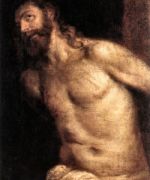
But there is a reason a crucifix adorns every Catholic sanctuary and devout home. As with the serpent on Moses’ staff, God directs us to confront the primordial human fears of suffering and death.
The Cross reveals that Jesus Christ suffered and died for the sins of the world. It does not remove suffering, which remains an implacable fact of life, but it redefines suffering in its light. The Passion of Christ teaches us to endure with courage and without complaint. The Resurrection is our destiny, but first comes the Cross in union with Jesus.
The world is renewed when we suffer with Christ—not in complaint, but in faith, courage, hope, and ultimately love. We silently trust in God as we face every fear, even the humiliations of old age.

Fr. Jerry Pokorsky is a priest of the Diocese of Arlington who has also served as a financial administrator in the Diocese of Lincoln. Trained in business and accounting, he also holds a Master of Divinity and a Master’s in moral theology. Father Pokorsky co-founded both CREDO and Adoremus, two organizations deeply engaged in authentic liturgical renewal. He writes regularly for a number of Catholic websites and magazines. See full bio.
All comments are moderated. To lighten our editing burden, only current donors are allowed to Sound Off. If you are a current donor, log in to see the comment form; otherwise please support our work, and Sound Off!