The Parish, Debunked
By Jacob Akey ( bio - articles ) | Jan 06, 2026
The Bishop of Syracuse serves as pastor for three churches in his New York diocese. In addition to his episcopal ministry, Bishop Douglas Lucia commutes within a “pastoral care area” in the suburb of Baldwinsville.
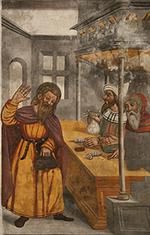
One must imagine that the priests of his diocese find Bishop Lucia’s example heartening: He’s in the trenches, with “the smell of the sheep.” The image of a commuter bishop calls to mind the scribe going to Christ in Matthew 8, “Master, I will follow you wherever you go.” But whatever the personal virtues of Bishop Lucia, the situation is the result of organizational dysfunction. There are not enough priests to serve his diocese and the solution—stretching those who remain over ever more parishes or parish groupings—is unsound. More than that, a bishop serving as pastor for three churches undermines the parish myth.
According to the Code of Canon Law, a parish is a juridic personality, a “community of the Christian faithful stably constituted in a particular church,” entrusted to a single pastor who is necessarily a priest. Beyond this strict definition, contained in canons 515–552, the parish structure ought to conform to a number of norms which, taken together, paint an image something like that of George Bernanos’s village in Diary of a Country Priest.
For one, the parish ought to be territorial, extending to all the Christian faithful of a region. Its pastor ought to “possess stability” and is obliged to “reside in a rectory near the [parish] church.” Think of Bernanos’s country priest, living within the village, buying groceries from its skinflint grocer. A pastor ought to “know the faithful entrusted to his care” and “visit families, sharing especially in the cares, anxieties, and griefs of the faithful.” Again returning to Bernanos, his country priest notices the moods of the parish children, knows who is sick, and visits with the families of rich and poor alike. And finally, excepting exigent circumstances, “a pastor is to have the parochial care of only one parish.”
The ideal parish, in perfect conformity to the letter and spirit of canon law, has ceased to exist in large parts of America. Parishes have been replaced by clusters: technically legal conglomerations under the pastoral ministry of a single priest who commutes between the cluster’s constituent parts. Some clusters maintain that they are groupings of independent parishes, merely pastored by one priest. Others adopted oddly hyphenated names; multiple churches form a single parish. (Canonically, only one church is the parish church, and others are “secondary.”) Both models appear to be in effect in Syracuse, where “78 active priests...serve 102 parishes and 133 worship sites.”
How clusters present themselves—a question for canonists—seems unlikely to affect the lived experience of the laity, who have been witness to the dissolution of parishes for decades. The problem began with the suburban boom of the fifties, sixties, and seventies, when 85 million Americans and a majority of white Catholics moved to the suburbs.
This process, chronicled by Fr. Stephen M. Koeth in Crabgrass Catholicism: How Suburbanization Transformed Faith and Politics in Postwar America, transitioned the parish from a geographic reality to an administrative one. With the mass movement to the suburbs, one of the largest discrete migrations in human history, parish boundaries were redrawn overnight. Where, for the past century, parish boundaries had evolved to accommodate the arrival of immigrant communities, the process of parish formation (and the division of existing parishes) accelerated. New parish boundaries did not represent existing communities with shared community life; they represented zip codes.
It was only after the suburban boom that the number of vocations to the priesthood began its long decline. In his chapter on priests and the laity, Koeth explains that the “rapidly evolving expectations of priestly ministry brought on by suburbanization and the reforms of Vatican II had tremendous effects on priestly identity and morale. In just six years between 1966 and 1972 one in ten American priests left the priesthood...[sociologist Fr. Andrew Greeley] declared it surprising that even more priests had not left active ministry. ‘We’ve broken with patterns that have existed half a millennium...and we’ve done it in five years.’”
No small part of the pattern-breaking, at least in the American context, was the abandonment of the canonical norm that pastors “must possess stability and therefore [are] to be appointed for an indefinite period of time.” In 1984, a USCCB predecessor, the National Conference of Catholic Bishops, promulgated a complementary norm permitting bishops to appoint pastors for six year terms. It’s hard to imagine something more damaging to the lay and priestly appraisal of the parish than temporary, cycling pastors.
Mission or Oratory?
The parish is kaput in many dioceses: Buffalo, Peoria, Cincinnati, Scranton, and Detroit are all undergoing major reorganizations. In Buffalo, this could mean closing 51 percent of parishes over a one-year period. Peoria plans to close a similar proportion. And as priests retire and die, the number of major reorganizations will increase nationally. But what comes next?
Most priests, Church-watchers, and commentators—excruciatingly aware of the declining number of priests in America—expect the situation of Syracuse to become ever more common: Priests in suburban and rural America will commute between churches, the parish will be further attenuated, and the laity will need to adjust to fewer Masses, perhaps on a rotating schedule. Maybe rubrics for lay-led Communion services will be dusted off.
This model is commonly referred to as the mission or missionary model in reference to how missionaries travel to celebrate Mass where there is not an established parish. Already, African and Indian-born priests ministering in America point out in homilies that, to them, this is mission territory.
Technically, the U.S. ceased to be mission territory in 1908 when Pope Pius X removed the nation from the supervision of what is now known as the Dicastery for Evangelization (then Sacra Congregatio de Propaganda Fide). It was a recognition of ecclesial maturity, that, to put it plainly, the Church in the United States was capable of sustaining itself. American dioceses were able to produce sufficient priests to meet the sacramental needs of the laity, leaders capable of episcopal ministry, and financial systems fit to task. The Church of the New World achieved, at least administratively, parity with that of the Old World.
But such markers of ecclesial maturity are slipping in the Old and New Worlds alike. (Commentator George Weigel provocatively suggested that Germany be demoted to the status of mission territory.) It seems very nearly inevitable that a large number of Americans will live as if they were in mission territory for the foreseeable future, even if US bishops escape the oversight of the Dicastery for Evangelization.
There is at least one compelling counterproposal, though. Acknowledging the reality of the priest shortage, Matthew Walther, editor of The Lamp, has suggested an oratory model (as opposed to a mission model). His February 2025 essay, “What Is a Parish?”, describes the suitability of churches built with the assumption that not all who attend will be from the neighborhood:
I envision a number of ersatz oratories, centrally located, where possible in the largest and most attractive former parish churches. Instead of being isolated in scattered rectories, diocesan priests would live a common life on the grounds of the oratories themselves; rather than travel to two or three different “clustered” parish churches, where confession can only be offered for half an hour a week, they would rotate six days a week in the box and at the altar.
Perhaps Walther is engaging in impossible fancies. Substantially changing the parish (now missionary) model is a project of immense scale—it means changing the structure of American Catholicism itself. But desperate times call for radical measures. As Walther says, “to the extent that religious decline can be measured by things like Mass attendance, the number of baptisms and religious vocations, and the state of diocesan finances [the decline of the Catholic Church in America] is an inevitability.” These are desperate times, and is it not preferable to venture to build something new than to train another, smaller generation of pastors as commuting managers of decline?
All comments are moderated. To lighten our editing burden, only current donors are allowed to Sound Off. If you are a current donor, log in to see the comment form; otherwise please support our work, and Sound Off!

-
Posted by: Dr. Jim -
Jan. 07, 2026 10:01 AM ET USA
Jacob, Thanks for this article, and welcome to Catholic Culture! About 25 years ago I came back to the Catholic Church from almost a lifetime in the Protestant world, and I was committed to the ideal of the parish - but having been disappointed by parishes, and even dioceses, I now find that I may have to go back to that most Protestant of activities: church-shopping - to find a faithfully Catholic parish and a faithfully Catholic (but not rad-trad) priest. The oratory model seems better.