Drivers
By Dr. Jeff Mirus ( bio - articles - email ) | Feb 25, 2026
A couple of weeks ago, after hastily applying some updates to my computer, my external monitor would no longer display anything when connected to my docking station. At the same time, two of the four connection ports on my laptop could no longer be used to charge the computer’s battery. It took me a while to get beyond the stage of moaning and complaining, but several days later I finally focused on the problem, did some research, downloaded the appropriate corrective software (again!) and, after a certain amount of fiddling, everything started working properly.
To fix anything, you often have to fiddle a bit. But you also have to keep your eye on the goal. And if you think this sounds a lot like the spiritual life (annoyed, moaning, fiddling, and sometimes distracted from the goal), I think you’re on to something. In fact, the type of software components I downloaded have a telling name. They are called “drivers”, because they control (or drive) the behavior of the various parts of the computerized system. Without the right drivers, these various parts simply won’t work together properly. If you have come to understand this, you have probably gotten fairly good at fixing the behavioral problems of your computer, assuming none of the hardware is actually broken.
By now you can see the human analogy: The same thing is true of our personal lives. Time and again things go wrong because we just aren’t making use of the right drivers, good solid drivers that haven’t been corrupted. As a result, we—and in some sense, our component parts—are not receiving the right instructions at the right times.
Aiming for proper results
Computer “drivers” are small programs that enable the overall operating system of the computer to communicate effectively with its various components so that each one does its job correctly as part of a well-tuned whole. If you want the right sounds to come out of a computer, you need an audio driver. If you want the right images to display on the screen, you need a video driver. If you want to be able to do anything productive with your computer, you need drivers that are properly tuned for each component—so that destructive input is rejected and constructive input produces the desired output.
Our personal lives are also governed by drivers—little behavioral processes that respond to stimuli, screening out what doesn’t “compute”, and properly applying whatever will accomplish the ends for which we were designed and built. Of course, the human person is not a machine. But each person receives impulses that he or she has not yet learned to interpret, control and correctly implement or reject. Good parents try to provide appropriate training, but ultimately each person has to learn how to respond to every impulse in accordance with his own proper ends. At the same time, one of the greatest difficulties of being human is precisely that we are not machines. While there is much that is “built into” us from the first, we must do more than simply follow instructions. We must actively discern our ends and the means appropriate to achieving them.
For this meta-task, you might say that just as a computer needs functional drivers that will enable it to respond properly and effectively to the input we are attempting to give the computer, so too do we need highly functional drivers that will enable us to respond properly and effectively to the input God is attempting to convey to us. Most often, we call these drivers good habits, that is, virtues.
Obviously, the analogy with computers breaks down for humans precisely because we are not merely “programmed”. Being possessed of both intellect and will, we are called upon to discern our own nature, the ends appropriate to that nature, and the means appropriate to those ends. Unlike computers, we are not automatons. Things can go wrong with us not only through inadvertent errors but through deliberate refusals. Moreover, while the fundamental operational principles are consistent across the entire human race, the particular purposes of each person are different, as are the experience and learning through which these purposes are to be achieved.
Unlike computer drivers, then, our human “drivers” are not hard-coded within us so that they depend solely on the competence of the designer. Rather, we must discern and learn our own purposes, apply our own intellects and our own wills to the accomplishment of the ends which we were designed to achieve, and develop our own productive habits.
When prayer becomes programming
Just as computers need properly coded drivers to guide the various input and output devices which enable them to receive, process, and present information in ways useful to humans, so too do humans need to learn to control their own forms of input and output in ways that are useful to God. We already have the means to screen our input and our output through our gifts of intellect and will, but we begin life without knowing how to make use of these means. Living a truly human life requires learning to control our exercise of these gifts so that they are productive of good for ourselves and others. And just as computers must submit to human design and controls in order to produce what is useful to their makers, so too must humans accept the design and controls of their maker in order to be useful in their turn—that is, in order to accomplish the ends for which they were made.
The difference, of course, is in our intellects and wills. Machines are not responsible things; even artificial intelligence systems are not responsible things; but human persons are. We are not mere machines which, if they are working properly, do exactly what they have been instructed to do, neither more nor less, and without any sense of responsibility whatsoever. Rather, we are designed to collaborate actively and eagerly with our manufacturer in making our own unique contribution to His overall plans and goals, not only for ourselves but for others. This willed collaboration is not automatic and is not limited to meeting a few formal requirements. It is ordinarily developed and fueled through personal prayer. No wonder Our Lord asked whether a Master will thank a servant “because he only did what was commanded” (Lk 17:9)! Rather, He warned that if we have done only what has been commanded we should say, “We are unworthy servants; we have only done our duty” (17:10).
The Second Vatican Council used the phrase “active participation”—participatio actuosa—to describe the role of the faithful in the Sacred Liturgy and its re-presentation of the sacrificial death of Jesus Christ. Another way to describe this overall role in daily life might be “willed collaboration”. Machines are incapable of this form of participation in the plans of their makers, but we are not. Machines can recognize neither their own purpose nor their own giftedness, but we can. No wonder St. Paul asked rather pointedly whether we possess anything that we have not received (1 Cor 4:7). And if we have received it, he demanded, why do we act as if it were not a gift?
Unlike our computers, if we wish to do something that is appropriate and right and good we must first will ourselves to participate actively in our Creator’s plan. But this depends on our motivation. It depends on the habits we have deliberately and painstakingly formed. In other words, it is all about our drivers.
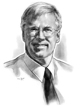
Jeffrey Mirus holds a Ph.D. in intellectual history from Princeton University. A co-founder of Christendom College, he also pioneered Catholic Internet services. He is the founder of Trinity Communications and CatholicCulture.org. See full bio.
All comments are moderated. To lighten our editing burden, only current donors are allowed to Sound Off. If you are a current donor, log in to see the comment form; otherwise please support our work, and Sound Off!