Make your gift today!
Help keep Catholics around the world educated and informed.
Already donated? Log in to stop seeing these donation pop-ups.
Confessions of a Baby Boomer
By Fr. Jerry Pokorsky ( bio - articles - email ) | Jul 13, 2026
God promises us the final victory of the Word through the Prophet Isaiah: “So shall my word be that goes forth from my mouth; it shall not return to me empty, but it shall accomplish that which I purpose and prosper in the thing for which I sent it.” (Isaiah 55:11) The promise applies to us individually, as families, tribes, and nations.
We all have sinful inclinations, and we are often oblivious to them. Occasionally we find ourselves committing sins almost at random as we ask ourselves, “How could I have said or done something that stupid?” Somehow, we cannot see the sins of our ways, but we see the sins of others very clearly. “Why do you see the speck that is in your brother's eye, but do not notice the log that is in your own eye?” (Matthew 7:3)
Over time, most of us have a growing awareness of our similarities to our parents, both good and bad. The same hidden tendencies that shape individuals also shape families over time. If we fail to recognize them, they become part of the moral inheritance we pass to the next generation. The sins we overlook in ourselves are often reinforced by the habits of those closest to us, making personal conversion inseparable from examining the influences that have formed us.
However, it is unfair to blame all our vices on our parents and take credit for all of our virtues. As we recognize our personal weaknesses, we must take responsibility for the way we think, choose, and live. God chooses us for His holy instruments. We are the vehicles of His loving Providence. God wishes to complete in us His holy will as we pray, “Thy kingdom come, Thy will be done, on earth as it is in heaven.”
Tribal and cultural patterns are often invisible to us, but clear to outsiders. Just as families can hand down patterns of virtues and vices, entire generations can adopt shared habits of thought that seem normal from within but become obvious from history.
Many of us playfully call ourselves “Baby Boomers.” We were the fruit of the return of American soldiers following World War II. In the 1950s and 1960s, the schools were filled with children. This was also an era of unprecedented economic prosperity.
But history demonstrates that there was a downside to the Boomer generation. As Pope John Paul II often pointed out, economic success brought consumerism: "I want what I want when I want it." By the late 1960s, we feared the Population Bomb. Many came to regard children primarily as consumers of scarce resources rather than as gifts from God. Even the United States government, through the 1974 National Security Study Memorandum 200, considered population growth a major foreign-policy concern and examined ways to promote contraception and population-control programs in developing nations.
The dire predictions of the population bomb did not unfold as many expected. The babies weren’t locusts ravaging the countryside. Rather, the Boomers gobbled up the wealth. Today’s $40 trillion national debt provides the quantitative evidence and Boomer legacy.
Ironically, we now have an alarming birth dearth. The US fertility rate today, before immigration, is 1.6, well below the 2.1 replacement rate. Whole populations are rapidly declining as we tread the economic waters with massive patterns of migration, both legal and illegal. Healthy families and churches need children. Healthy economies need people.
Many Boomers today may not recognize another variant of the consumerist mentality in their twilight years. The same mindset that once viewed children primarily as economic burdens can also shape the way we view aging, illness, and death.
When consumerism governs our moral imagination, we can be tempted to pursue two opposite end-of-life errors: insisting upon every possible medical intervention to prolong life regardless of proportionate benefit or burden, or abandoning hope by seeking to end life prematurely through euthanasia. Medical studies have shown that the final months of life can account for a disproportionate share of healthcare expenses. So many nations have introduced so-called “mercy killing” in part to reduce these burdens.
Against both temptations, the Church offers a consistent moral witness: We should use ordinary means to maintain our lives. We may not have the right to invoke extraordinary or disproportionate means. But we certainly do not have the right to kill in the name of mercy. “Thou shalt not murder.” God’s grace enlightens our hearts through Church teaching and breaks the fog of moral confusion with a well-formed Catholic mind. Only then can we resist the cultural currents that quietly reshape our moral judgment and instead allow God's Word to form our hearts.
Like every generation, the generations following the Boomers must learn from the mistakes of their forefathers, or they will magnify them with their own errors and sins.
Despite the obstacles we toss in the path of God's providential Word, we cannot outwit His historical kingship. Whether our resistance is personal, familial, cultural, or national, God's purposes are never frustrated. We may delay repentance, but we cannot overturn divine providence.
Individually, we stand before God on our Day of Judgment. If we cross the threshold of eternity in His grace, God gives us the finishing school of Purgatory to purify us of our attachments to sin. We pray that God blesses America, from sea to shining sea. Without abiding by God’s Commandments, so-called “American exceptionalism” means nothing. A superpower without God is an international wrecking ball.
God's ultimate triumph is never in doubt. Through the Prophet Isaiah, God gives us hope: God’s word “…shall not return to me empty, but it shall accomplish that which I purpose and prosper in the thing for which I sent it.” St. Paul provides the secret to success: “Do not be conformed to this world but be transformed by the renewal of your mind, that you may prove what is the will of God, what is good and acceptable and perfect.” (Romans 12:2)
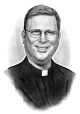
Fr. Jerry Pokorsky is a priest of the Diocese of Arlington who has also served as a financial administrator in the Diocese of Lincoln. Trained in business and accounting, he also holds a Master of Divinity and a Master’s in moral theology. Father Pokorsky co-founded both CREDO and Adoremus, two organizations deeply engaged in authentic liturgical renewal. He writes regularly for a number of Catholic websites and magazines. See full bio.
All comments are moderated. To lighten our editing burden, only current donors are allowed to Sound Off. If you are a current donor, log in to see the comment form; otherwise please support our work, and Sound Off!