The Blame Game
By Fr. Jerry Pokorsky ( bio - articles - email ) | Feb 23, 2026
The fall of Adam and Eve in Genesis reveals the heart of human weakness and the choices we make in the face of temptation. Among the many effects of Original Sin is our persistent failure to take responsibility for our actions. It begins as a child. “The dog ate my homework.” When confronted with wrongdoing, we either take responsibility for our actions or blame others.
In the passages preceding the account of Original Sin, the Lord gives Adam a companion. As Adam slumbers, God removes one of his ribs and fashions Eve as Adam’s bride. Eve is neither superior nor inferior to Adam. She is his equal, fashioned from his rib, close to his heart. Adam responds with marital joy: “At last, bone of my bones, and flesh of my flesh.” God sanctifies the marriage of man and woman and bestows His blessing upon it.
When the Lord caught Adam and Eve red-handed after their deal with the Devil, Adam explained, “The woman whom thou gavest to be with me, she gave me fruit of the tree, and I ate.” So much for marital bliss. Adam implies that God was responsible for the woman who successfully tempted him to sin. Adam used the very gift God had given him to evade personal responsibility—and subtly to indict God Himself.
In turn, Eve offered her own deflection. “The serpent beguiled me, and I ate.” Say what you will about Eve, but even in her deflection, there remains a faint admission of agency—and folly. The “sin of Adam,” without mentioning Eve, suggests that Adam’s evasion was more calculated and more grave. Nevertheless, the common denominators for both Adam and Eve were disobedience, the blame game, and the refusal to abide by God’s loving sovereignty.
Authentic repentance refuses such evasions. It requires us to take responsibility for our sins and resolve to sin no more. King Saul blamed the ruddy young David for outshining him in the eyes of the people and sought to kill him. During a lull in the pursuit, David could have killed Saul—but he refused to harm the anointed one. Saul initially appeared to repent of his murderous plans, but his instability got the better of him, and he came to an unhappy end. Saul’s tragedy was not merely jealousy but his refusal to face his sinful motives. Irrationally blaming others often leads to rage and destruction.
As king of Israel, with sloth fueling his lust, David committed adultery and murdered the husband of his mistress. But Nathan, the court prophet, fearlessly indicted David for his crimes. To his everlasting credit, unlike many ancient potentates, David did not silence the prophet. Neither did he deflect responsibility. He took responsibility for his sins, repented, and penned Psalm 51—the Miserere—a masterpiece of personal responsibility and repentance.
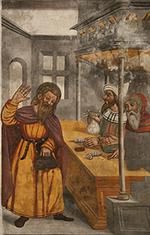
We often have legitimate reasons to assign blame and even to react with righteous indignation. Injustice requires moral clarity and resistance. But more often, the reflex to blame operates on a smaller, more petty level. You distracted me. You misunderstood me. You made me do it. And the crown jewel: “You do not understand that it is expedient for you that one man should die for the people, and that the whole nation should not perish.” (John 11:50) The temptation of human sacrifice to deflect our sins lurks beneath the surface.
The reflex to blame magnifies hurts and insults, breaks up marriages, and tears communities apart. It evades personal responsibility and the need for change. We can run, but we cannot hide. Indeed, some emotional problems are rooted in blaming others and failing to take responsibility for our own sinful actions, as well as failing to change course.
Yet taking responsibility for our lives remains elusive. The more we ponder the state of our souls, the more we realize how difficult it is to stand honestly before God. During a serious examination of conscience, we measure our lives against God’s law and dominion with sobriety and precision, weighing our responsibilities and failures.
Our sinful inclinations are countless—the lingering effects of Original Sin. Yet it is helpful to identify our predominant sinful tendencies. An inclination, like a feeling, is not a sin unless acted upon. A worthy examination of conscience is arduous. As we review our behavior since our last confession, invoking God’s grace, we honestly consider the components of the sins we have committed.
The vocabulary of the Church’s moral theology helps us achieve precision in our self-accusation. We commonly hear someone admit to “inappropriate” behavior when they mean various forms of impurity. Thus, we use softer words to deflect painful self-indictment. Avoiding the vocabulary of Catholic moral theology blunts conviction and shields us from the sting of personal responsibility.
There is no need to be overly technical, but it may help to begin the specific confession of sins with the phrase, “I accuse myself of…” The phrase stings—and it fosters precision. We are less likely to say, “I accuse myself of feeling angry.” We are more likely to say, “I accuse myself of expressing my anger through petty and hateful remarks.”
We may even group our sins around the threefold temptations Jesus faced in His encounter with the Devil in the desert. Where have I yielded to the allure of the world and the lust of the flesh? Have I given the Devil free rein over my memory and imagination? Have I unjustly blamed others for my shortcomings? Or have I taken responsibility before God and man for who I am and for the person I intend to become, with God’s grace?
Good Catholics do not blame Adam and Eve for their sins, tempting though it is. We stand before God without excuse. We take responsibility for our failures. We turn to Jesus for mercy. And He Himself becomes our defense as He redeems us on the Cross: “Father, forgive them, for they know not what they do.” (Luke 23:34)

Fr. Jerry Pokorsky is a priest of the Diocese of Arlington who has also served as a financial administrator in the Diocese of Lincoln. Trained in business and accounting, he also holds a Master of Divinity and a Master’s in moral theology. Father Pokorsky co-founded both CREDO and Adoremus, two organizations deeply engaged in authentic liturgical renewal. He writes regularly for a number of Catholic websites and magazines. See full bio.
All comments are moderated. To lighten our editing burden, only current donors are allowed to Sound Off. If you are a current donor, log in to see the comment form; otherwise please support our work, and Sound Off!