What if I’m wrong?
By Phil Lawler ( bio - articles - email ) | Feb 24, 2026
Sometimes after I post a piece, confidently giving my opinion on this or that issue, I sit back and ask myself: “But what if I’m wrong?”
It’s healthy to ask that question, I think. Perhaps many readers would suggest that I ask it more often. But in my case, if and when I am wrong, not too much harm is done. My writing reflects only my opinions, which come with no guarantees. Outside my own household I cannot speak with authority.
For those who do teach with authority, and especially for those who have the pastoral care of souls, that question is much more important. A pastor, a bishop might be clear in his own thinking. But before he takes a fateful step—especially on a matter that is hotly disputed—he needs to take the question to prayer: What if I’m wrong?
There is no guarantee of freedom from error except in the Catholic Church, guided by the Holy Spirit. Even in the Church, that infallible judgment is guaranteed only to the Roman Pontiff and the bishops in communion with him. So the Society of St. Pius X (SSPX) is taking a very dangerous step in threatening to consecrate new bishops without a papal mandate, thus risking a rupture in their communion with the Holy See.
Yes, I know that the SSPX believes a judgment of schism would be invalid. But what if they’re wrong. I realize that they argue their breach of ecclesiastical discipline would be justified on grounds of necessity. But what if they’re wrong? It is no small matter to profess that salvation comes only through the Catholic Church, and then to sever (or at least strain) those attachments.
The cardinals’ pleas
Cardinal Robert Sarah, who like the SSPX decries the many abuses and uncertainties within the Church today, has issued a heartfelt plea for the group to avoid a further rift. “I know only too well how the deposit of faith is sometimes scorned even by those who have the mission to defend it,” he says. Nevertheless he counsels the traditionalist group to show “a supernatural understanding of canonical obedience, which guarantees our bond with Christ himself.” The cardinal explains:
But salvation is Christ, and He gives himself only within the Church. How can one claim to lead souls to salvation by paths other than those He himself has indicated to us? Is it truly to will the salvation of souls, to rend the Mystical Body of Christ in a perhaps irreversible way?
While SSPX leaders insist that they proudly uphold the unchanging truths of the faith, Cardinal Gerhard Müller—another prelate who is ready to join the SSPX in the denunciation of doctrinal novelties—observes that “schisms, unlike heresies, also arose and solidified among orthodox Catholics. He continues:
While other ecclesial communities may claim to be Catholic because they agree wholly or almost entirely with the faith of the Catholic Church, they are not truly Catholic unless they also formally recognize the Pope as the supreme authority and practice sacramental and canonical unity with him.
Cardinal Müller goes on to suggest that union with the Pope is also the best strategic option for the SSPX. He acknowledges that…
…great uncertainties regarding dogmatic questions and even heresies have infiltrated the Church. But in the 2000-year history of the Church, heresies from Arianism to Modernism were only overcome by those who remained in the Church and did not turn away from the Pope.
An imprudent plan
At this point—having announced that the unauthorized episcopal ordinations will take place, even in the face of a stern Vatican warning—the SSPX may already have crossed the Rubicon. Backing down, or reaching a last-minute compromise with the Vatican, might precipitate a split within the traditionalist group itself. Still, is there no room for maneuver?
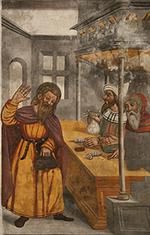
The SSPX says that their group needs bishops, to ensure the preservation of their witness. But there are two SSPX bishops now, and no doubt others who, although not members of the group, would join in a future consecration. Does the group—which professes to be working for reform in the universal Church—think that there is no hope for reform except within its own ranks? That no bishops other than SSPX members can be trusted to continue the work? The test proposed by Rabbi Gamaliel seems relevant here; if the work of the SSPX is the mandate of the Holy Spirit, it will surely overcome any current ecclesiastical barriers.
And of course there are groups outside the SSPX, acting within the ecclesiastical structures, to further the same goals. A precipitous action by the SSPX could damage the standing of these other groups. Joseph Shaw, the chairman of the Latin Mass Society, has complained that the ruckus over the SSPX has “thrown a hand grenade” into efforts to secure a relaxation of the restrictions imposed by Traditionis Custodes. He worries that “we risk being lumped together by people who don’t care one way or the other.”
For all these reasons I deeply regret the SSPX plan to proceed with the episcopal ordinations. But what if I’m wrong?
An overdue reckoning
What if this seemingly rash initiative by the SSPX is the best way to force a long-overdue Vatican reckoning with the doctrinal, pastoral, and liturgical abuses that have proliferated in the years since Vatican II? Traditionalists are not alone in their frustration with the corruption of the faith and the absence of any effective disciplinary response from Rome. What if a serious discussion might clarify some of the disputed teachings of the Council? What if, in the aftermath of a pastoral council, we now need a dogmatic follow-up, to define and anathematize errors that have become all too prevalent?
Bishop Athanasius Schneider remarks that the current dispute “exposes, before the eyes of the whole world, a wound that has been smoldering for over sixty years. This wound can be figuratively described as ecclesial cancer—specifically the ecclesial cancer of doctrinal and liturgical ambiguities.” Curing that cancer can only advance the cause of the faith.
In the past few weeks some generally conservative Catholic writers have betrayed an unseemly eagerness to lower the disciplinary boom on the SSPX, to be done with their arguments, to banish them forever. Father Robert McTiegue has noticed the tendency to respond to traditionalists’ critical observations with the argument that Ring Lardner made famous: “Shut up, he explained.” That attitude contrasts sharply (and unfavorably) with the pastoral solicitude that Pope Benedict XVI displayed in 2009, when he lifted the excommunications of the SSPX prelates, explaining:
Can we be totally indifferent about a community which has 491 priest, 215 seminarians, 6 seminaries, 88 schools, 2 university-level institutes, 117 religious brothers, 164 religious sisters, and thousands of lay faithful? Should we casually let them drift further from the Church?
Since Pope Benedict wrote those words, the number of SSPX priests has jumped by almost exactly 50%, the number of seminarians by 25%. Insofar as an institution is known by its fruits, this group appears healthier than most other Catholic ecclesial units in the early 21st century. All the more reason for Vatican officials to ask themselves, before pronouncing sentence on the traditionalist group: What if we’re wrong?
Bishop Schneider makes the surprising proposal that Pope Leo could defuse a crisis by simply giving his approval to the SSPX plan to consecrate new bishops. (He would, presumably, then have the opportunity to vet the appointments.) That gesture, Bishop Schneider reasons, “would stand as a profound testimony to the pastoral charity of the Successor of Peter.”
If he chooses, Pope Leo, with his own expertise in canon law, might find some other way to reach some common ground with the SSPX without compromising his own authority. Even without making any concessions, he could agree to meet personally with the SSPX leaders before any final action is taken. Some Catholics would say that the SSPX leadership has done nothing to deserve such a face-to-face meeting, and they would be right. But the pastoral needs of thousands of people are reason enough to set protocol aside. And Jesus dined with sinners.
Phil Lawler has been a Catholic journalist for more than 30 years. He has edited several Catholic magazines and written eight books. Founder of Catholic World News, he is also the lead news analyst at CatholicCulture.org. See full bio.
All comments are moderated. To lighten our editing burden, only current donors are allowed to Sound Off. If you are a current donor, log in to see the comment form; otherwise please support our work, and Sound Off!

-
Posted by: dover beachcomber -
Mar. 01, 2026 3:22 PM ET USA
I no longer understand what it means to be "in communion with Rome." Heretic German bishops trample the Faith in their country, and Rome does nothing. The shameful (and still secret) Francis-era agreement with China gives the Chinese Communist Party free rein to appoint bishops who sacrifice the Faith of their flocks to its purposes, and Rome does nothing. But let the SSPX try to appoint orthodox bishops, and Rome pounces.
-
Posted by: philtech2465 -
Feb. 26, 2026 12:39 PM ET USA
The comment "lack of trust on both sides" nails it. However, the sides are not equal in status, which is the error that the SSPX insists in making. To be Catholic, you have to be in communion with the Bishop of Rome. You do not get to negotiate the terms of that communion. You don't have your own independent Magisterium. That's not to say the SSPX can't express their concerns, many of which are valid. It does mean that at some point, they are either in Holy Mother Church -- or out.
-
Posted by: rghatt6599 -
Feb. 25, 2026 7:00 PM ET USA
The issue is a lack of trust on both sides. The prefect of the Dicastery for Divine Worship, Cardinal Roche, scorns the ancient traditional liturgy and is very worried by the continued existence pre-Vatican II expressions of the faith. Cardinal Ferandez, at the Dicastery for Doctrine, has not been a firm defender of Catholic orthodoxy and morals, and he has written books that are unworthy of a Catholic priest. It is early in his papacy but as you noted in a previous commentary Pope Leo seems to be doubling down on Pope Francis’ reforms. Disobedience to Peter is problematic, but what do you do when the evidence strongly suggests that Rome is the problem?
-
Posted by: Crusader -
Feb. 25, 2026 10:51 AM ET USA
Pope John said he was not calling a Doctrinal Council. Pope Paul VI at the Council conclusion said it was not a Doctrinal Council. The SSPX say they accept all doctrines prior to V II. The Vatican says they must accept the doctrines of Vatican II. Can the Vatican list the new doctrines of Vatican II that the SSPX must accept? Can the SSPX list what new items of Vatican II they do not accept? Can we then just sort out what is doctrine and what is policy and practice?
-
Posted by: feedback -
Feb. 25, 2026 8:26 AM ET USA
What rubs me the wrong way is that at the same time the Chinese Communist Party can ignore papal approval, or disapproval, for new Catholic Bishops without the threat of excommunications for anyone involved. Pope Leo, please get yourself good new advisors! Consider Bishop Schneider and Bishop Strickland. https://www.catholicculture.org/commentary/chinas-puzzling-influence-on-conclave/
-
Posted by: Carole Foryst -
Feb. 24, 2026 8:03 PM ET USA
In the past,the Vatican has approved bishops selected by the Chinese government, contrary to the agreement that the Vatican would select the bishops. It seems reasonable to assume SSPX choices for Bishops would be as good or better, and worthy of Vatican approval.