On life in the midst of indifference to Christ
By Dr. Jeff Mirus ( bio - articles - email ) | Aug 18, 2026
It is very difficult to know what to do about the world’s indifference to Christ, or even about the frequent indifference of the Catholic Church to what her members believe, how they think, and how they behave. We know from endless polls that acceptance of the teachings of the Church is greater among Catholics the more frequently they attend Mass, but the correlation is far from absolute. And even those who attend Mass frequently will have had to learn much about what the Church teaches on their own. To take one example of what I am getting at, countless studies have shown that the commitment to Christian morality, including Christian voting habits, tends to be much stronger among Evangelicals than among Catholics. And while there is certainly some correlation between the frequency of Mass attendance and a deep commitment to Catholic faith and morals, that correlation is not even close to absolute.
In a typical Catholic parish, I suspect, there is far more emphasis on engaging parishioners in common social activities than engaging them in a deep commitment to what it means to think like a Catholic—that is, to be highly counter-cultural in our beliefs, ideas and commitments. To cite one thing that is notably scandalous, it is extremely rare (really, to the point of non-existence) for Catholic bishops or priests to publicly rebuke or ecclesiastically discipline Catholic politicians who promote clearly immoral policies. It is just as rare to hear direct Catholic teaching from the pulpit on the most pressing moral issues of our time, or on the difference between what we might call worldly and Christian habits. What even the Catholic Church lacks in the modern era is an effective emphasis on a coherent Christian life and discipline.
Outside the confessional
One can argue that the least visible way—that is, the way of the confessional—is the best way. But such a strategy relies primarily on the sinner to get at his own sins. The sinner does not forgive his own sins, of course, but it is the sinner who must bring them up in the first place. The confessor is not going to say, “Now, let’s talk turkey. I know you’ve rarely been to Mass, your tax records show that you donate to Planned Parenthood, and it appears you’ve been purchasing a great many contraceptives—which you haven’t even been using at home. Your children aren’t getting a Catholic education. I’ve seldom seen you at Mass. And, by the way, your charitable contributions wouldn’t impress a ten-year-old.”
In fact, even if the the confessor could know and say these things, this particular Catholic probably wouldn’t be in the confession line. At best, the priest would have to haul the irregulars into the confessional before Mass on Christmas or Easter. Of course it is also true that the people who need it the most seldom come to Mass or go to Confession. But what this means is that, in addition to whatever informal and formal outreach methods the priest and the parish may undertake, priests must in some sense whip the Mass-goers into shape for both a deeper personal commitment and evangelization. Most people can’t do a great deal, and probably aren’t called to do a great deal. But everybody can do something, either through prayer or direct action.
There are a number of standard ways to get Catholics more involved, of course, chiefly surrounding the reception of the sacraments by children. There are many relatively inactive and seldom-practicing Catholics who still want their children to be baptized, receive First Communion, and be confirmed. Unfortunately, in too many cultural situations, confirmation is perceived as a sort of graduation from “going to Church”, perhaps with a brief return as a part of marriage preparation, and for the wedding itself. The bottom line is that the number of nominal Catholics far exceeds the number of Catholics who regularly attend Mass (and keep the other laws of the Church). To put this in another perspective, only a relatively small percentage of baptized Catholics actually practice their Faith. And it is an even smaller number who accept all that the Church teaches.
Throughout the West, in fact, and despite improvements in many places over the past generation, the number of genuinely active Catholics is a relatively small percentage of the whole. Sadly, even the sum total of nominal Catholics is dwarfed by those who are not even nominal.
Solutions?
One inescapably wonders how spiritually different this is from the historical norm. My lifespan extends from the post-World War II era, when most Americans, including most American Catholics, still attended Church, on into the 2020s when most Americans (including American Catholics) no longer see either Church affiliation or Church attendance as a significant priority. This suggests, after all, that WWII Catholics themselves typically lacked deep conviction, so quickly did they and their children fall away when the dominant culture shifted. Most of us, of course, are largely products of the culture that surrounds us, but what we almost always fail to perceive is that the dominant culture is typically what we might call spiritually bad. It may be extraordinarily bad now, but it doesn’t have to be extraordinarily bad to dissuade people from taking Christ and His Church seriously. For that, it just has to be normally bad.
I’m afraid that the only solution to this has always been prayer, evangelization, infinite patience, and in particular the sacrifices of those whom we might as well call the “few”. The “many” appear, at least, to be irretrievably lost. Yet even this is an understatement, for all of us, without the grace of God, are finally and irretrievably lost. The prospects for this world are, after all, extraordinarily distressing—that is, they are extraordinarily distressing without the death and resurrection of Jesus Christ. When we look into the abyss of this world and frankly realize how genuinely terrible things are when it comes to the state of souls, it is a wonder that we have the temerity to hope for any positive outcome.
But this is the miracle of Christ. Like St. Paul, we must decide “to know nothing except Jesus Christ and him crucified” [1 Cor 2:2]. Our message must not be “in plausible words of wisdom, but in demonstration of the Spirit and of power” [v.4]—and perhaps the greatest demonstration of this power is simply a genuinely imperturbable and astonishing witness against all odds. The fact that we stand for Christ in every circumstance must be enough for us, and for others, until the time when He comes.
It goes without saying that we must always look for opportunities. And certainly the Church can never be satisfied merely with the opportunities she has already taken. But the following personal observation may also resonate with a few others: After a lifetime of pouring energy into “my projects”, perhaps I can frankly recognize my own futility—and resolve at last to trust God more than I trust myself.
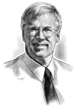
Jeffrey Mirus holds a Ph.D. in intellectual history from Princeton University. A co-founder of Christendom College, he also pioneered Catholic Internet services. He is the founder of Trinity Communications and CatholicCulture.org. See full bio.
All comments are moderated. To lighten our editing burden, only current donors are allowed to Sound Off. If you are a current donor, log in to see the comment form; otherwise please support our work, and Sound Off!

-
Posted by: winnie -
Aug. 20, 2026 11:38 AM ET USA
Isaiah 49:4. Though I thought I had toiled in vain, for nothing and for naught spent my strength, Yet my right is with the LORD, my recompense is with my God.
-
Posted by: Crusader -
Aug. 20, 2026 9:12 AM ET USA
"It is just as rare to hear direct Catholic teaching from the pulpit on the most pressing moral issues of our time," Truer words were never spoken.
-
Posted by: caroleuhlarik4443 -
Aug. 19, 2026 11:49 PM ET USA
Thank you for your words of wisdom, especially the very last sentence. It definitely resonated with me after years of working for the Church. I will try to trust God more than I trust myself. He knows what He’s doing, and I can leave it all in His hands.