Confronting the Ideology of Inevitability
By Fr. Jerry Pokorsky ( bio - articles - email ) | Mar 09, 2026
Politics is the art of the possible, requiring the careful application of enduring principles to everyday circumstances. Catholic doctrine—unchanging moral truths applying to all tribes and nations—must remain sharply distinct from the prudential judgments required for political action.
Prudence bridges universal truths to local circumstances. The queen of all virtues guides political choices but never replaces Christ’s ultimate rule of life, entrusted to the Church for our salvation.
Jesus did not engage in politics as commonly understood. The Gospels do not portray Him as a partisan or an advocate of specific economic or foreign policies. He’s not a warlord like Muhammad. Nor is He a philosopher like Socrates. He speaks with authority.
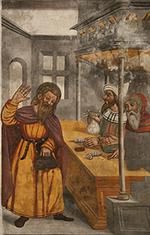
Christ offered no theory of Roman rule. Before Pontius Pilate, He simply reminded him that all authority comes from above. When He told His disciples to render to Caesar what belongs to Caesar and to God what belongs to God, He affirmed a real distinction between temporal and divine authority without endorsing any regime.
Among the Twelve were men from opposite political worlds: Simon, the Jewish Zealot, and Matthew, the tax collector who cooperated with Rome. Yet Christ’s teaching was not shaped by their allegiances. He formed disciples, not strategists.
The calling of the Twelve, echoing the twelve tribes of Israel, reveals the same pattern: continuity, fulfillment, and universality. In His encounter with the Samaritan woman, Jesus addressed a religious dispute. The Samaritans accepted the Torah but rejected the Prophets and worshiped on Mount Gerizim rather than in Jerusalem.
Jesus affirmed that salvation is “from the Jews,” yet declared that the hour had come when true worship would be offered neither on that mountain nor in Jerusalem, but “in Spirit and truth.” Henceforth, worship would transcend sacred geography and center on Him and His saving work. We sense hints of the Holy Sacrifice of the Mass in these words.
The sacrifice of the Cross fulfills and surpasses Temple worship. The destruction of the Temple later confirmed in history what Christ had already accomplished in Himself. He entrusted to the Church His “way, the truth, and the life.”
The Catholic Church is the new People of God. St. Paul teaches that the Church is grafted into the promises made to Israel and carries them to their fulfillment in Christ (cf. Romans 11). The Church is the custodian and authentic interpreter of His words (cf. Matthew 16:18). With God's grace, the Church proposes moral principles rooted in revelation, illuminated by reason, and applied to the circumstances of life.
Authentic prudence remains faithful to binding truths and soberly assesses facts. We argue reasonably, garner sufficient facts, and never violate the principles that direct moral action. Church teaching protects the dignity of human freedom and the responsibility of conscience.
Rooted in the Gospel and developed within the natural law tradition, Church teaching establishes moral limits on the use of force. The Church’s just-war tradition teaches that the response of military action requires grave harm inflicted by an aggressor, war as a last resort, a serious prospect of success, and the proportionate use of arms. These principles bind conscience. Their application, however, requires careful judgment by those responsible for the common good—our leaders. Christ rules through the universal Church, where “All nations will come to adore Him” (cf. Psalm 86).
But some Christians hold that the promises made to Israel remain apart from the Church, awaiting fulfillment in a rebuilt Temple, ushering in the Second Coming. Protestant dispensationalism is a theological system that emerged in the nineteenth century through the teaching of John Nelson Darby and was later popularized in the United States. It divides salvation history into distinct “dispensations” or eras in which God administers His purposes in different ways, and maintains a sharp distinction between Israel and the Church.
Dispensationalists teach that Christianity did not fulfill Israel. Rather, biblical promises to ethnic Israel remain to be fulfilled in a future earthly kingdom. Events in Jerusalem are not merely political developments, but rather necessary steps in a prophetic timeline. The final dispensation will see a period of tribulation, the rapture of the Church, the rebuilding of the Temple, and a literal thousand-year reign of Christ.
Dispensationalism promotes a dangerously detailed interpretation of prophetic Scripture, especially concerning Israel and the end times. The urgency of rebuilding the Temple, devoid of moral guidelines, to usher in the end times becomes a fearful imperative.
The immensely influential Hal Lindsey (author of The Late Great Planet Earth, 35 million copies sold) wrote that the Dome of the Rock appeared to stand on the site of the ancient temple and that a new temple would eventually be rebuilt there because “prophecy demands it.” (Alas, church-going Catholics are often completely unaware of this pervasive and perverse heresy.)
If military conflict is seen as advancing God’s prophetic plan, prudential judgment, as governed by conscience, is displaced. War ceases to be a tragic last resort measured by moral law and instead appears as cooperation with alleged end-of-times prophecies. The consideration of just-war principles evaporates. It is replaced with a pseudo-theocracy driven by alleged prophecies (parallels to radical Islam are unmistakable).
Apocalyptic expectation overshadows carefully crafted moral limits developed over centuries. Conscience and human freedom give way to the inevitability of Protestant dispensationalist prophecies. A prophetic narrative that drives historical circumstances and results undermines Christian moral principles and the demands of conscience.
The Church’s moral authority relies on human reason purified by faith. Her principles function as universal guardrails, protecting both the integrity of theology and the discipline of moral reasoning in public life. Catholic orthodoxy respects the dignity of human freedom, subject to the dictates of conscience, and avoids the ideology of inevitability. It establishes principled guidance to practical politics.
Faith seeking understanding is the remedy. We distinguish between God’s revelation and our response of hard work and respectful argument. Fidelity to truth in charity, not heretical Scriptural interpretations, directs us to the Kingdom of God.
Fr. Jerry Pokorsky is a priest of the Diocese of Arlington who has also served as a financial administrator in the Diocese of Lincoln. Trained in business and accounting, he also holds a Master of Divinity and a Master’s in moral theology. Father Pokorsky co-founded both CREDO and Adoremus, two organizations deeply engaged in authentic liturgical renewal. He writes regularly for a number of Catholic websites and magazines. See full bio.
All comments are moderated. To lighten our editing burden, only current donors are allowed to Sound Off. If you are a current donor, log in to see the comment form; otherwise please support our work, and Sound Off!