Essential Phenomenology
By Fr. Jerry Pokorsky ( bio - articles - email ) | Sep 29, 2026
Over the last century, phenomenology has become an essential philosophical discipline. As the word suggests, phenomenology studies phenomena—how things manifest themselves to us. How does an underlying reality become perceptible? Essentially, I am a man, and my physical features manifest something of that reality.

The parable of the two sons (cf. Matthew 21:28–32) helps us understand the integrity of human existence: whether our outward manifestations correspond with our inner selves.
As we try to get to the heart of the matter, we often begin with the word “essentially.” Also, we sometimes hear that “appearance is reality.” But that assertion is too categorical. We hope appearances disclose reality, but appearances can also disguise it. Appearances are easily misunderstood and can become grist for the gossip mill. A husband who fails to come home on time may be delayed for good or ill reasons. Appearances alone do not tell the whole story.
In the Gospel, Jesus is approaching His final confrontation with the religious authorities. The setting is Holy Week. He enters Jerusalem on Palm Sunday and, with holy anger, cleanses the Temple. The chief priests and elders challenge Him on His authority. He invokes the memory of John the Baptist and their rejection of him. His parables then become increasingly pointed and accusatory. The parable of the two sons is a rhetorical gut punch.
A father sends two sons into the vineyard. The first son refuses, but later relents and obeys. The second son cheerfully agrees. But he does not fulfill his promise. The parable explores the relationship between appearance and reality. External behavior reveals something about interior disposition. As the saying goes, action speaks louder than words.
One son was all words and no action. The other resisted the tug of obedience but eventually complied. The first son’s initial “no” was not his last word. He repented and finally obeyed his father. The second son’s “yes,” by contrast, was a lie because it disguised his disobedience.
Jesus concludes with a startling condemnation that offends our sensibilities:
Truly, I say to you, the tax collectors and the harlots go into the kingdom of God before you. For John came to you in the way of righteousness, and you did not believe him, but the tax collectors and the harlots believed him; and even when you saw it, you did not afterward repent and believe him.
Catholic moral theology observes that we become, in an important sense, what we choose. Spouses who honor their marriage vows become what their promises declare them to be: faithful spouses. A person who deliberately steals becomes a thief. Every deliberate sin deforms the person who chooses it because our actions are not merely external events. They shape the person we become.
Our sins can begin to define who we are becoming, but God refuses to define us by our sinful inclinations. We are His children. Repentance changes our direction in life. When we repent of grave sins, God forgives mortal sins and remits eternal punishment.
The tax collectors and sinners whom society despised repented in response to John the Baptist. Those living contrary to God’s law could turn back toward God. They could become obedient children and grow in virtue. They would enter the kingdom before those who talked the talk of religion but did not walk the walk.
We must honestly admit to a good deal of externalism in our worship of God. Church-going Catholics—priests and lay people—can sometimes go through the motions at Mass with minds and hearts a hundred miles away. It is a paradox of our humanity that the more we profess our belief in Catholic teaching and attend Mass, the more we become vulnerable to the charge of hypocrisy if our outward profession does not match our lives.
Sometimes the contrast is humorous:
Many years ago, I got lost in Jerusalem and entered a Holy Land religious-goods store. As I waited for my group to return, I asked the proprietor if I could use his store for a few minutes. He kindly agreed.
But he knew a potential customer when he saw one. As I admired a priestly garment, the proprietor repeatedly asked me to make an offer.
“$150?”
I graciously explained that I wasn’t interested.
“Wait. $125?” Really, it’s very nice. But no.
“$100?”
Worn out, I finally said, “$50.”
Indignant, the proprietor grabbed the garment and exclaimed, “And you call yourself a priest!” (True story!)
Sometimes the contrast is grim:
We have all heard stories of priests—beginning with Judas Iscariot—who betrayed their priestly offices. But look at the bright side. A bad priest provides cover for every bad Catholic. “You will know them by their fruits.” (Matthew 7:20)
Catholic politicians who publicly profess the Catholic faith while supporting abortion come to mind. So do Catholics who vote according to their pocketbooks or political ideologies rather than according to a conscience formed by authentic Catholic moral teaching. We may call ourselves Catholics, but behave like unbelievers.
We cannot reliably infer another person’s interior disposition from external appearances. Appearances can deceive. “For the Lord sees not as man sees; man looks on the outward appearance, but the Lord looks on the heart.” (1 Samuel 16:7) Our diagnosis of others’ motives usually ends in futility. But our self-examination may end in repentance.
Over a lifetime, with God’s grace, especially through our encounter with Him in the Sacraments, we struggle to allow the externalism of Catholic worship to penetrate and transform the hidden realities of our existence.
Our “yes” to God must become our way of life. Our profession of faith must become a life of obedience. Our worship must move beyond mere external compliance with the Third Commandment and become generosity. With God’s grace, the faith and charity we profess outwardly will increasingly reveal the reality of Christ within us.
Sanctity is phenomenology at its best.
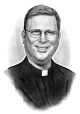
Fr. Jerry Pokorsky is a priest of the Diocese of Arlington who has also served as a financial administrator in the Diocese of Lincoln. Trained in business and accounting, he also holds a Master of Divinity and a Master’s in moral theology. Father Pokorsky co-founded both CREDO and Adoremus, two organizations deeply engaged in authentic liturgical renewal. He writes regularly for a number of Catholic websites and magazines. See full bio.
All comments are moderated. To lighten our editing burden, only current donors are allowed to Sound Off. If you are a current donor, log in to see the comment form; otherwise please support our work, and Sound Off!