5.42 St. Alphonsus Liguori: Most Zealous Doctor
By Dr. James Papandrea ( bio - articles - email ) | Sep 09, 2026 | In Way of the Fathers (Podcast)
Listen to this podcast on: Apple Podcasts | Spotify | RSS feed | YouTube Channel
This is a listener-supported podcast! Thanks for your help!
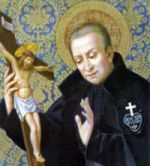
St. Alphonsus Liguori (1696—1787) was a priest, bishop, spiritual director, retreat leader, musician and composer. Co-founder of the Redemptorists, he was a teacher of prayer, and a very popular confessor, who knew how to bring people to repentance.
Links
Liguori’s Duetto—https://www.youtube.com/watch?v=CYyHfHbHRxc
Pope St. John Paul II Apostolic Letter Spiritus Domini on St. Alphonsus Liguori (1987)—https://www.ewtn.com/catholicism/library/spiritus-domini-8413
Dr. Papandrea’s Homepage: https://jimpapandrea.wordpress.com/
Dr. Papandrea’s latest book—Praying the Wisdom: Inspired Prayers for Lectio Divina and Contemplative Prayer: https://sophiainstitute.com/product/praying-the-wisdom/
Dr. Papandrea’s YouTube channel, The Original Church: https://www.youtube.com/@TheOriginalChurch
Theme Music: Gaudeamus (Introit for the Feast of All Saints), sung by Jeff Ostrowski. Courtesy of Corpus Christi Watershed: https://www.ccwatershed.org/
TRANSCRIPT:
Welcome to The Way of the Fathers, a production of Catholic Culture. I’m Jim Papandrea. To support this podcast, go to catholicculture.org/donate.
Today, we continue our series on the Doctors of the Church with St. Alphonsus Liguori, priest, bishop, spiritual director, retreat leader, musician and composer, co-founder of the Redemptorists, and a very popular confessor who knew how to bring people to repentance. He said, “The deeper a soul has fallen into sin, the more it is bound by the powers of hell, the greater should be the kindness of the confessor in order to win it to repentance, to snatch it from the devil, and to bring it to the arms of Jesus Christ.” In other words, the longer it’s been since the last confession, the gentler you have to be with the person. But this was not the method of the time, and he was criticized for it.
Coming off of our seven overlapping doctors of the Catholic Reformation, we now have a gap of almost a century to get to the life of St. Alphonsus. Of course, the Protestant Reformation was still ongoing, with second and third waves inventing new doctrines, like only adults can be baptized.
But the new issue in the lifetime of Liguori was the Enlightenment. In fact, St. Alphonsus once tried to give advice to that famous critic of the Church, Voltaire. In a letter that was never received, St. Alphonsus wrote, “I was grieved indeed and wept to see that truly great intellect you received from God so misused by you these many years.” For context, the American Revolution took place during St. Liguori’s lifetime, and the French Revolution started just two years after Liguori died.
In the year 1696, in the little town of Marianella, Italy, now basically a suburb of Naples, a little boy was born. His name was Alfonso Maria Antonio Giovanni Francesco Cosma Damiano Michelangelo Gasparo de Liguori. That’s how many saints his mother hoped would be praying for him. In fact, if you go to Naples today, to the church of Santa Maria dei Vergini, you can see that name in the baptism registry, and you can also see that someone later wrote in the margin next to his name, ‘Beatified September 1816, canonized twenty-six May 1839, declared a Doctor of the Church twenty-three March 1871.’
He was the oldest of eight children, and of the seven who survived beyond infancy, five, including him, would become clergy or religious. As a child, little Alfonso liked to play church and pretend to be a priest presiding over Mass. He grew up in a household rather like our impression of the Von Trapps from the movie The Sound of Music. A Navy father who was a man of faith but treated his children like the sailors on his ship, and a devout, soft-hearted mother who was raised in a convent and who continued as much of the daily life of a nun as she could. She made sure that little Alfonso had a spiritual director at the age of seven. And of course, there was a love for music in the home. In fact, Alfonso’s music teacher was a famous disciple of the great Scarlatti, and he became an accomplished harpsichord player and composer.
Actually, Alfonso got all of his early education from private tutors. And like several of our doctors, his father’s ambition for him was that he become a lawyer and go into politics. And he did become a lawyer, graduating from the University of Naples Law School at the age of sixteen. That’s both civil law and canon law, which is quite an accomplishment. But before you think he was the Doogie Howser of law, graduating at that age was not all that unusual at the time. There was still a time of apprenticeship until about the age of eighteen or nineteen, and then he began his law practice. And he did go into politics. With the help of his family’s connections, he had a seat in the parliament of the Kingdom of Naples.
Now, just a quick aside here. You have to remember that Italy as we know it did not become a unified nation until 1870. Before that time, it was a patchwork of kingdoms and dukedoms and with the papal states, land controlled by the church, right in the middle. The Kingdom of Naples included most of southern Italy and sometimes Sicily. It’s more complicated than that, of course, but that’s about all the detail we need for the story of St. Alphonsus. The point for now is that St. Alphonsus went to university in a place where the professors were trying to indoctrinate the students toward an anti-church bias that was partly based on kings not wanting the pope telling them what to do, but also based on the new secular materialist philosophies of the so-called Enlightenment. Come to think of it, it was pretty much the same when I was at the University of Minnesota. At any rate, St. Alphonsus rejected their philosophy and would be one of the church’s greatest defenders of a Christian worldview.
As a lawyer and a politician, St. Alfonso spent his free time with an organization that ministered to the homeless and the patients in a hospital for the poor. He would later join another organization that also took care of burials for the poor, gave hospitality to pilgrims, and ministered to prisoners. At about the age of twenty-five, Alfonso went on a Holy Week retreat. He would later refer to this retreat as his conversion, and some versions of his life story make it seem like all the devotion for God and love of the Church from his childhood that he had somehow lost came back to him. But the truth is he never really lost it. It was always there, though this retreat may have been the moment when he finally decided to quit practicing law and become a priest. Well, he didn’t quit yet, not for over a year, but he did begin going to Eucharistic adoration every day, and he would continue that daily habit for the rest of his life. His father arranged a marriage for him twice, but he had already made up his mind to become a priest. He just wasn’t telling anyone yet.
It’s said that in his law practice, he never lost a case until he did. He lost his last case as a lawyer, though why that happened is a matter of debate. Some versions of the story say that the case was lost by his own negligence, that he somehow overlooked some important document, and so he was so upset and humiliated by this that he locked himself in a room and fasted for three days, and then he quit the law and started visiting the sick. Now, the more scholarly treatments of his life take into account the context of the time. He had taken on a case against the powerful Medici family in Florence. He was never going to win that case. The only question at the time would have been how much the Medicis would have to pay for their win. In the end, St. Alphonsus and his clients were the victims of political intrigue and good old-fashioned bribery. He is said to have cried out as he ran from the courtroom, “World, I know you now!” There is also a story that he had a vision of a bright light enveloping him, and he heard a voice telling him it was time to become a priest. And so he left his sword on an altar dedicated to the Blessed Virgin. But this can’t really be confirmed. In any case, the loss of a big case did motivate him to pull the trigger on his career change. According to the story, his father was so angry that he said to his son something to the effect of, “I can’t stand the sight of you.”
When Alphonsus, the ex-lawyer, went to inform the Archbishop of Naples his desire to become a priest, some versions of the story say that his father finally relented, accepted the will of God, and went with him to meet the archbishop. Other versions of the story say he did not. And so at about the age of twenty-six or twenty-seven, Alfonso began his studies for the priesthood. Interestingly, seminary at this time and place meant living at home and studying under private tutors. And for formation, candidates joined another one of those organizations that ministered to the poor and met together for prayer. This is when the saint probably was introduced to his spiritual hero, St. Francis de Sales. And in this group, St. Alphonsus got into the ministry of accompanying those condemned to die, walking with them to their execution, and burying them. He was ordained at the age of thirty.
And now here’s another little aside for context. In 1726, in the Kingdom of Naples, there was no shortage of vocations. What they had was a shortage of priests who actually fulfilled the vows and duties of the priesthood because you see, people became priests for reasons of networking and political advantage and to avoid paying taxes and for a paycheck that would come even though they never did the job, what in another time and place would be known as a no-show job. Going by the numbers alone, Naples didn’t need another priest. The metropolitan area had fifteen hundred diocesan priests and a hundred monasteries full of priests, most of whom never served in a parish, never presided over sacraments, never preached a homily, never ministered to anyone, and were not celibate. Some did their one Mass a week but never heard confessions, preached, or visited anyone, and many somehow skipped over the part where they were supposed to learn theology. So the king was actively trying to decrease ordinations. What this meant for St. Alfonso was that his mission would be to try to catechize the clergy and get them to actually do their job. For the next five years, he was a street preacher and missionary to the poor and imprisoned in the region of Naples.
During this time, he created a kind of small groups ministry called the Association of Chapels or the Evening Chapels. The members met in homes or in shops or in chapels to pray and receive formation, and then they went out and visited the sick and cared for the poor. Also during this time, St. Alphonsus entered something called the Chinese College, which was a kind of missionary school to prepare people to go and bring the gospel to East Asia. As it turned out, though, St. Alphonsus never traveled outside the Kingdom of Naples except for one trip to Rome.
In the year 1730, St. Alphonsus’ spiritual director was elected bishop of the nearby town of Castellammare di Stabia. The new bishop asked the young saint to cover for him as chaplain to a convent in the town of Scala, which is near the coast between Sorrento and Salerno. Well, it turns out that the nuns of this community were having visions, and one nun in particular, a Sister Maria Celeste, was apparently receiving revelations. So the Bishop of Scala assigned St. Alphonsus the task of investigating these revelations and discerning whether they were really from God. Some sources say that St. Alfonso was hard on the nun, but eventually he decided that her revelations were legit, and what’s more, these revelations included a new rule for the community. St. Alphonsus, under the direction of the two bishops, edited the rule and a new religious order was born in 1731 under the guidance of St. Alphonsus. These sisters would now be called the Redemptoristines, and the men’s order, founded a year later, is called the Redemptorists.
Like the Carmelites, like the Capuchins, like the Visitation Sisters, this new community faced heavy opposition. Those in the missions agencies of Naples and in the Chinese College opposed it because they wanted to keep St. Alphonsus working with them and not lose him to the leadership of this new order. Those in the other orders opposed it because they thought it would dilute vocations and donations that would otherwise come to them. Others refused to believe that the revelations were really from God and accused St. Alphonsus of listening to hysterical women. His own great-uncle told him that he had lost his mind.
The first group of Redemptorists was just St. Alphonsus himself and three other priests. Their monastery, such as it was, was the guest house at the convent. And those three other priests would eventually leave. It took time, but eventually the community grew and other houses were founded. In 1749, Pope Benedict the fourteenth gave papal approval to the new order, which was officially called the Congregation of the Most Holy Redeemer. St. Alphonsus was, of course, appointed as the spiritual father, and in that role he started traveling and preaching all over the Kingdom of Naples. But the opposition kept on coming. The king never officially recognized the order because he had decreed against the founding of new orders. Then St. Alphonsus had to submit to another royal decree, which made every Redemptorist house give any surplus alms to the local bishops.
So at this point, the order began to grow outside of the Kingdom of Naples in the Papal States, where it would be more protected. But within the Kingdom of Naples, St. Alphonsus had to make more concessions to the crown. And at one point, he signed a document he didn’t quite understand. And now you might be tempted to think this lends credence to the story that he lost that big court case by his own negligence. But the truth is that by this time he was almost blind and he had to rely on others to tell him what was in the document he was signing. And those others apparently lied to him to get him to sign it. In any case, his signing of the document was taken by the Pope, now Pius the sixth, as some kind of agreement with the king that was an infringement on papal authority. And so the Pope responded by splitting the Redemptorists in the Papal States away from those in the Kingdom of Naples. So now, still in the Kingdom of Naples, St. Alphonsus could not lead his Redemptorists in the Papal States. The order would not be unified again until six years after he died. When he was sixty-six years old, he was chosen to become the bishop of a town called Sant’Agata dei Goti, St. Agatha of the Goths. It’s northeast of Naples.
Like several of our other doctors, he tried to get out of being elevated to bishop, and the list of his illnesses and infirmities that he sent to the pope would seem like it should have been a more than adequate excuse. But, you guessed it, the pope made him bishop anyway. They just had to wait to consecrate him while he briefly got so sick that he almost died and had to receive last rites. When he didn’t die, he made his one trip to Rome to be ordained bishop. He would petition the next two popes asking to retire, but they both also said no. Pope Clement XIII said, His shadow alone is enough to govern the diocese. And Pope Clement XIV said, It is enough for me if he governs the diocese from his bed. His prayers will do as much good to his flock as all the activity in the world. Eventually, he would govern the diocese from his bed. .
When he got to his new diocese, he reformed the seminary and started teaching there. He also ordered that bells should ring every day at the time of Eucharistic adoration. And he promoted Saturday devotions and fasting in honor of the Blessed Virgin. And he restored Gregorian chant and issued a pastoral letter on church music. He did everything he could to crack down on clergy abuses, especially those clergy who were not living their vows of celibacy. And, to the horror of the nobles in his diocese, he refused to ordain anyone who was not truly called to the vocation and trained. And about half of his over 100 books were written while he was bishop. But eventually his health got so bad that he was basically bedridden for the last five years of his episcopate. He was finally able to retire as bishop in 1775 at the age of 79. But he remained the major rector of the Redemptorists in the Kingdom of Naples for another eight years, until 1783. Then he lived out the rest of his years in the Redemptorist monastery in the town of Pagani, which is just east of Pompeii. At the time of his death, there were 15 houses with 200 members. At its peak, the Redemptorists were worldwide with over 300 houses and 5,500 members. Today it’s down to about 4,500 members, but still in over 80 countries.
In his last years, rather like St. Francis de Sales, St. Alphonsus suffered from doubts about his own salvation and even some doubts about doctrine. He believed the devil himself tormented him, and he faced temptations to despair. But sick people who came to visit him at the end were cured of their illnesses. Like St. Francis de Sales, he feared the loss of his salvation, but he recognized that St. Augustine had gone a bit too far down the road of perseverance and predestination, giving John Calvin enough rope to take it too far. Unlike St. Francis de Sales, he never worried that he was predestined to hell. He just worried that he might lose his salvation. But all this did make him sensitive to the ways in which the heresy of Jansenism, a Catholic version of Calvinism, was affecting the laity. He died at the age of 90 in the year 1787.
The Redemptorists continue with a charism of missionary work, preaching the gospel to the marginalized, and in the U.S. that originally meant as missionaries to Native Americans and immigrants. True to the spirit of St. Alphonsus, the Redemptorists often do their work by giving parish missions, where people can be catechized, they can be encouraged to go to confession, and generally renew their enthusiasm for the faith. They always have at least one sermon on Mary, and St. Alphonsus always thought this sermon on Mary’s mercy was the most effective for calling people to confession and back to the church. It’s been said that what Saints Peter Canisius and Lawrence of Brindisi did for Germany, and what St. Francis de Sales did for Switzerland, that’s what St. Alphonsus Liguori did for Italy. But Italy never really had the Lutherans like Germany or the Calvinists like Switzerland. What Italy did have was the heresy known as Jansenism. As I said, Jansenism was basically Calvinism disguised as a form of Catholicism. And what this did to the average Catholic who bought into it was to make them overly scrupulous and so full of doubt about their salvation that they stayed away from the sacraments out of fear. St. Alphonsus fought this with his somewhat groundbreaking approach to hearing confessions, neither too strict nor too easy, and by encouraging the laity to receive the Eucharist frequently. With regard to the Enlightenment, he was an apologist for the Christian worldview against Enlightenment materialism and deism. He was opposed by secular humanist scholars who, among other things, denied the important doctrines about the Blessed Virgin, especially the Immaculate Conception, which St. Alphonsus defended.
In fact, St. Alphonsus became the next in line to contribute to the eventual confirmation of the doctrine of the Immaculate Conception as a dogma of the Church. He required the Redemptorists to affirm their belief in it, even though it was not yet confirmed as a dogma. St. Alphonsus was also a proponent of Mary’s mediation. Following with St. Lawrence of Brindisi, he taught that Mary is the mother of all graces. Of course, he would clarify that Mary is not the source of grace, that is Jesus, but it is by her role in the Incarnation and by her intercession that she is the mediatrix of grace. He loved the Salve Regina prayer and said that if you want peace of mind, you should pray that prayer every day. And he always prayed for our Blessed Mother’s intercession whenever he had a decision to make, and he said that she gave him advice, sometimes by appearing to him.
St. Alphonsus was so forgiving that when one of the most vehement persecutors of the Redemptorists died, having gotten himself into debt with legal fees from persecuting the Redemptorists in the courts, St. Alphonsus made sure that the man’s children were taken care of. He was so careful about looking at women that whenever he had to speak to a woman, he would take off his glasses so he couldn’t see her clearly. And as much as he loved the opera, when he went to the opera, and Naples was the opera capital of the world at this time, he took off his glasses there too to prevent himself from seeing anything sensual, and he pretty much ignored the story and just listened to the music.
St. Alphonsus himself was an accomplished harpsichord player and a composer. And the one thing I know of where you can hear the music he composed is a thing called the Duetto, or a duet between the soul and Jesus Christ on his way to the cross. And I’ll include a link to a performance of that in the description so you can hear what it sounds like. And he was a painter. Some of his paintings survive, including a beautiful portrait of Our Lady, which you can see with a simple search online. He certainly wasn’t vain. He trimmed his own beard with a scissors, and he cut his own hair, and he wore his clothes down to rags. On at least one occasion, he was mistaken for a beggar. And he refused all the royalties from his many books. He refused to receive any gifts, and he sold the diamond out of his bishop’s ring and gave the money to the poor. And he ate only one meal a day. He was known to prophesy and perform miracles of healing, and once he was seen to levitate while preaching, which embarrassed him. And once, when it seemed that Mount Vesuvius was about to erupt, he went there, and the fact that the eruption never happened was credited to his intercession. He suffered from asthma, migraines, progressive loss of his eyesight and hearing, chronic ear pain, severe arthritis. He lost his ability to walk. He lost all of his teeth. He was in a wheelchair, and his head was so bent over by the time he was bishop that no one really ever saw his face. He also struggled with scrupulosity and suffered from indecision. The only thing they say never faded was his beautiful singing voice. He was close to death and had last rites several times, including right before his ordination as a priest and right before his elevation to bishop, and a couple more times while he was bishop. In spite of all this, he was driven. He probably didn’t allow himself enough sleep, but he forced himself to write. Even when he had a migraine, he would strap a piece of marble to his head to cool it off and just keep on writing.
And so he’s called Most Zealous Doctor. Now, that’s not meant to be taken as the most zealous doctor, as if he won a contest for most zealous among the doctors. It just means that he was a most zealous doctor, a very zealous doctor. Unofficially, St. Alphonsus would be the patron of everyone who has any of that long list of ailments, as well as people who have doubts, which I dare say is most of us. Officially, he is the patron of confessors and moral theologians. He was canonized in 1839 by Pope Gregory XVI, and his feast day is August first. His tomb is at the Redemptorist House in the town of Pagani, and there is a museum of his life that you can visit, complete with his harpsichord. His relics are there, with the exception of three fingers from his right hand, the ones used to hold a pen. Those are in Rome.
I’ll end with a prayer by St. Alphonsus Liguori. Oh, my God, help me to remember that time is short, eternity long. What good is all the greatness of this world at the hour of death? To love you, my God, and save my soul is the one thing necessary. Without you, there is no peace, no joy. Oh, my God, let me always live in your presence. Prepare me for death and judgment. Grant that I may die loving you, and that in heaven I may praise you forever. Amen. Next time on The Way of the Fathers, the legacy of St. Alphonsus Liguori.
Thanks for listening.

Dr. James Papandrea is a senior fellow of the St. Paul Center for Biblical Theology and a Catholic member of the faculty at Garrett Evangelical Theological Seminary. A theological consultant for EWTN’s series The Heresies, he is also the writer and presenter for The Original Church series on YouTube. See full bio.
All comments are moderated. To lighten our editing burden, only current donors are allowed to Sound Off. If you are a current donor, log in to see the comment form; otherwise please support our work, and Sound Off!