Pope decries abuse of political power in ‘State of the World’ address [News Analysis]
January 09, 2026
“War is back in vogue and the zeal for war is spreading,” Pope Leo XIV said in a January 9 speech to the Vatican diplomatic corps. Basing his address on the thought of St. Augustine, the Pontiff made an appeal for a new approach to international collaboration, which “cannot depend on mere circumstances and military or strategic interests.”

The annual audience at which the Roman Pontiff speaks to the diplomats accredited to the Holy See—commonly known as the Pope’s “state of the world” address—is carefully watched as an indication of the Vatican’s top foreign-policy priorities. Rising to the occasion—which he observed was “a new experience for me”—the Pope delivered by far the longest speech of his young pontificate, with a text of well over 5,000 words.
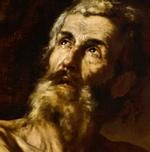
Speaking in English, in an unprecedented break from Vatican tradition, Pope Leo began with thanks to the assembled ambassadors for their service, and added his thanks to the people of Rome for help in coping with the crowds that visited the Vatican during the Jubilee Year. Then turning to the substance of his talk, he immediately invoked St. Augustine, drawing the framework for his talk from the Church father’s great work, the City of God. He observed that in that book, St. Augustine analyzed the “grave dangers to political life arising from false representations of history, excessive nationalism, and the distortion of the ideal of the political leader.” Those would be the main themes of his address.
Pleas for peace
In his outlook on the world’s political troubles, the Pope lamented the breakdown of an international order that emerged after World War II. He said: “A diplomacy that promotes dialogue and seeks consensus among all parties is being replaced by a diplomacy based on force, by either individuals or groups of allies.”
While that statement could be interpreted as a criticism of Russia’s actions in Ukraine or US actions in Venezuela (among other possibilities), the Pope’s next observation seemed clearly directed at Israel’s campaign in Gaza: “We cannot ignore that the destruction of hospitals, energy infrastructures, homes and places essential to daily life constitutes a serious violation of international humanitarian law.”
Later in the speech the Pontiff did make a call for peace in Ukraine. Regarding Venezuela, he said simply: “I renew my appeal to respect the will of the Venezuelan people, and to safeguard the human and civil rights of all, ensuring a future of stability and concord.”
For the most part, however, the Holy Father avoided specific controversies. His speech was a more general call for the development of a culture of peace, laced with frequent references to St. Augustine’s conception of civic peace as the “tranquility of order.”
In identifying threats to that order, the Pope made a special point of warning against the misuse of language, and the vital need for clear and honest speech. He said: “It is painful to see how, especially in the West, the space for genuine freedom of expression is rapidly shrinking.”
Religious violence
Pope Leo urged the world’s leaders to recognize “that the persecution of Christians remains one of the most widespread human-rights crises today, affecting over 380 million believers worldwide.” He condemned the violence against Christians and other religious minorities “in Bangladesh, in the Sahel region and in Nigeria, as well as those of the serious terrorist attack last June in the parish of Saint Elias in Damascus. Nor do I forget the victims of jihadist violence in Cabo Delgado, Mozambique.”
The Pontiff went on to speak of “a subtle form of religious discrimination against Christians” that is “spreading even in countries where they are in the majority.” Pointing specifically to Europe and the Americas, he said that Christians are “restricted in their ability to proclaim the truth of the Gospel” on certain social issues, particularly “when they defend the dignity of the weakest, the unborn, refugees and migrants, or promote the family.” The Pontiff renewed the Vatican’s condemnation of abortion, and added a denunciation of surrogate parenting, which “violates the dignity of both the child, who is reduced to a ‘product,’ and of the mother, exploiting her body and the generative process, and distorting the original relational calling of the family.”
Touching on the vexed question of immigration, the Pope reminded his audience that immigration is not always a matter of choice—that many people are fleeing from war or persecution. He encouraged respectful treatment of migrants, and expressed the hope “that the actions taken by states against criminality and human trafficking will not become a pretext for undermining the dignity of migrants and refugees.”—PFL
For all current news, visit our News home page.
Further information:
- To members of the Diplomatic Corps accredited to the Holy See (Dicastery for Communication - Libreria Editrice Vaticana, 1/9/26)
- Pope Leo Condemns a ‘Zeal for War’ That He Sees as Spreading Globally (New York Times
- The pope in a major foreign policy address blasts how countries are using force to assert dominion (AP)
- Pope Leo condemns ‘zeal for war,’ weak multilateralism in speech to diplomats (CNA)
All comments are moderated. To lighten our editing burden, only current donors are allowed to Sound Off. If you are a current donor, log in to see the comment form; otherwise please support our work, and Sound Off!