Ordinary Time: October 10th
Wednesday of the Twenty-Seventh Week of Ordinary Time
Other Commemorations: St. Daniel Comboni, Priest (RM); St. Paulinus of York, Bishop (RM)

MASS READINGS
October 10, 2012 (Readings on USCCB website)
COLLECT PRAYER
Almighty ever-living God, who in the abundance of your kindness surpass the merits and the desires of those who entreat you, pour out your mercy upon us to pardon what conscience dreads and to give what prayer does not dare to ask. Through our Lord Jesus Christ, your Son, who lives and reigns with you in the unity of the Holy Spirit, God, for ever and ever.
Recipes (4)
Activities (4)
Prayers (1)
Library (4)
Blog & Podcasts (0)
» Enjoy our Liturgical Seasons series of e-books!
According to the 1962 Missal of Bl. John XXIII the Extraordinary Form of the Roman Rite, today is the feast of St. Francis Borgia, a descendant of the notorious Alexander VI. He spent a part of his life in collecting titles and offices of importance. Certain reverses of fortune caused him to reflect on his life. He was already a Franciscan tertiary, but this was not enough for him; he became a Jesuit, at first secretly and then publicly in 1550 having made provision for his eight children. In 1565 he became General of the Society of Jesus. He was a man of wide experience, a clever diplomat and ranks as the second founder of his Order. He died in Rome on October 1, 1572.
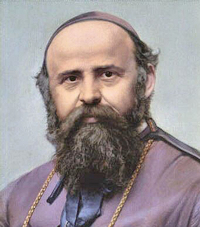
St. Daniel Comboni
St. Daniel Comboni was one of the Church’s great missionaries—he engaged all of Europe in the evangelization of the African continent.
He was born in the Lombardy region of Italy in 1831 to parents who farmed on land owned by a wealthy owner. His seven siblings all died young—six in their infancy—so his parents held him very closely. They were poor, but rich in faith and intimacy.
Daniel was sent away to a Catholic boarding school in Verona, where a vocation to the priesthood was awakened in him. During his studies, he became fascinated with the people of central Africa as they were described by visiting missionaries. He was ordained in 1854, and three years later set out with five others to help spread the Gospel there.
It took five months for the team to reach Khartoum, capital of the Sudan. They immediately encountered many difficulties, including hard work in an uncomfortable climate, the dire poverty of the people, and sickness. The death of several of his fellow missionaries did not dampen his zeal.
He wrote to his parents: “We will have to labor hard, to sweat, to die. But the thought that one sweats and dies for love of Jesus Christ and the salvation of the most abandoned souls in the world is far too sweet for us to desist from this great enterprise.”
He was forced to return to Italy to develop a new strategy for his missionary work. While he was praying at the tomb of St. Peter, he received an inspiration for a new plan—to “save Africa through Africa.” His idea was to empower the local Church in Africa so that it could regenerate and sustain itself, rather than approaching central Africans as helpless.
From that point, he began begging tirelessly throughout Europe for support and awareness of the emerging Christians of central Africa. Kings and queens, bishops, and nobles responded. He could speak six different European languages in addition to Arabic and several indigenous African dialects. He founded Italy’s first missionary magazine and began gathering men and women in a religious order to sustain the work.
In 1877, he was ordained a bishop and given responsibility for the Church in central Africa. Soon after, a terrible drought and famine hit the area, which crippled the missionary efforts once again. Daniel and his missionaries endured, however, and took steps to suppress the slave trade.
In 1881, Daniel fell sick and died. He was only 50 years old. Comboni priests, brothers, and sisters continue his work today in 41 countries. He was beatified in 1996 after an Afro-Brazilian girl was healed through his intercession. He was canonized in 2003 after his intercession was credited with the healing of a Muslim mother from Sudan.
—Excerpted from FaithND
Patronage: Missionaries; Aid workers; Comboni Missionary Sisters; Comboni Missionaries of the Heart of Jesus
Symbolis and Representation: Episcopal attire;
Highlights and Things To Do:
- Read more about St. Daniel:
- Read about the order he founded, Comboni Missionaries and also the Comboni Lay-Missionary Programs.
St. Paulinus of York
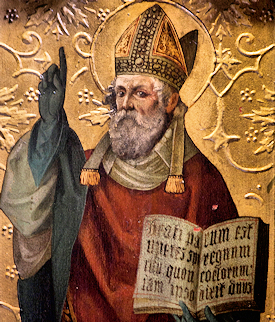 St. Paulinus was born in Rome about 554 and became a monk. In 601, he was one of the second group of monks sent to England by Pope Gregory the great and worked in the Kentish Kingdom until 625. At that time, King Edwin of Northumbria, who was a pagan, requested permission to marry Ethelburga, the Christian sister of King Edbald of Kent. Edwin indicated that he was willing to give Ethelburga complete freedom of conscience and might even become a convert himself.
Therefore, Paulinus was consecrated Bishop of York and accompanied Ethelburga as her chaplain, holding the hope that he could convert the pagan King as well as the Northumbrian people.
In 627, the Bishop’s hope came true. He baptized Edwin and his infant daughter at Easter in a wooden church at York, which led the way to many nobles and others seeking Baptism. Paulinus also built a church of stone at Lincoln where he consecrated Honorius, Archbishop of Canterbury, in 628. He thus came to be known as the first Christian missionary to labor in Northumbria.
In 633, King Edwin was slain in the battle of Hadfield Chase, and all missionary action had to be suspended. Paulinus took Queen Ethelburga and her two children back to Kent. He was then made Bishop of Rochester, comforting the people with his venerable and awe-inspiring presence for the rest of his days until death on October 10, 644.
—Excerpted from the Congregation of the Divine Redeemer
Patronage: Rochester, England
Often Portrayed As: archbishop baptizing King Saint Edwin
Highlights and Things To Do:
- Read more about St. Paulinus at
- St. Paulinus' remains are located in Rochester Cathedral in Kent, England. OrthoChristian gives details about St. Paulinus' life and also more information about York and the churches and places of his relics and veneration.