Lent: February 28th
Thursday of the Second Week of Lent
Other Commemorations: St. Romanus of Condat, Abbot (RM); Bl. Daniel Brottier (RM)

MASS READINGS
February 28, 2013 (Readings on USCCB website)
COLLECT PRAYER
O God, who delight in innocence and restore it, direct the hearts of your servants to yourself, that, caught up in the fire of your Spirit, we may be found steadfast in faith and effective in works. Through our Lord Jesus Christ, your Son, who lives and reigns with you in the unity of the Holy Spirit, God, for ever and ever.
Recipes (1)
Activities (4)
Prayers (7)
Library (2)
Blog & Podcasts (0)
» Enjoy our Liturgical Seasons series of e-books!
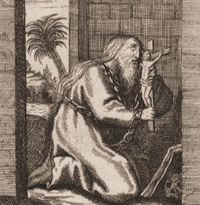
Historically today is the feast of St. Hilary, pope from 461 to 468 and guardian of Church unity and St. Romanus of Condat who founded the abbeys of Condat and Leuconne, and the convent of La Beaume, among others.
Saint Romanus of Condat
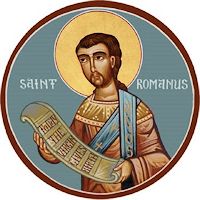 Romanus at thirty-five years of age left his relatives and spent some time in the monastery of Ainay at Lyons, at the great church at the conflux of the Saône and Rhone which the faithful had built over the ashes of the famous martyrs of that city; for their bodies being burned by the pagans, their ashes were thrown into the Rhone, but a great part of them was gathered by the Christians and deposited in this place.
Romanus a short time after retired into the forests of Mount Jura, between France and Switzerland, and fixed his abode at a place called Condate, at the conflux of the rivers Bienne and Aliere, where he found a spot of ground fit for culture, and some trees which furnished him with a kind of wild fruit. Here he spent his time praying, reading, and laboring for his subsistence.
Lupicinus, his brother, came to him sometime after in company with others, who were followed by several more, drawn by the fame of the virtue and miracles of these two Saints. Their numbers increasing, they built several monasteries, and a nunnery called La Beaume, which no men were allowed ever to enter, and where St. Romanus chose his burial-place.
The brothers governed the monks jointly and in great harmony, though Lupicinus was the more inclined to severity of the two. Lupicinus used no other bed than a chair or a hard board; never touched wine, and would scarcely ever suffer a drop either of oil or milk to be poured on his pottage. In summer his subsistence for many years was only hard bread moistened in cold water so that he could eat it with a spoon. His tunic was made of various skins of beasts sewn together,. with a cowl; he used wooden shoes, and wore no stockings unless when he was obliged to go out of the monastery.
St. Romanus died about the year 460, and St. Lupicinus survived him almost twenty years.
Patronage: against insanity; against mental illness; drowning victims; mentally ill people
Highlights and Things to Do:
- Read more about St. Romanus of Condat:
- St. Romanus' relics are now in Abbey of Saint-Romain-de-Roche.
Bl. Daniel Brottier
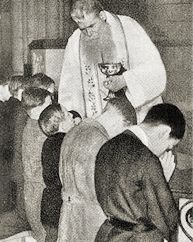 Blessed Daniel Brottier was a French Spiritan born in France in 1876 and ordained priest 1899. His zeal for spreading the Gospel beyond the classroom or the confines of France made him to join the Spiritan Congregation.
He was sent to Senegal, West Africa. After eight years there, his health suffered and he went back to France where he helped raise funds for the construction of a new cathedral in Senegal.
At the outbreak of World War I Daniel became a volunteer chaplain. He attributed his survival on the front lines to the intercession of Saint Therese of Lisieux, and built a chapel for her at Auteuil when she was canonized.
After the War he established a project for orphans and abandoned children "the Orphan Apprentices of Auteuil" in the suburb of Paris.
He gave up his soul to God on the 28th of February, 1936 and was beatified only 48 years later in 1984 by Pope John Paul II.
—Excerpted from Evangelizo.org
Highlights and Things to Do:
- Read more about Bl. Daniel Brottier:
- Read more about Brother Dan:
- Bl. Daniel was a member of the Congregation of the Holy Spirit which under his management took up the task of helping orphans after World War I.
- Bl. Daniel was buried at the Chapelle Sainte-Thérèse de la fondation d'Auteuil. In 1962 when his cause was being promoted, his remains were found to be completely intact.
- Bl. Daniel had great devotion to St. Thérèse the Little Flower.
 Wednesday of the Second Week of Lent
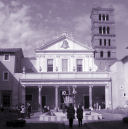
Station with Santa Cecilia in Trastevere (St. Cecilia):
The Station is at the church of St. Cecelia where the Saint lived and was martyred and where her body now rests. The first church on the site was built in the 3rd or 5th century, and the baptistery from this church was found during excavations, situated underneath the present Chapel of Relics. A house from the Imperial era was also found, and tradition claims that the church was built over the house in which St Cecilia lived. This house was one of the tituli, the first parish churches of Rome, known as the titulus Ceciliae.
For more on Santa Cecilia in Trastevere, see:
For further information on the Station Churches, see The Stational Church.