The “Our Father” according to Benedict
By Dr. Jeff Mirus ( bio - articles - email ) | Jun 13, 2007 | In Reviews
I had promised to return to Pope Benedict’s book in my blog, but one scarcely knows where to begin. The book is just too rich. Perhaps the best thing I can do is provide a sampling, selected almost at random, in the hope that others really will read it for themselves.
So let’s look at just five pages, the first section in Chapter 5 on the Lord’s Prayer, which begins by commenting on the phrase “Our Father Who art in heaven”. In the space of this short section, Benedict touches on a number of important considerations, several of which directly address specific modern concerns.
His first point is that, since many of our contemporaries may not have a very good experience of fatherhood, it is important to let Jesus Himself teach us the qualities of our Father. Jesus says through Matthew’s gospel that the Father, far more than human parents with their own children, will “give good things to those who ask him,” (Mt 5:44-45) and in Luke He clearly states that these “good things” are the Holy Spirit (Lk 11:13). Benedict concludes:
This means that the gift of God is God himself. The “good things” that he gives us are himself. This reveals in a surprising way what prayer is really all about: It is not about this or that, but about God’s desire to offer us the gift of himself—that is the gift of all gifts, the “one thing necessary.”
Two pages later, the Pope takes up the question of whether we can also call God “Mother”. He notes that Scripture offers us many maternal images of God but never names Him maternally. He says that one likely reason is that the mother-deities which surrounded Israel invariably led to a sort of pantheism, a lack of separation between creator and creature, whereas the name of Father expresses the otherness of Creator and creature and the sovereignty of God’s creative act. On this question, Benedict concludes:
But even if we cannot provide any absolutely compelling arguments, the prayer language of the entire Bible remains normative for us…. We make our petitions in the way that Jesus, with Holy Scripture in the background, taught us to pray, and not as we happen to think or want. Only thus do we pray properly.
Finally, Benedict focuses on the word our in the expression “Our Father”, as an antidote to our selfish individualism. Only Christ the only-begotten Son is fully entitled to say “my Father”, for only He is one substance with the Father. The Pope continues:
By contrast, the rest of us have to say “our Father.” Only within the “we” of the disciples can we call God “Father,” because only through communion with Jesus Christ do we truly become “children of God.” In this sense, the word our is really rather demanding…. It requires that we surrender ourselves to communion with the other children of God…. When we say the word our, we say Yes to the living Church in which the Lord wanted to gather his new family. In this sense, the Our Father is at once a fully personal and a thoroughly ecclesial prayer.
There are gems like these on nearly every page. While Benedict says the book is his own “personal search” for the face of the Lord, we need to recognize that he has invited us to tag along.
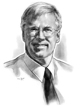
Jeffrey Mirus holds a Ph.D. in intellectual history from Princeton University. A co-founder of Christendom College, he also pioneered Catholic Internet services. He is the founder of Trinity Communications and CatholicCulture.org. See full bio.
All comments are moderated. To lighten our editing burden, only current donors are allowed to Sound Off. If you are a current donor, log in to see the comment form; otherwise please support our work, and Sound Off!